by nikosmadakis » Tue Nov 24, 2015 2:50 am
oh no the other way around.
If you saw the Chris's video, he roughly shapes a piece of cotton in his fingers. Brushes some kind of glue, be it gloss medium for instance, on the sea surface and places the cotton right next to the bow. More finger manipulation as needed until you re happy with the shape. Then with a small brush dipped in gloss medium lightly touch the cotton all around, it will give it a "wet" look once dry.
I do the same thing with silicone. The advantage is that you dont have to wait for it to dry, you see your final result immediately. Use a toothpick or a dentist spatula and lightly touch the cotton. Especially at the bottom where the cotton meets the water to unify them. I takes a bit of practice and be prepared to toss the first few tries until you re happy with it.
After the silicone has dried you can still roughly manipulate the final form of the wave.
- Attachments
-
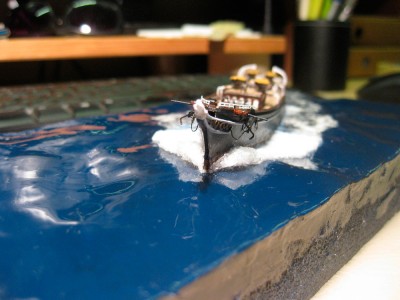
- you can see here the final bow wave after the silicon
oh no the other way around.
If you saw the Chris's video, he roughly shapes a piece of cotton in his fingers. Brushes some kind of glue, be it gloss medium for instance, on the sea surface and places the cotton right next to the bow. More finger manipulation as needed until you re happy with the shape. Then with a small brush dipped in gloss medium lightly touch the cotton all around, it will give it a "wet" look once dry.
I do the same thing with silicone. The advantage is that you dont have to wait for it to dry, you see your final result immediately. Use a toothpick or a dentist spatula and lightly touch the cotton. Especially at the bottom where the cotton meets the water to unify them. I takes a bit of practice and be prepared to toss the first few tries until you re happy with it.
After the silicone has dried you can still roughly manipulate the final form of the wave.