As I am now 48 yrs old-(!!) -and my close-up eyesight has deteriorated somewhat ( until 4 years ago I did everything with the naked eye--supplemented with an Optivisor
I now wear the Optivisor in conjunction with my reading glasses.
I find the Optivisor indispensable!!! I use a DA-3 and DA-05 lens--it has really sharpened up my modelling.
Cutting PE.
------------
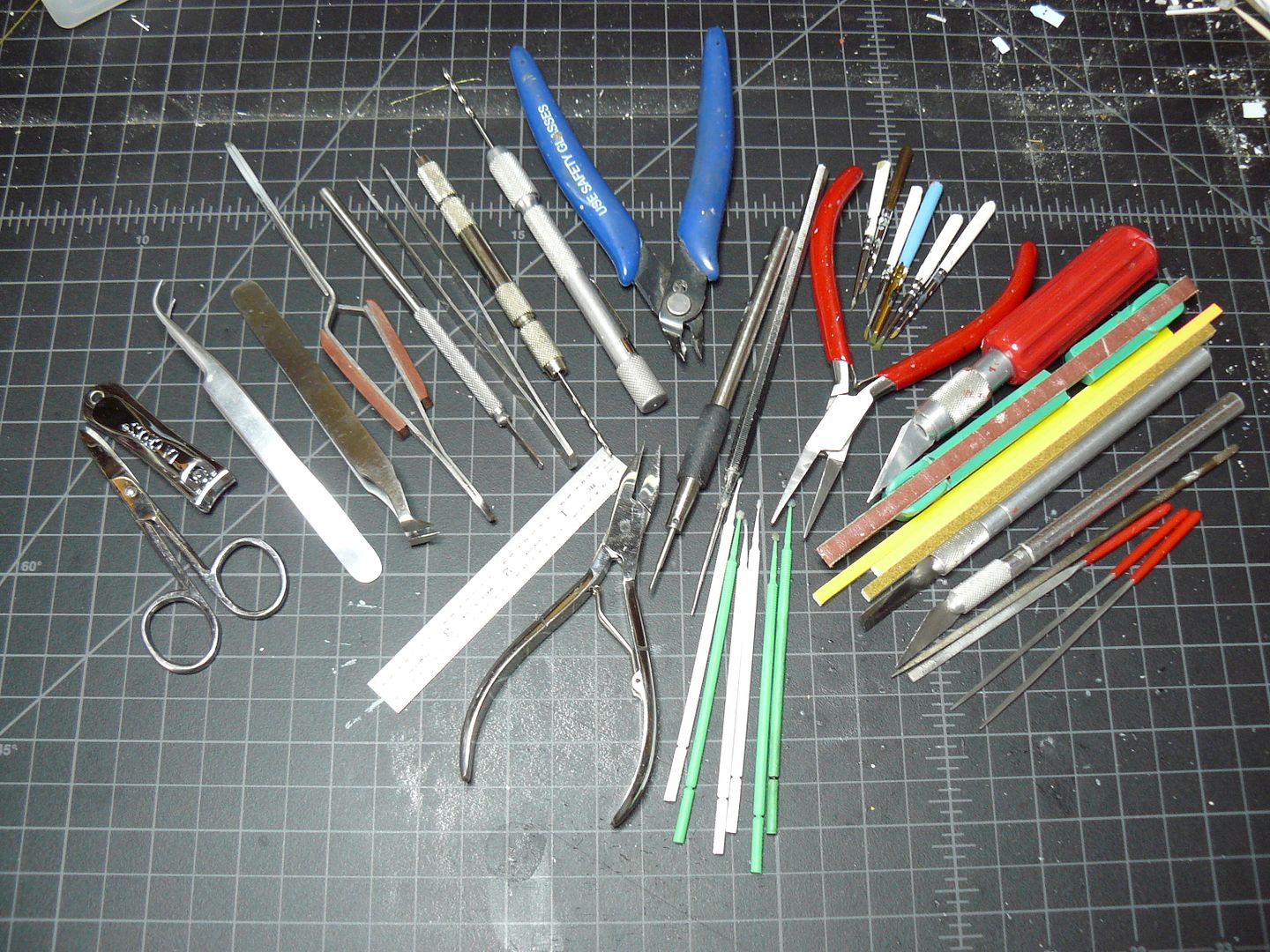
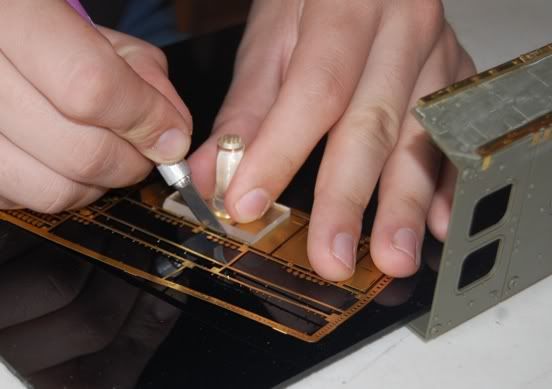
I do not like blades for cutting PE-- bits fly everywhere and the cut is not always perfect.
I much prefer using high quality scissors with a really good edge--
==> one can 'feel' any protrusions--however slight -- and tune them away-- works best with brass--stainless steel will wear the blades ( albeit I do replace the scissors every 3 months or so--the old ones get demoted to such functions as cutting brass or Nickel silver rod - even stainless steel wire for making masts and yards
The best so far that I have found --cost to blade ratio are the Fiskars embroidery
For longer runs or cutting railing I use Fiskars needlework
Apropos cutting...
I have always found modelmaking knives and scalpels just too flexible for my liking.-- not enough precision when paring or scoring
I use Stanley blades- hand held in my fingers--rigid and have a good edge--excellent for paring and scraping
- I frequently change to a new blade ( 3-6 blades per session )
as a result I buy them in packs of 100
No seeing or cutting is any use if one cannot hold the tiny parts
My favourite tweezers are the Swiss made RUBIS-- not cheap at all-(!!) -but oh so precise and sharp!-- no twist and no slipping on the points--alas like their cheaper sisters they also do not like being dropped point down...


- Tweezers stamp collector.jpg (6 KiB) Viewed 1804 times
So as to be able to match drill bits to metal rods accurately--or indeed different mast materials etc I find a digital caliper simply indispensable-- they are not expensive now--mine was � 14.75
Apropos masts-- I like using tube wherever possible ( also good for making funnels)I prefer cutting the tubing with a tube cutter--( also useful for creating indents--ie plates on funnels
I use a pushpin to start all portholes--and also mast and vent locations .
I often attach non structural parts with wood glue--high grab and dries clear.
- white glue wood adhesive.jpg (10.03 KiB) Viewed 1804 times