Painting ships of the Russian fleet during the second half of the 19th century
The entry into operation of the first domestic armored ships (monitors, tower boats and frigates) coincided with the worsening diplomatic relations with Britain and the ships were ready to go into battle, as they say, right from the shipyard. Therefore, their color at the time was mostly sharoy [bluish-gray] (modern sharovoy [gray], but with a bluish tint).
During the Russian-Turkish war of 1877-1878, painting of ships it was also protective sharoy, or, as they said at the time, gray.
In subsequent years, with the growth in the ships of the fleet and a relative high cost of the composite components of sharoy paint (white lead, soot, ocher, and blue Gorodetskaya [bright blue pigment]) the Marine Department was inclined towards painting ships in black, as a cheaper and more practical option than constantly fixing the paint after a voyage. Nevertheless, sharoy color was used for a long time in painting armor upper casemates, skylights and main battery turrets. The walls of chart and conning rooms were painted with white lead, and their roofs - ocher. Ocher was also used to paint ladders, and covers of entrance hatches. In addition to the outside, soot was used to paint fairleads, anchors and anchor machinery, bales and bollards, and sometimes chimneys (for the latter often used straw-colored (fauve) paint); deflectors on boiler fans were painted white. White lead paint was used for under the boat and banks, while their outside was usually sharoy. Sharoy color was even used for assault guns carriages.
Masts, tops, crow�s nest, topmast crosstree, bowsprits and yardarms were painted with whitewash (white lead), yards, shot, gaff � soot, topmast head and outrigger - light color(?)
Underwater part of the hull was painted with red lead, but when sailing in warm seas a patented paint (antifouling paint) was used that included copper sulfate and therefore had a bright green color.
But in that time, the Naval Ministry was aware that this painting scheme was unacceptable for battle, and ships continued to develop experiments for different camouflage options from dark chocolate and gray to green-olive, which was how warships of the Pacific squadron were painted on the eve of the Russian-Japanese war.
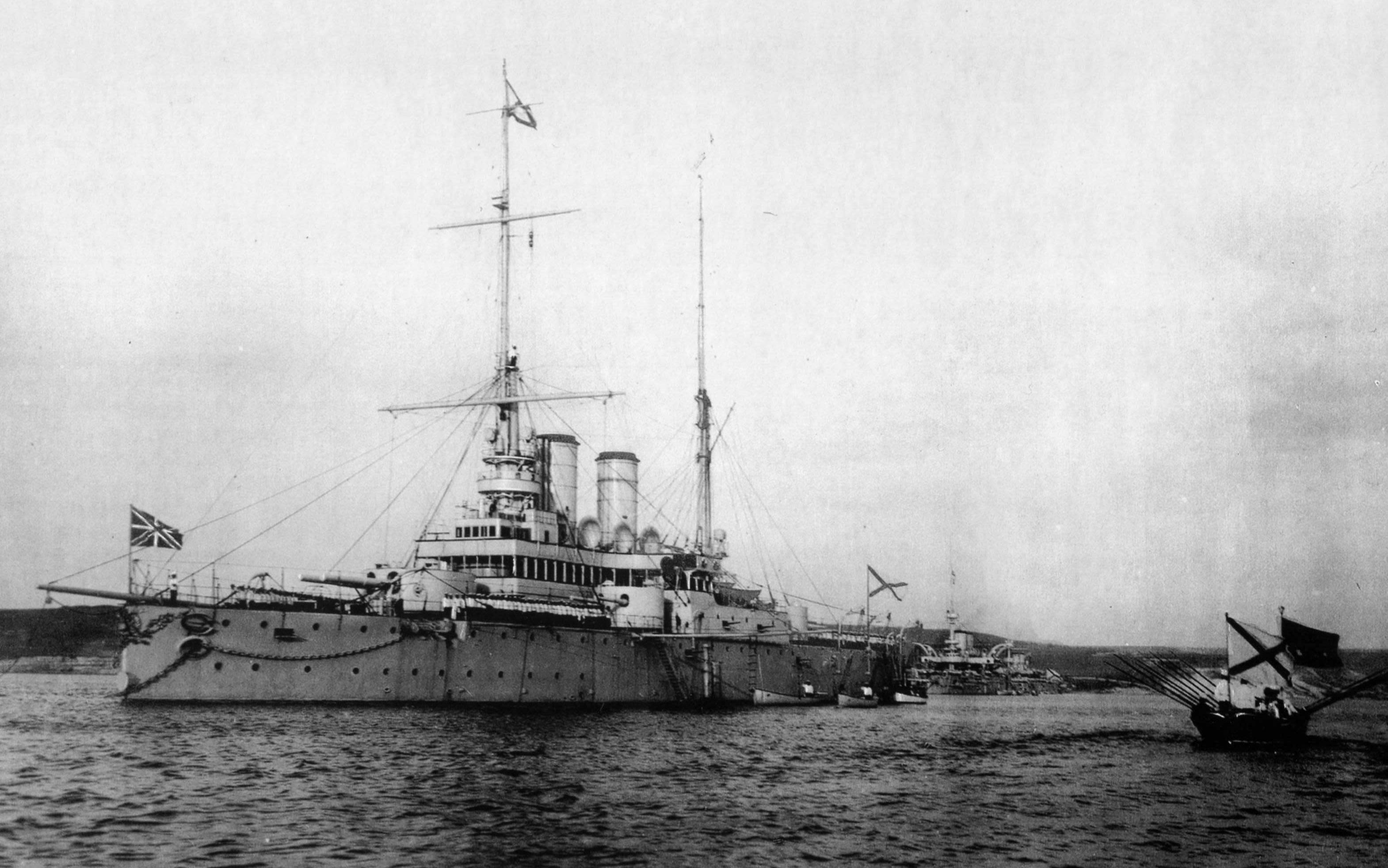
In June 1899 the general meeting of the flagships and commanders of the ships in Kronstadt, discussing various proposals on the color of ships, decided to "keep black for the hull color of vessels in home waters and use white color for "other parts of the ship which are visible from the outside": spars, davits, and fan baffles, except for yards, which "must be black." Chimneys were required to be painted in "yellow with black tops in the most practical color for them."
For the ships of the Pacific squadron and Mediterranean Sea detachment a white paint scheme, keeping yellow for the smoke stacks, was adopted as "the most expedient and desirable in terms of cleanliness and habitability of the ship in a hot climate", as was announced by the Navy Department June 12, 1899 for "leadership and precise execution."
The idea of painting the ships of the Russian fleet at that time gives below is an excerpt from Tobel "Supply ships of the fleet, colorful materials for 1899":
- Holds
- Double bottoms separation, coal pit = red lead
- Holds below the cockpit which are not wood-trimmed = red lead
- Holds below the cockpit wood-trimmed = white
- Corridors of tail shafts, upper bottom in the engine rooms, in boiler rooms = saturnine red
- Device for provisions and spares: chests, cabinets, lockers = umber to white lead
- Ceilings boiler rooms, smoke hoods, cubicle in a residential and battery decks = sharaya(?)
- Ceilings engine rooms, propeller shaft corridors, longitudinal and transverse bulkheads in them = white
- At the bottom of the engine rooms on the 6 '(152 mm. � S.O.) from the bottom platform = sharaya(?)
- The upper surface of the platforms and ladders steps = vermillion
- Engine store-room not wood-paneled = sharaya(?)
- Engine store-room, wood paneled = white
- Ceilings, walls, stanchions, cellars, metal shelving = white
- Living Deck
- Ceilings, wooden and metal = white lead
- Boards, longitudinal and transverse bulkheads, their doors and gutters, electrical wires = white lead
- Mast pipes coal pits, doorways, coamings, armored manhole covers, rails to adapting hanging beds lockers, cofferdams = umber with white lead
- Wardroom officers and other cabins, hospital, pharmacy, inside and outside of the bulkhead = white
- The internal board of collapsible shields = red lead and white
- Battery Deck
- Ceilings, boards, individual items (see Living Deck) = umber with white lead
- Bitt, fairleads, deck stoppers, eyebolts, cast iron bollards, cover mouth and coal pits, items that require very frequent painting = black
- Admiral�s and commander�s quarters = white lead
- Upper Deck
- Bulwark, berthed grid foundations of bridges, deck-house coaming, outside and turrets inside and out, ceilings bridges = white lead
- Hammock(?) netting inside = umber with lead whitewash
- Hammock(?) netting covers = black
- Selected objects: grappling blocks skid beams (boat beams), boiler shells, sills light hatches, Waterski Weiss, stringers, but skirting bridges and cutting = umber with white lead
- Towing fairleads, bollards, scuppers, chimneys, Top smoke hoods, ventilation pipes = black
- Inside of ventilator bellmouths = vermilion
- Life buoys; top = vermilion, bottom = same as outer side
- Outer Side
- Hammock(?) netting outside = white
- Underwater part = red lead
- The rest of the outside = black or white
- Luffs (anchor davit, cat head), back anchor (kedge), fish-davit, balconies = black
- Davits = white lead
- The bow and stern figure = gilding
- Masts
- Masts, tops, flag poles, yardarm, mars, cross-tree (topmast, trestle), bow sprit = white lead
- Yards, booms, gaffs = black
- Topmast, studding sail alcohols, outrigger = light color(?)
- Machinery, Boilers, Galleys
- All of the main machinery and auxiliary machinery except for the foundations = chrome green
- Galleys = black
- All machinery foundations = black
- Refrigerators, separators, spare parts of machines, rowing oxen bearings = chrome green
- Rowing Boats
- Boats outside = white
- Boats inside, above thwarts = white
- Boats and ships inside under thwarts = shary [gray]
- Mine [torpedo?] boats outside = shary [gray]
- Mechanisms on the boats = painted the same color as other mechanisms on the ship
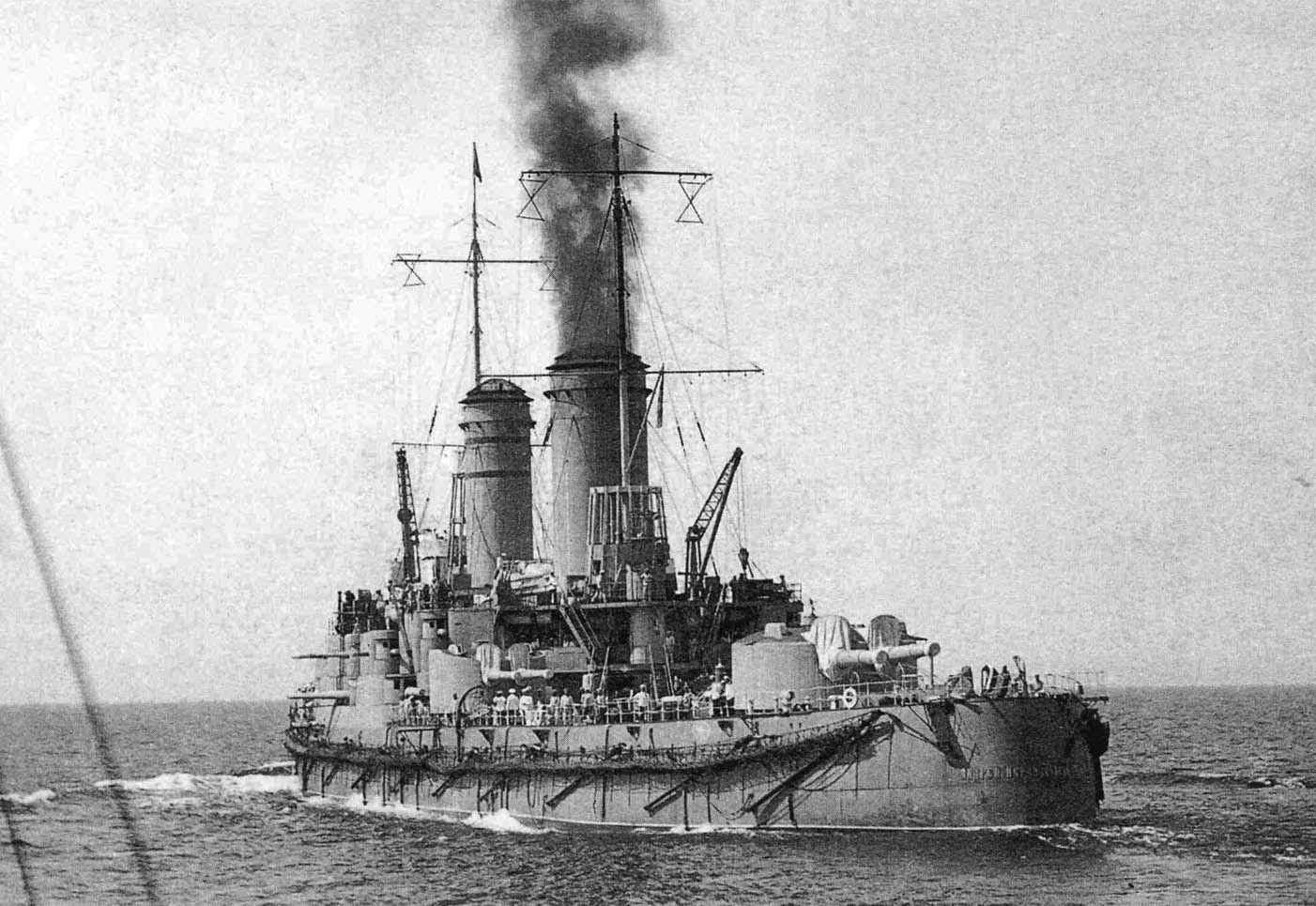
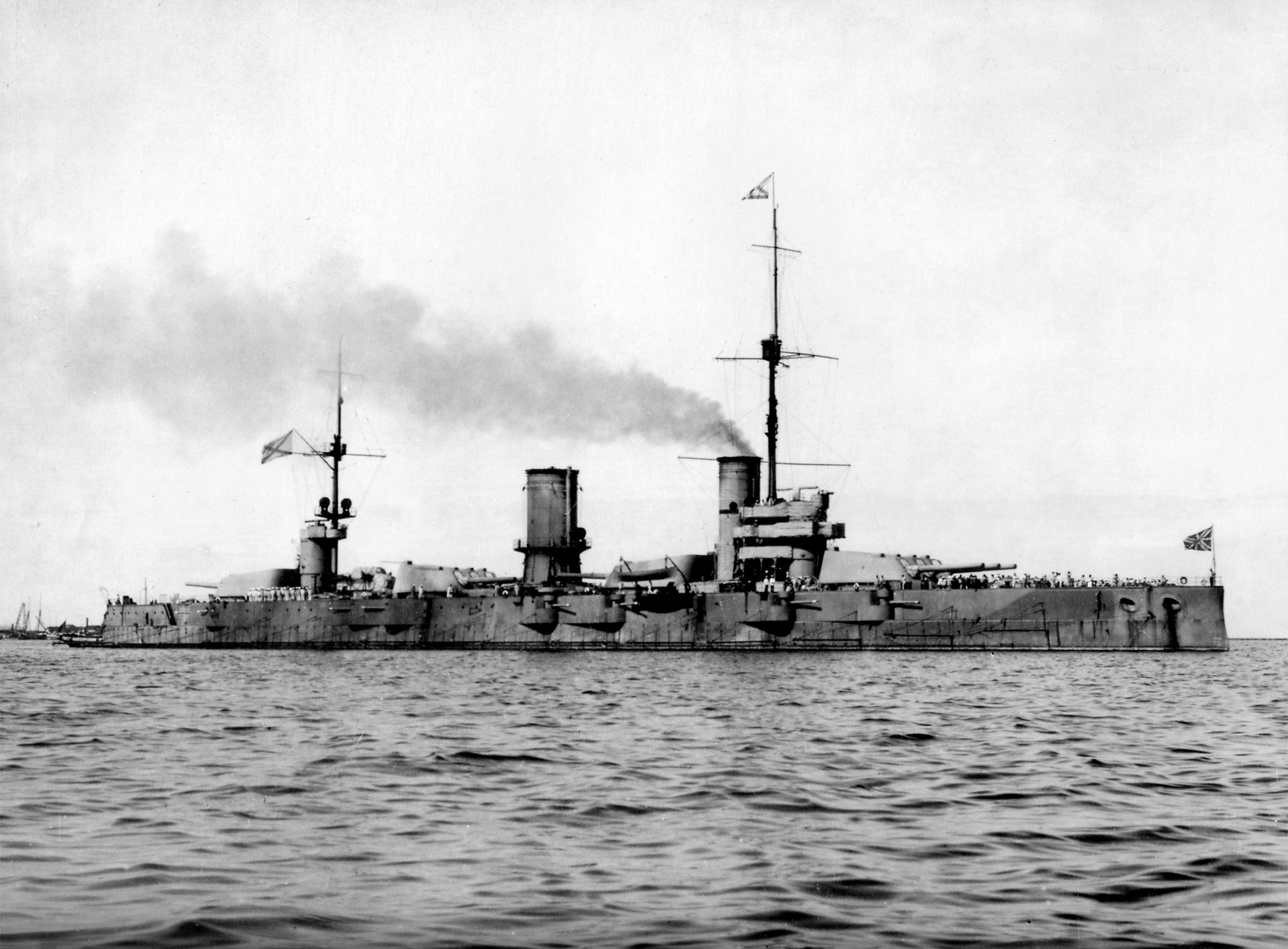
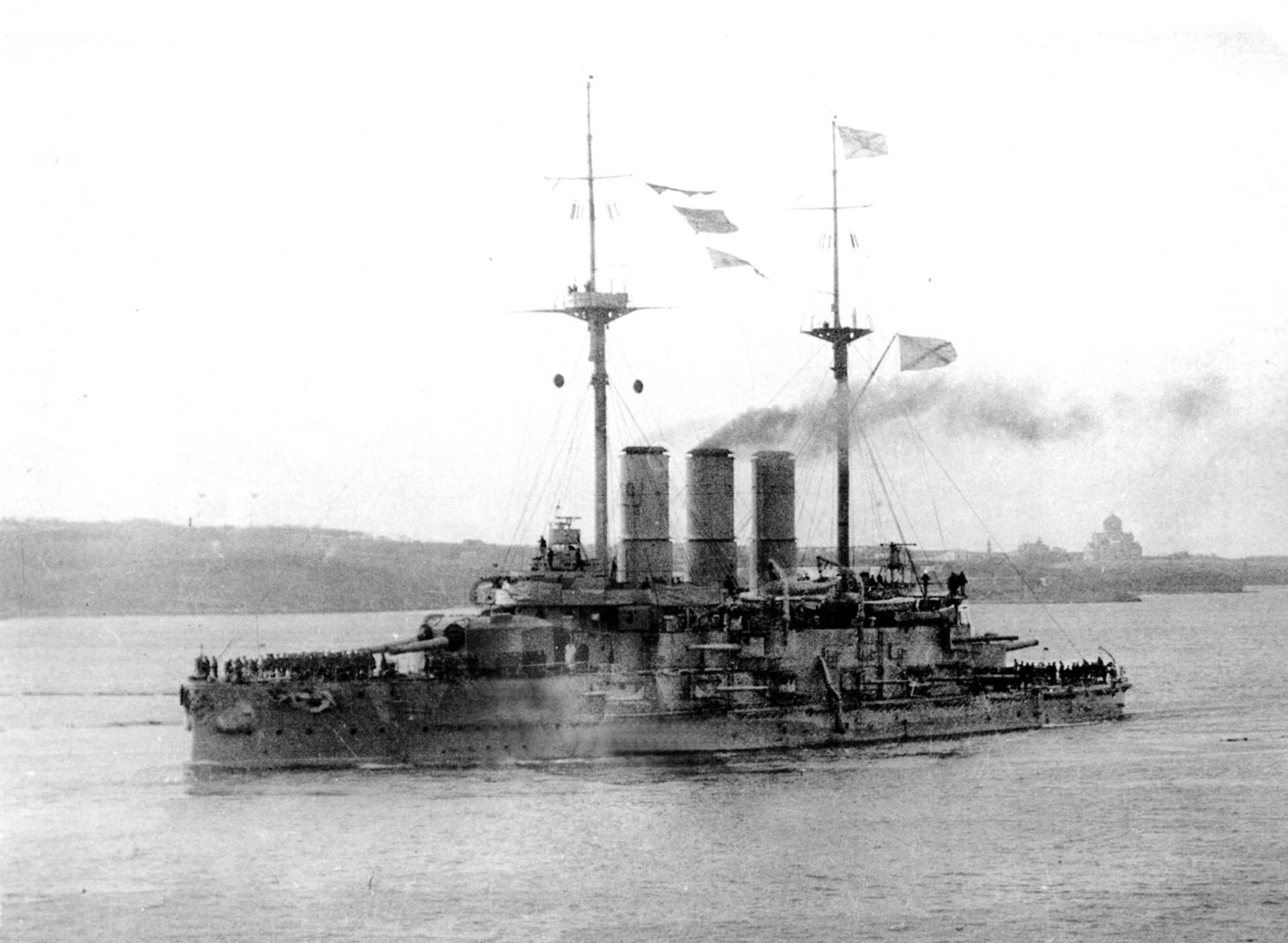
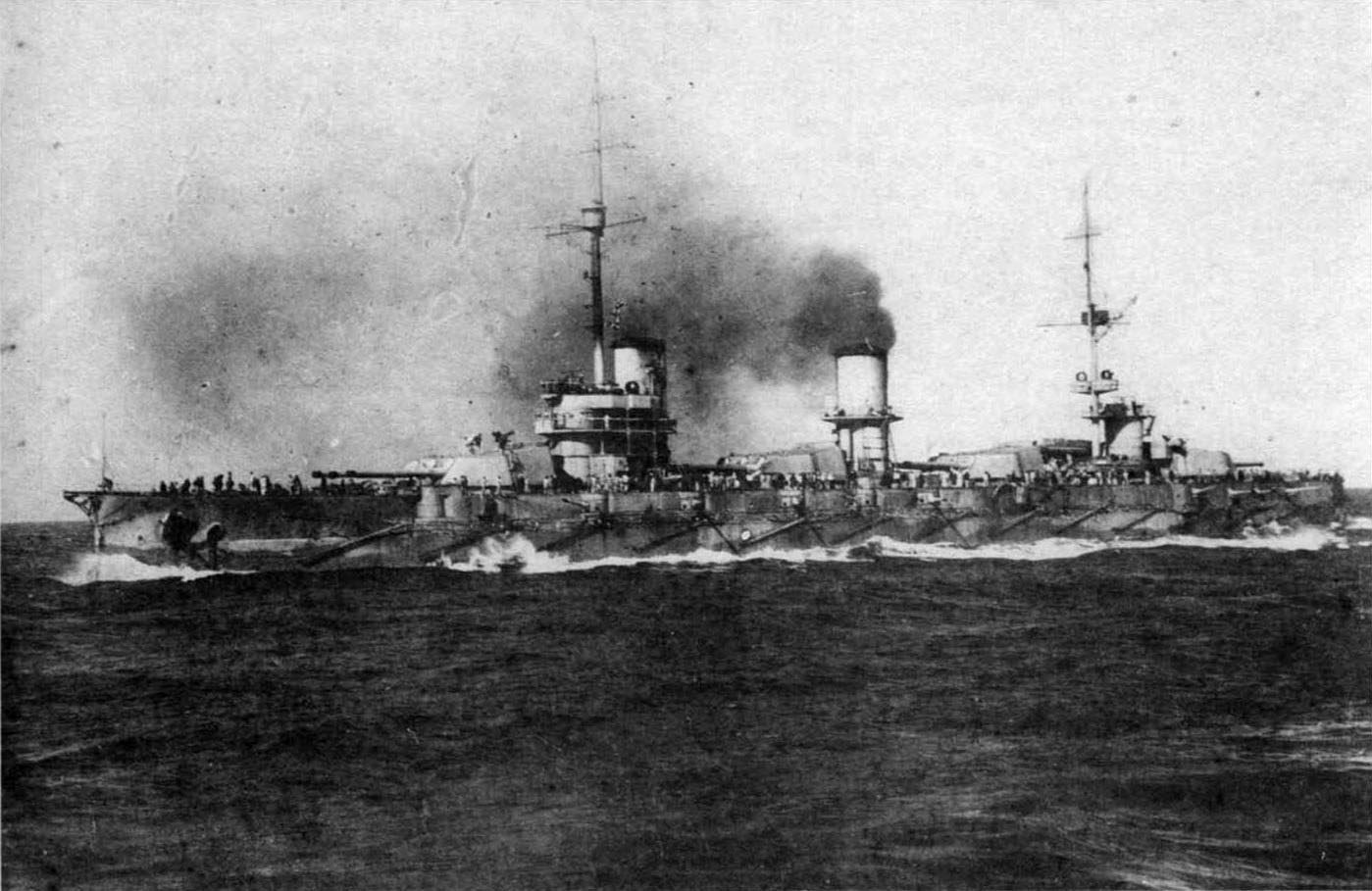
According to the circular of the Naval Technical Committee No. 3 for ships of the Russian Navy on 24 March, 1908 the following requirement was introduced: "... all that can be visible from a distance" should be painted "In a protective grayish-green." So painted on top deck bulwarks, hammock(?) netting, stanchions, bridges, ceilings, outside of deckhouses, boats and even towing bollards and other items requiring frequent painting. Not forgotten smoke stacks and hoods (top), ventilation sockets, as well as handrails, steering wheels and metal compass cabinets. On the outer side of such paint covered surfaced part above the waterline and underwater part below the "two feet" (0.61 m), all davits and cranes. Masts, tops, flagpoles and yardarms, too, were painted in the grayish-green color; the inner surface of the commander and officers boats - whitewash, and their outer surface (as well as the workers boats) - in a khaki (camouflage?). The inner surface of the boats above thwarts working boats painted in khaki (camouflage?) and under thwarts - "grayish oil paint."
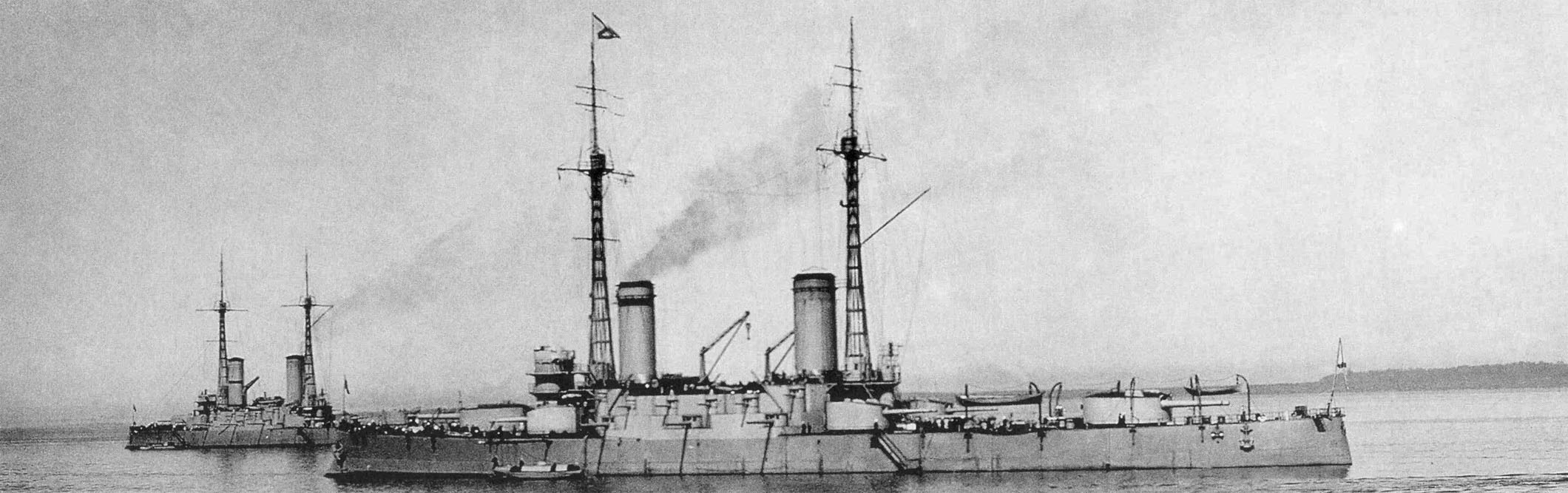
Circular from the Staff Commander of Naval Forces of the Baltic Sea of March 7, 1912 "strictly to rigorous execution" were instructed to adhere to the following rules: battleships, cruisers, minelayers, training ships, vessels for trawling and transport squadrons were to use three paint colors: light-gray, dark gray, and grayish-black. The first was intended for masts, smoke stacks, superstructures and boats, the second exterior sides, and the third for the boot topping (narrow strip at the waterline). Gunboats, destroyers, pilot boats and transport in destroyer divisions were camouflaged with a greenish hue, submarines were dark gray, dispatch vessels were the color of the unit to which they were attached, and harbor craft were black. On March 21, 1912 this color scheme was extended to the Black Sea Fleet.