Zuiderzee-Botter

Moderators: BB62vet, MartinJQuinn, JIM BAUMANN, Jon, Dan K

Pieter
Posts: 1602
Joined: Sat Sep 17, 2005 9:19 am

Re: Zuiderzee-Botter

Post by Pieter »

Nice to see you're doing a local scene here. I did the Monnikendam - Volendam - Marken triangle on skates back in 2009 after starting out here in Amsterdam Noord. And forgot to take my camera off course....-:( I did take it out to nearby Durgerdam the next day.
Did you do the same route from Alkmaar?
Now that you're in the diorama phase I have some suggestions. Zuiderzee in the late 1900s = seawater ice so not the hard, glossy and almost black surface you would have seen in 2007-2009 but a slightly matt and more grey-ish surface texture. Also don't overdo the snow as it slows down ice growth. An alternative would be a situation at the end of a cold period when the Volendam-Marken area would be hit by drifting and slowly thawing iceflows which would form ice walls when hitting the dykes.
What would be the same as nowadays is the light. All water particles are frozen out of the atmosphere so you get this bright clear air with very little blueshift and very clear colors.
I'm including two pictures of Durgerdam and the IJdoorn lighthouse to try to illustrate this. I seem to recall posting them before but I could not find them. Durgerdam is much more like the Volendam of 1900 than the current Volendam which has become something of a a tourist trap.
Durgerdamkerkje.JPG
vuurtoreneiland.JPG
User avatar
wefalck
Posts: 2079
Joined: Wed Sep 28, 2011 12:04 pm
Location: Paris
Contact:

Re: Zuiderzee-Botter

Post by wefalck »

Pieter, you are touching on a number of issues I considered, when developing the story-board for this scenic setting. Not all of my thoughts had been spread out here though.

In order to capture the spirit (or the 'soul' as dafi put it above) of the features and events to be portrayed, I had to condense things in space and time, as will be discussed in later postings.

The Ijsselmeer today is quite different from the Zuiderzee at the end of the 1800s. Then it was a brackish bay with a tide of around 0.5 m to 1 m or so. Today there is no tide (thanks to the Afsluitdijk) and the water is freshwater. This will have important repercussions on how the freezing proceeds. In theory, the Ijsselmeer should freeze over much more quickly than the Zuiderzee. However, we have seen a number of decades with few freezing events due to a relatively warm climatic period. It was only during my last winter in Alkmaar, at the beginning of 2009, that the canals and lakes began to freeze. Indeed, my next-door neighbours told me that their 7 year-old daughter had neither seen 'real' ice beforelet alone skating on it. Actually, the severe frost in the Alkmaar region lastet only a few days and didn't allow that much (safe) skating. I did, however, manage to take a few interesting pictures and this event provoked the idea for the scenic setting.

The tide and changing winds would result in breaking up the ice near the shore. There are, in fact, early 20th century pictures that show some sort of pack-ice formation, when northerly winds drove the ice up onto the shores around the Zuiderzee. Other pictures show a fairly continuous ice sheet on which ice-sailing and ice-fishing take place. On the other hand, the harbour of Volendam is relatively sheltered by the long breakwaters that already existed at the time that is depicted. Photos show ice floes drifting around the harbour. Behind the dyke, the canals etc. would be frozen over flat.

So, I will show some moderately disturbed ice with some pancake-ice formation near the shore. This occurs in both, fresh and brackish water, when the ice-formation is disturbed by waves. I observed this in Enkhuizen and other places. At the dyke, these ice-floes will be pushed together. This assumes that a strong Northerly wind has brought the cold and also partially cancels out the tides, so that ice has not been broken up into larger floes that then may form the pack-ice mentioned before.

Below are a few pictures I took in February 2009 at various places in Noord Holland.
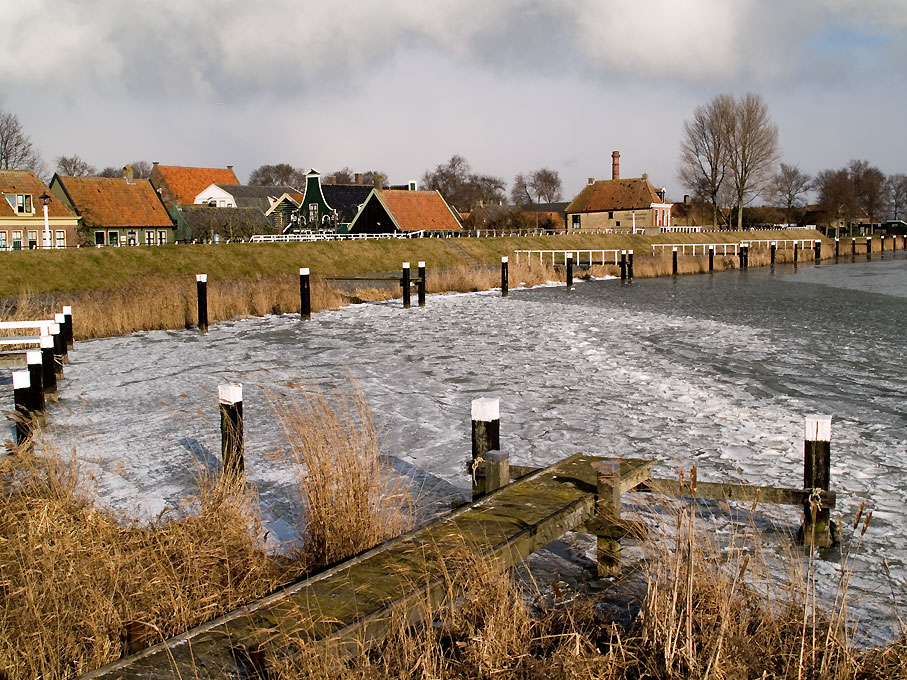
Image
At the Zuiderzeemuseum in Enkhuizen - inspiration for the scenic setting
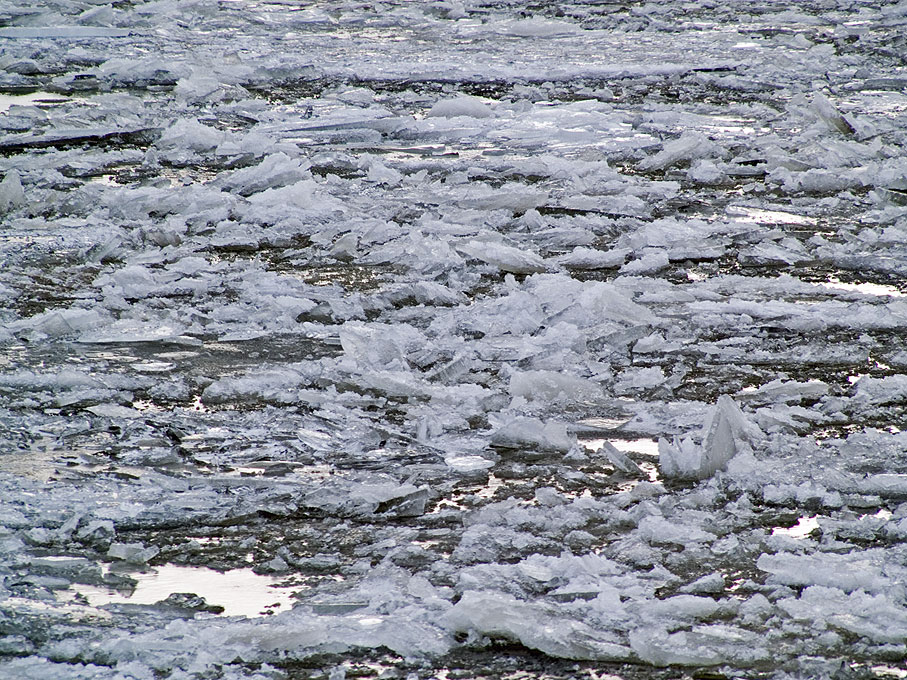
Image
Packice and pancake-ice outside the dyke of Volendam
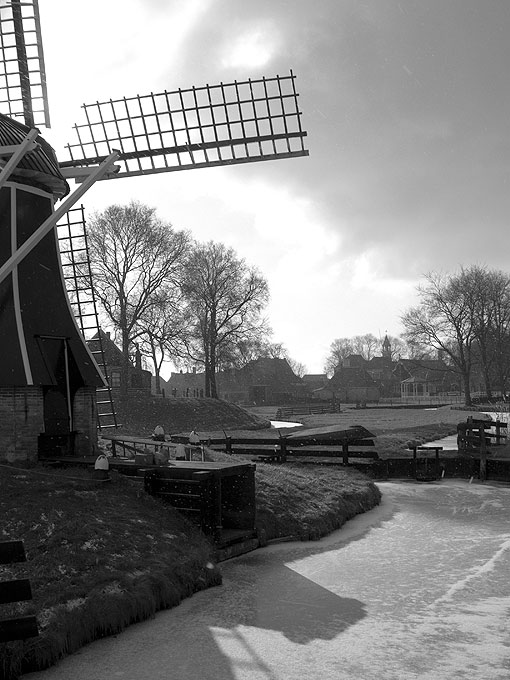
Image
Undisturbed inland-water ice in Enkhuizen
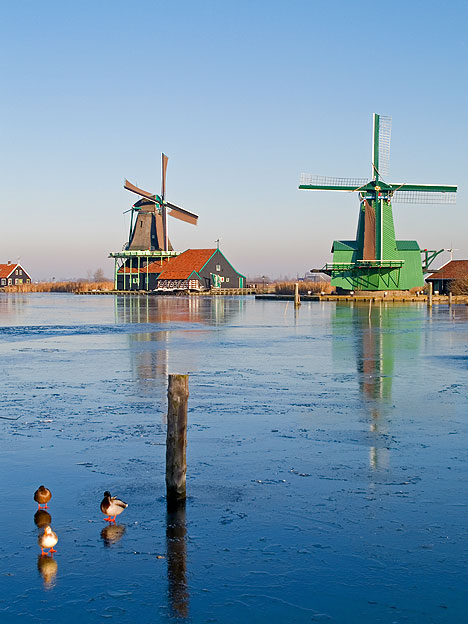
Image
Clean freshwater ice at Zaandam

Incidentally, there will be only a light dusting of snow in the scenic setting. Metereologically, snow does more likely occur in the temperature range of say +2�C to -5�C than at significantly lower temperatures. I assumed that there would have been a very cold spell that surprised the Marker botter and forced it to seek shelter in Voldendam ...

wefalck

Last edited by wefalck on Sat Mar 13, 2021 2:52 pm, edited 2 times in total.
Eberhard

Former chairman Arbeitskreis historischer Schiffbau e.V. (German Association for Shipbuilding History)

--------------------------------------------------------------------------------------------------------------------------------------------------------------------------------------------

Image Image Image Image
User avatar
wefalck
Posts: 2079
Joined: Wed Sep 28, 2011 12:04 pm
Location: Paris
Contact:

Re: Zuiderzee-Botter

Post by wefalck »

Work on the scenic setting continues ...

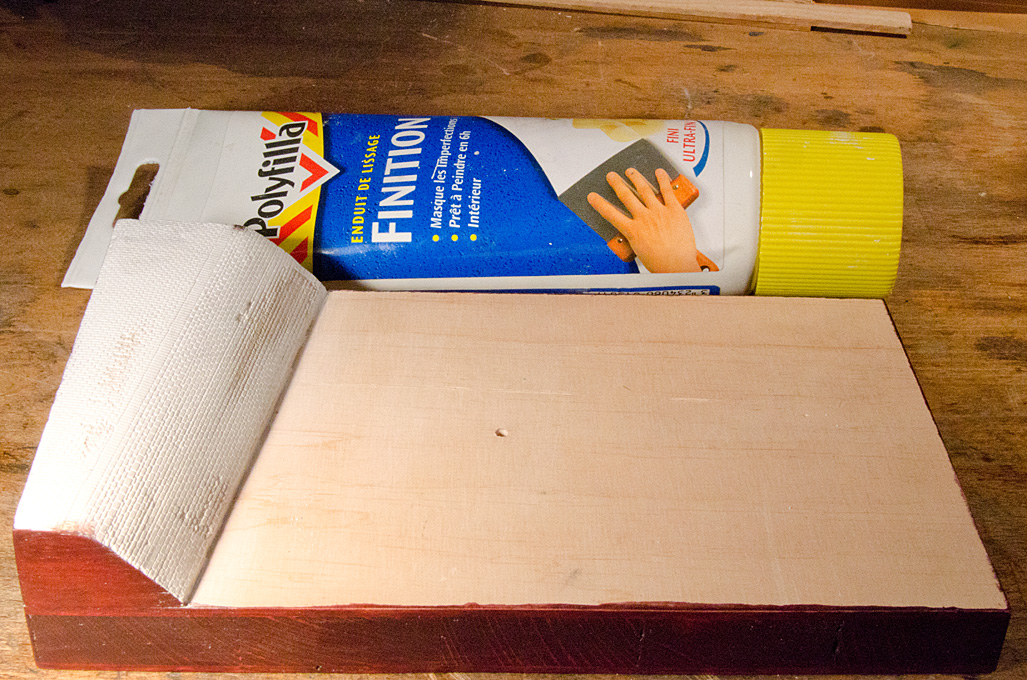
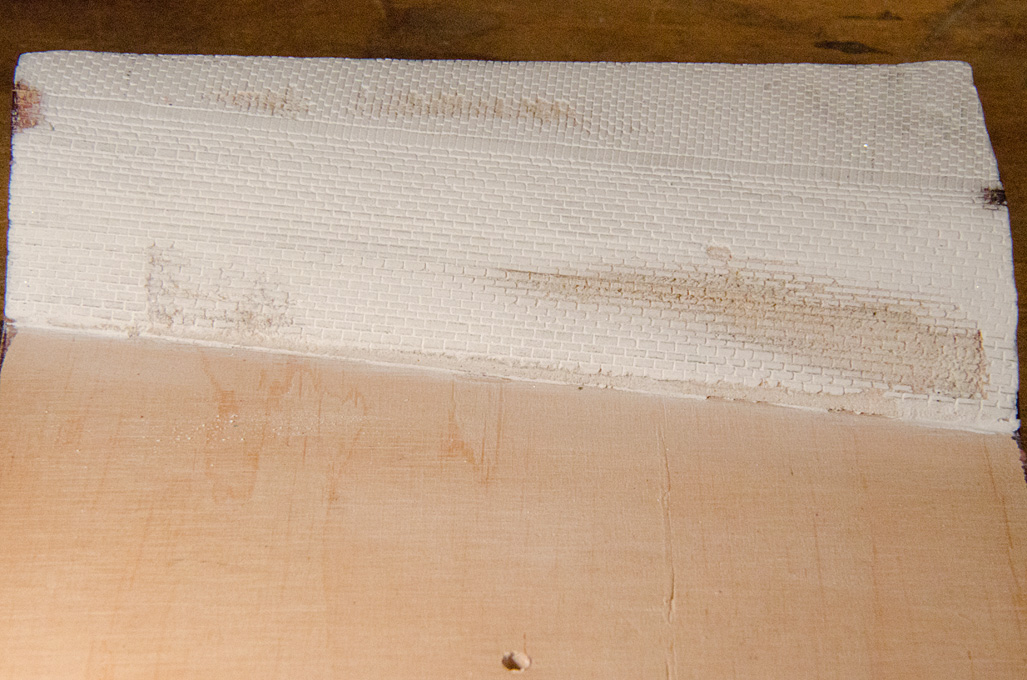
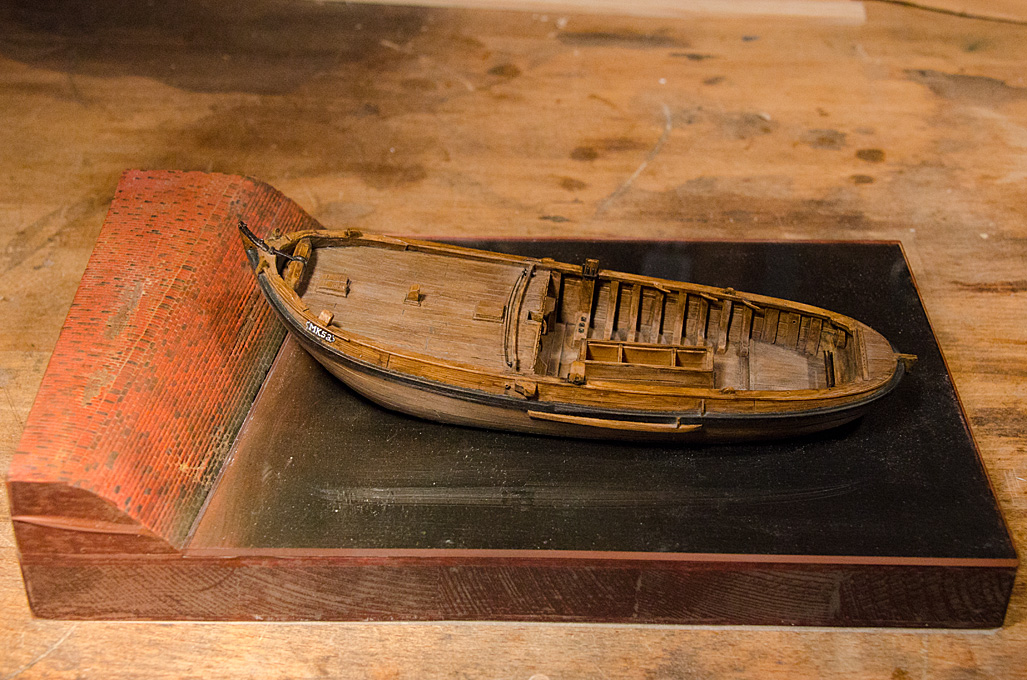
The dyke section was covered in a thin layer of wall-repair putty from a tube that I had around by chance. Otherwise, I would have used plaster of Paris mixed with some wallpaper glue, which improves its sculpting behaviour. Once the putty was dry, it was sanded down smoothly and then single bricks engraved by rows with a needle held in a pinvise. The fact that corners broke out of the bricks was approvingly tolerated, as it will enhance the weathered appearance.

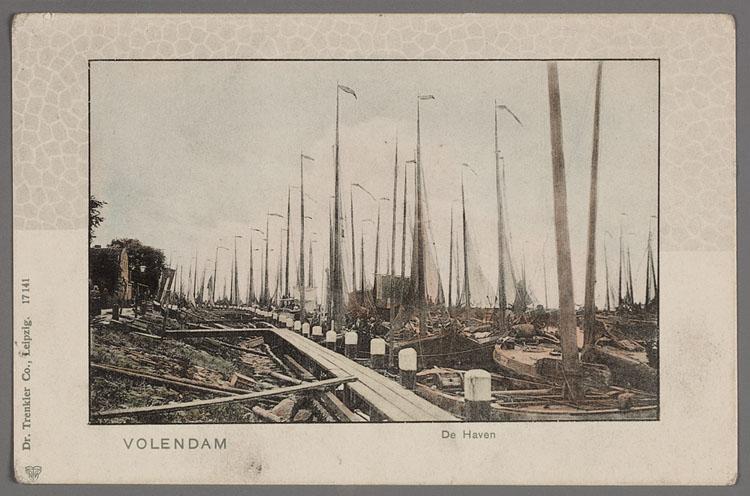
Actually, I am not sure, whether actually bricks covered the dyke inside Volendam harbour. The historical photographs are not clear on this. Modern practice would be either hard rock, such as granite or basalt, or concrete blocks because of their higher density and larger size. The Netherlands have no domestic hard rock sources and would have had to import such stones. It was common practice to use such stones as ballast, e.g. in wood transporting ships from Sweden or Finland. However, I have no evidence for their use in Volendam. In order to create the right atmosphere, I think brick is a reasonably good choice.

Also, the slope of the dyke is too steep compared to what can be seen on pictures of the time and what would be good practice in coastal engineering. I used some artistic license in this respect in order to condense the scenic setting into a smaller space so as not to distract from the actual object, the botter.

Image
Baseboard with sculpted dyke

Image
Close-up of the engraved bricks

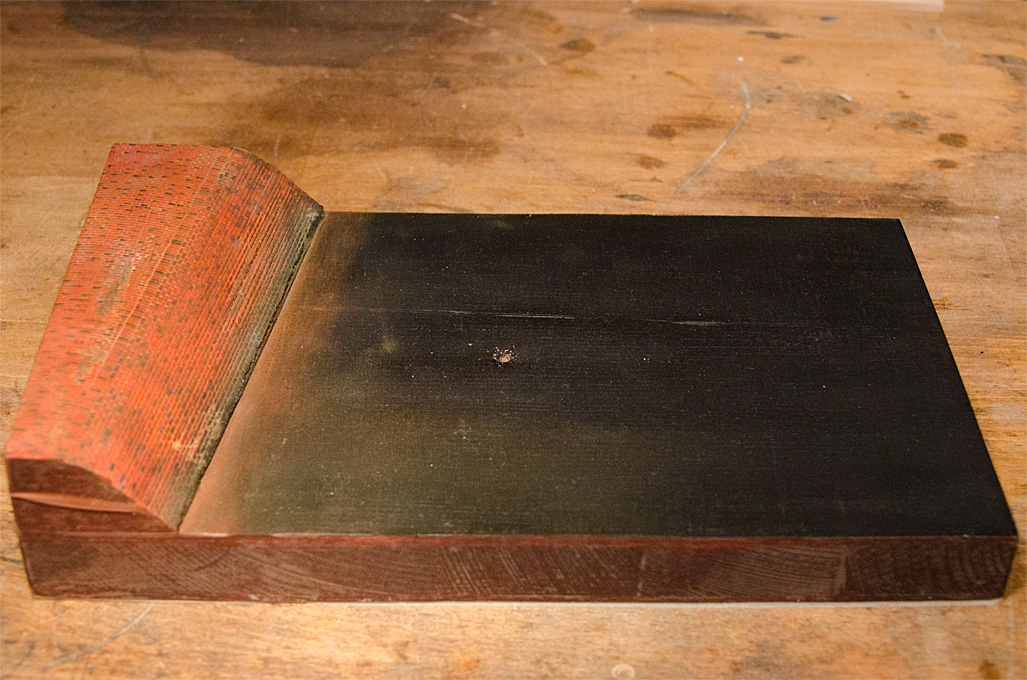
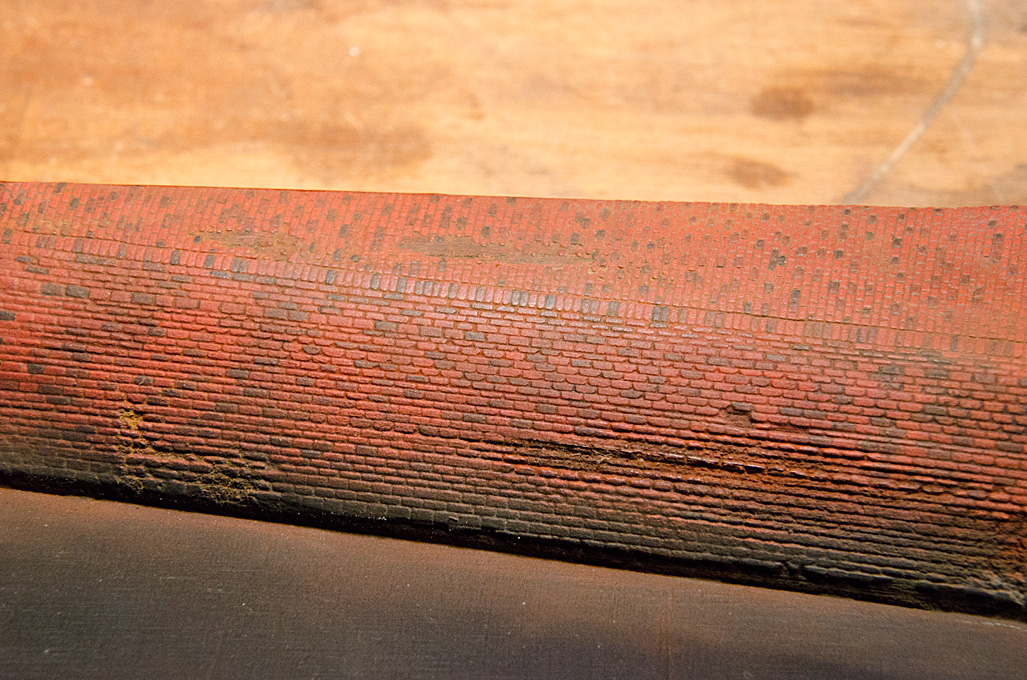
In order to reduce the porosity of the putty and the wood the whole surface was treated with cellulose-based woodfiller, before the dyke was airbrushed in English Red (Schmincke AeroColor), while the water area received a basecoat of burnt umber, partly mottled with black. In a next step individual bricks were picked out with blue and brown washes to enliven the dyke surface. Since the acrylic paints dry satin, the whole was lightly sprayed with Winsor & Newton acrylic matte varnish. A restrained weathering using artist�s pastels followed.

Image
Painted baseboard

Image
The brick surface of the dyke

Image
The model of the botter in place

wefalck
Last edited by wefalck on Sat Mar 13, 2021 1:03 pm, edited 1 time in total.
Eberhard

Former chairman Arbeitskreis historischer Schiffbau e.V. (German Association for Shipbuilding History)

--------------------------------------------------------------------------------------------------------------------------------------------------------------------------------------------

Image Image Image Image
User avatar
JIM BAUMANN
Posts: 5678
Joined: Mon Jan 10, 2005 5:30 pm
Location: Nr Southampton England

Re: Zuiderzee-Botter

Post by JIM BAUMANN »

OK-I concede.... :big_grin:

-this is looking very good indeed! :thumbs_up_1: :thumbs_up_1: :wave_1:

Excellent images of the ice--

Rgds
JB
....I buy them at three times the speed I build 'em.... will I live long enough to empty my stash...?
http://www.modelshipgallery.com/gallery ... index.html

IPMS UK SIG (special interest group) www.finewaterline.com
Pieter
Posts: 1602
Joined: Sat Sep 17, 2005 9:19 am

Re: Zuiderzee-Botter

Post by Pieter »

I like the brickwork you've done so far but if you're aiming for an accurate 19th century dike you will have to take part of it away I'm afraid. Like you indicated Volendam did not have much of a port and its vessels would be simply run up to the dike surface. 19th century dikes in the area were made up of a sand core and and thick, strong and flexible clay layer on top, with most of the clay being put on the seaside gradient. In richer areas there would be basaltous rocks over a willow base (zinkstukken) but Volendam was very poor and unlike the myths some of you may have been sold in tourist brochures these was no such things as solidarity between richer and poorer polders. Brickwork may have been put on the horizontal area on top of the dike as it was functioning as a road in Volendam but brickwork is inflexible and does not stand salt water very well so it could not have been used on the gradient. On sand/clay dikes one would either see a thin layer of grass on the gradient or a temporay wood cover to protect the clay from ships and ice. A good drawing of the "Westfriese omringdijk" just north of Volendam can be found at this link http://home.tiscali.nl/~wr2777/West-Friesland.htm. Scroll down to the enlish language section drawings. This is how the dike would have been like around 1825.
User avatar
wefalck
Posts: 2079
Joined: Wed Sep 28, 2011 12:04 pm
Location: Paris
Contact:

Re: Zuiderzee-Botter

Post by wefalck »

Pieter, thanks for the interesting link. I should add that, as a geologist, I worked a bit on coastal zone management (e.g. in the recent THESEUS project: http://www.theseusproject.eu), though I am not a coastal engineer. I also wrote for the project mentioned a little report on the historical evolution and 'philosophy' of coastal protection, mainly considering the North Sea coast from Denmark to the Netherlands (not yet published).

When I started the work on this scenic display a few weeks (or perhaps already months :big_grin: ) ago, I did not have any good pictures of the front of the Voldendam dyke as it appeared in the late 19th century. There was a causeway on top of it that was hardened with bricks. This is clearly visible on all relevant photographs. I recently found on http://www.geheugenvannederland.nl some pictures from the period around 1890 to 1910 that seem to show blocks of hardrock on the seafront, though they are rather overgrown. Unfortunately, at that moment, I had already modelled the bricks. The seawater resistance of bricks would depend on their degree of firing. Highly fired, fused bricks (Klinker in German) would be quite resistant due to their almost glass-like surface. Other bricks, indeed, might be prone to sulfate attack or salt-cracking (when seasalt crystallises in pores and due to the expansion cracks the material), particular in the intertidal and wave-zone.

Image
Volendam dyke (from http://www.geheugenvannederland.nl)

I had already planned to partially hide the bricks near the waterline under some short overgrowth, as seen on the photographs. There will be also some reeds near the land-water interface. Pictures will come in due time ...

wefalck

Eberhard

Former chairman Arbeitskreis historischer Schiffbau e.V. (German Association for Shipbuilding History)

--------------------------------------------------------------------------------------------------------------------------------------------------------------------------------------------

Image Image Image Image
User avatar
wefalck
Posts: 2079
Joined: Wed Sep 28, 2011 12:04 pm
Location: Paris
Contact:

Re: Zuiderzee-Botter

Post by wefalck »

Just a small update today, too many other activities recently, apart from being hot and sunny here ... :cool_1:

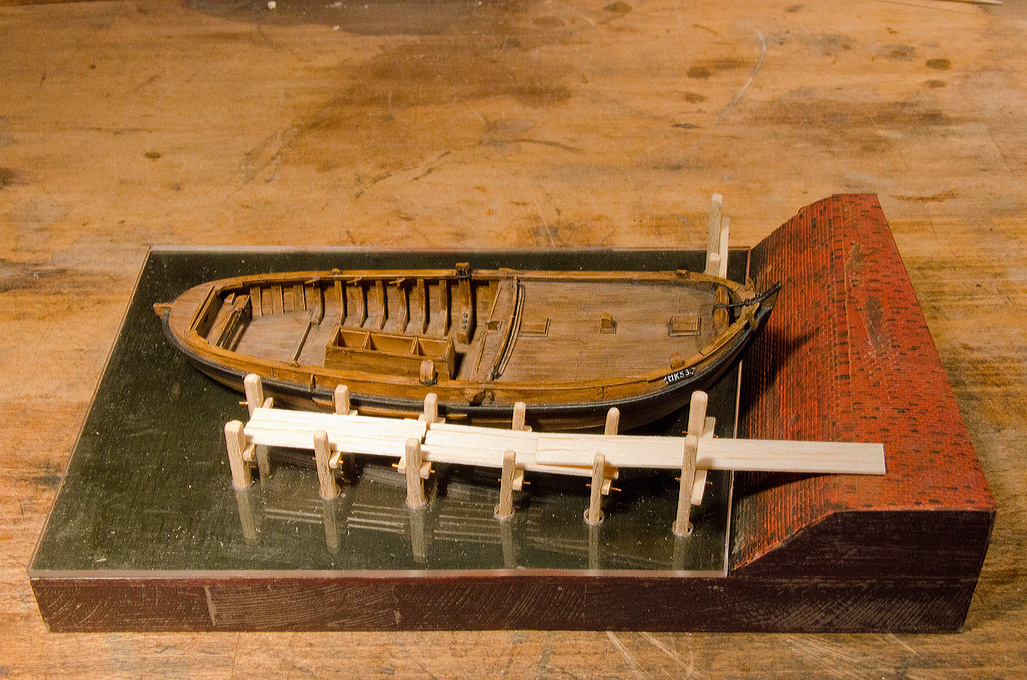
With the Plexiglas sheet to simulate the ice in place, the positions for various piles that carry the planned jetty were marked out. The design of the jetty followed that seen on various historical pictures (see my Web-site). Holes for inserting the piles were drilled throught the Plexiglas into the wood. I cut some square strips of soft wood on the table saw and from these 'piles' of the appropriate length were chopped. The wood was roughend and shaped using a rotary steel-wire brush in the hand-held drill. Cross-pieces etc. were shaped from the same wood.

Image

wefalck
Eberhard

Former chairman Arbeitskreis historischer Schiffbau e.V. (German Association for Shipbuilding History)

--------------------------------------------------------------------------------------------------------------------------------------------------------------------------------------------

Image Image Image Image
User avatar
wefalck
Posts: 2079
Joined: Wed Sep 28, 2011 12:04 pm
Location: Paris
Contact:

Re: Zuiderzee-Botter

Post by wefalck »

Here a small update on the work on the scenic display.

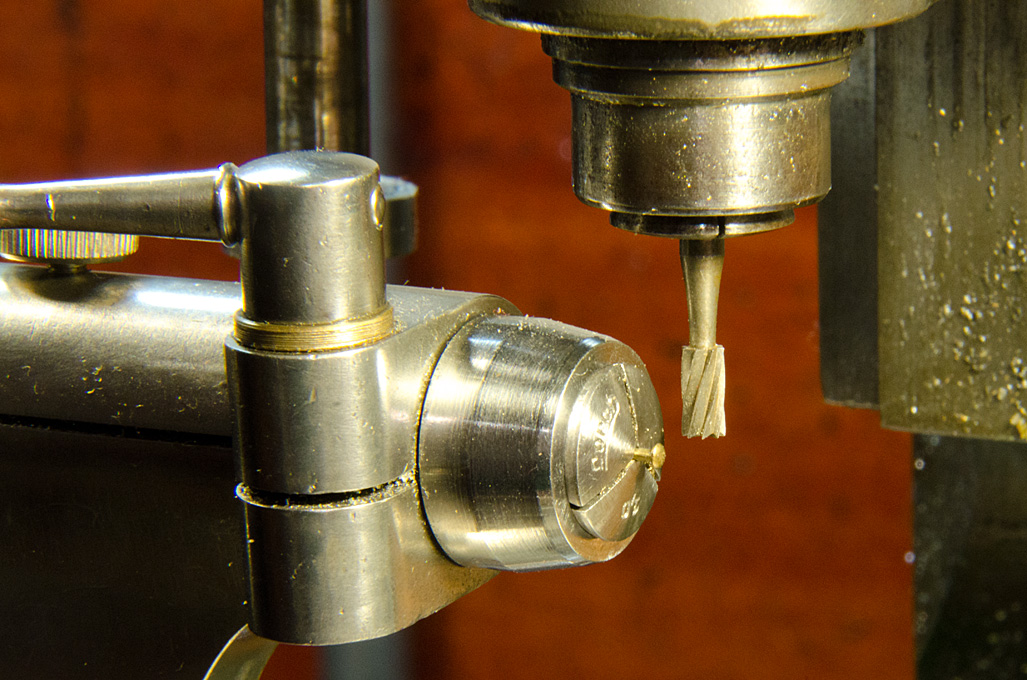
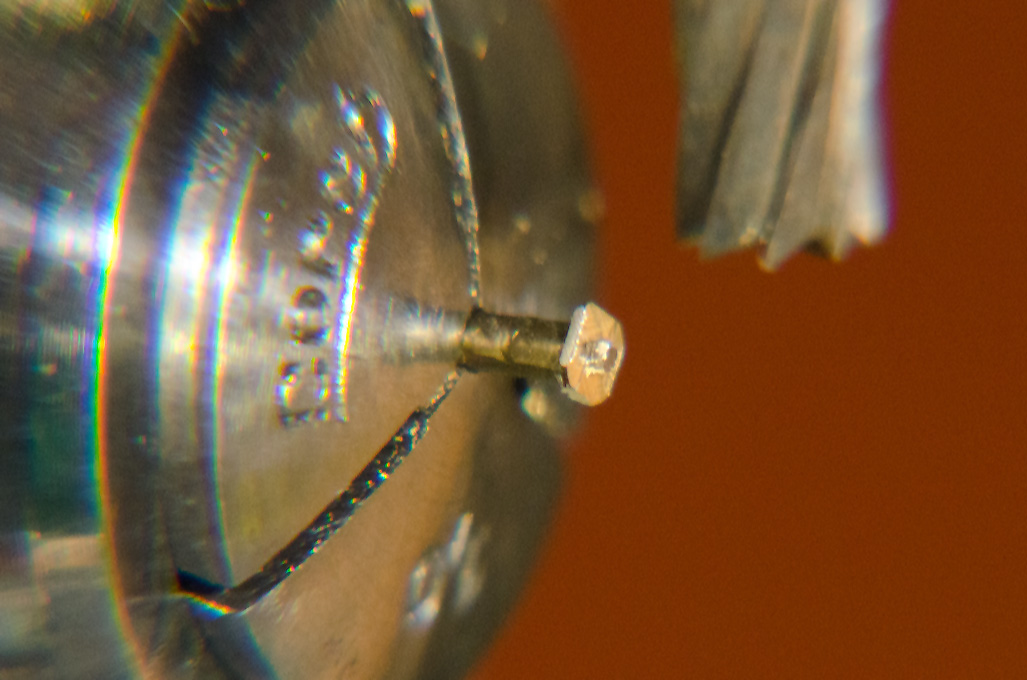
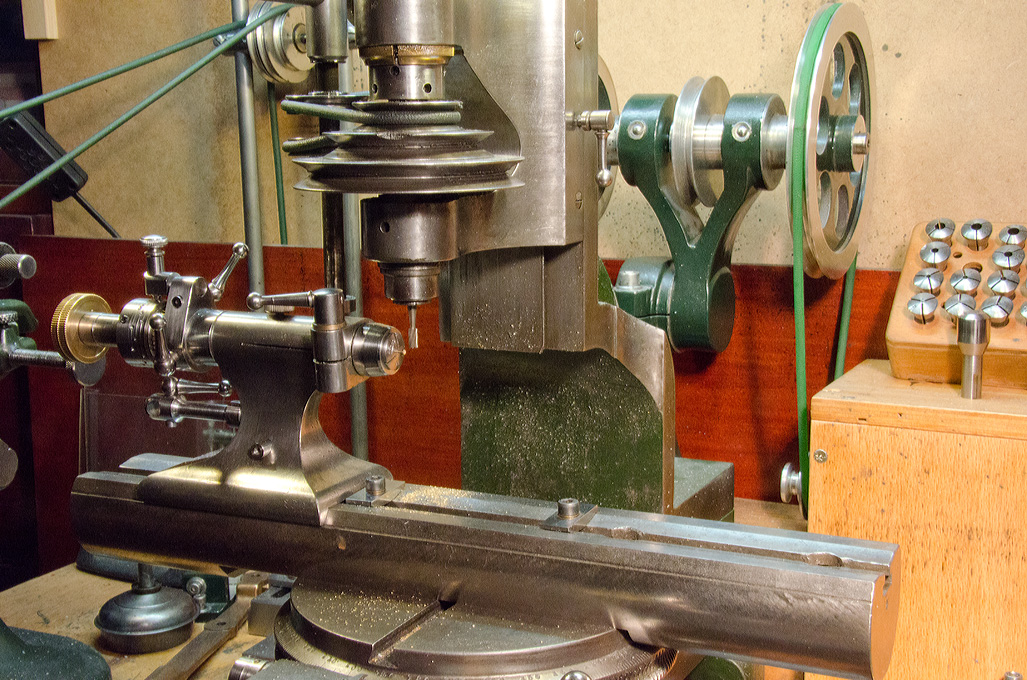
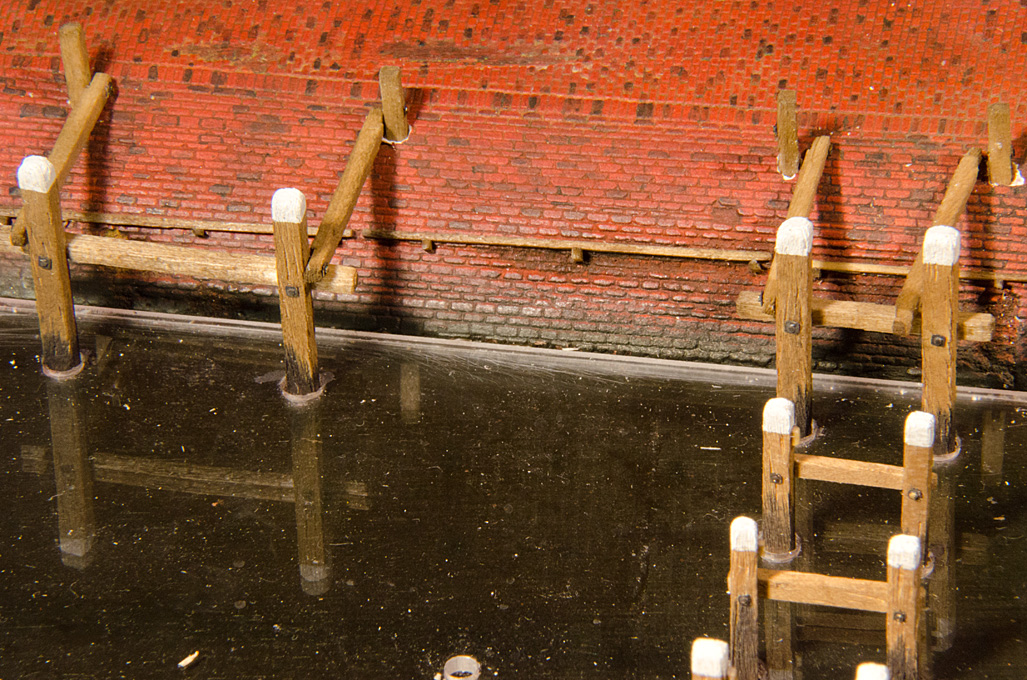
In real life the various members of the jetty would have been fastened together with iron bolts. Square washers prevented the bolt heads and nuts from being pulled into the wood and splitting it. The bolts and washers were imitated by taking simple brass nails and milling a hexagonal head and a square on to them with a set-up of an indexer on the mill. The shaft was thinned down and parted off on the lathe.

Image
Brass nail ready to be milled into a bolt together with a square washer

Image
Milled bolt head

Image
Milling machine set-up with indexer

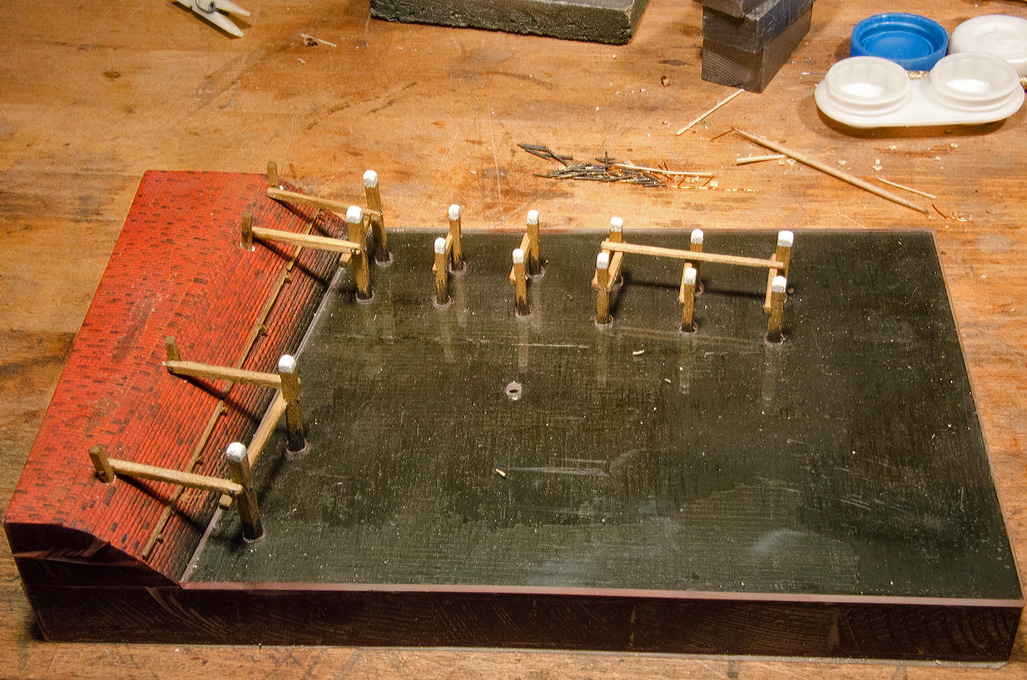
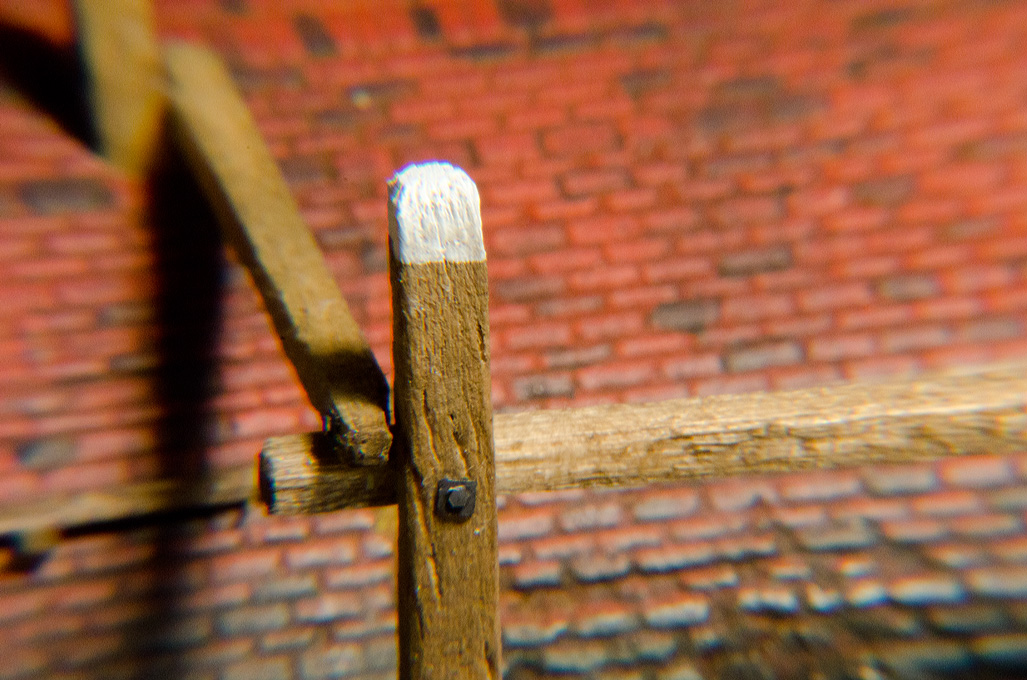
The wood was stained in 'medium walnut', which gives it a greenish-grayish weathered appearance (not so visible on the photographs due to the warm light colour). The pile-heads were painted white (which gave them a better visibility in bad weather). The effect of the seawater was reproduced by letting the wood soak up some black stain from below. More weathering will follow.

Image
The jetty etc. under construction

Image
Details of the construction

Image
Details of the construction

wefalck
Eberhard

Former chairman Arbeitskreis historischer Schiffbau e.V. (German Association for Shipbuilding History)

--------------------------------------------------------------------------------------------------------------------------------------------------------------------------------------------

Image Image Image Image
User avatar
Neptune
Posts: 2453
Joined: Sun Mar 13, 2005 11:51 am
Location: Belgium

Re: Zuiderzee-Botter

Post by Neptune »

Pretty stunning, down to the fibre size of those wooden piles! Love the brick paint (and sculpt) job on the shore as well.
The merchant shipyard
User avatar
wefalck
Posts: 2079
Joined: Wed Sep 28, 2011 12:04 pm
Location: Paris
Contact:

Re: Zuiderzee-Botter

Post by wefalck »

Thanks, Neptune.


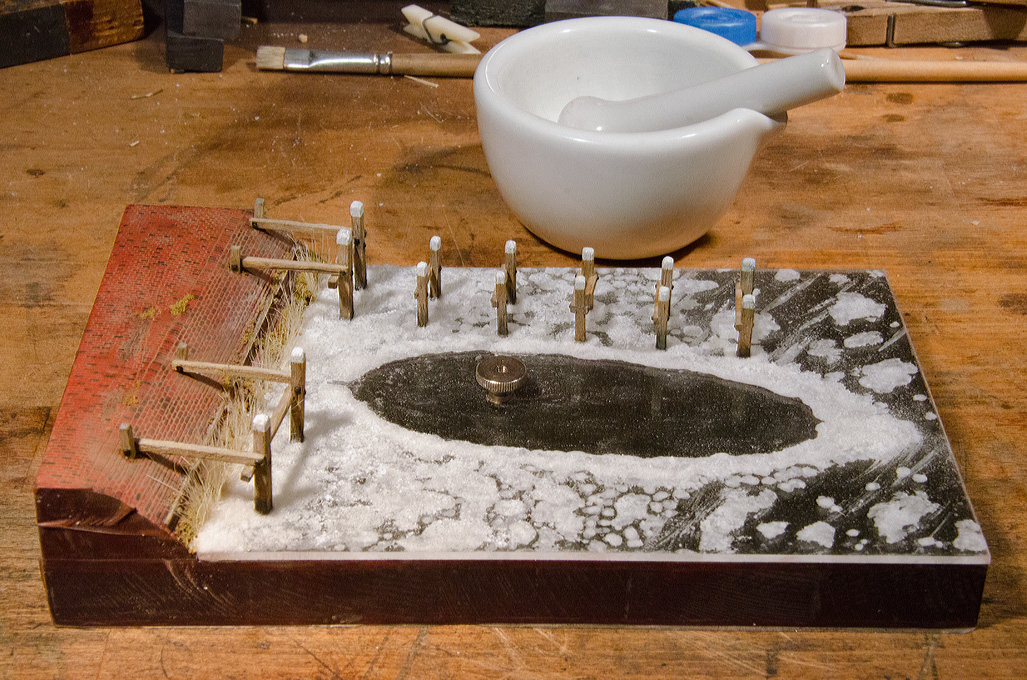
In spite of the high temperatures in our appartment, ice began to form in the harbour of Volendam. At the beginnig there were only a few floes, but the NE Wind pushed them together and piled them up in front of the dyke � pancake ice. The botter-crew tried to keep the ice away from the boat � ice is not so friendly to a wooden hull, but in vain. The low ridge of loose ice around the boat bears witness to the efforts of the crew with crowbar and broadaxe. In the meantime a continuous ice cover has developed, streaked with a few snowflakes by the wind.


Image

As noted before, the basis of the ice surface is a piece of Plexiglas, which was stiffled with acrylic gel using a bristle brush. The next step was a bit of an experiment: in the past I created drifting foam and breaking waves using a sort of icing (no pun intended) made from sugar and wallpaper glue. As we now have acrylic gel and varnish, I tried out a mixture of sugar with these. The sugar in France is rather coarse, so I ground it down in a mortar. The sugar partially dissolves in the varnish and then recrystallises. The viscosity can be adjusted by mixing sugar and varnish in different ratios. It dries up milky-white. Using this mixture, the ice floes were modelled in several steps. Also, the piles were set into the �ice� with this mixture.


Image

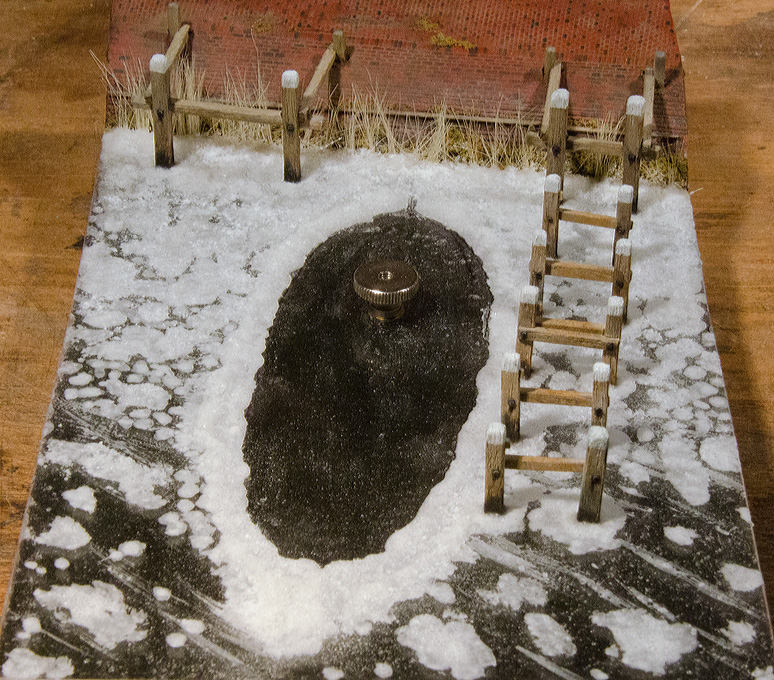
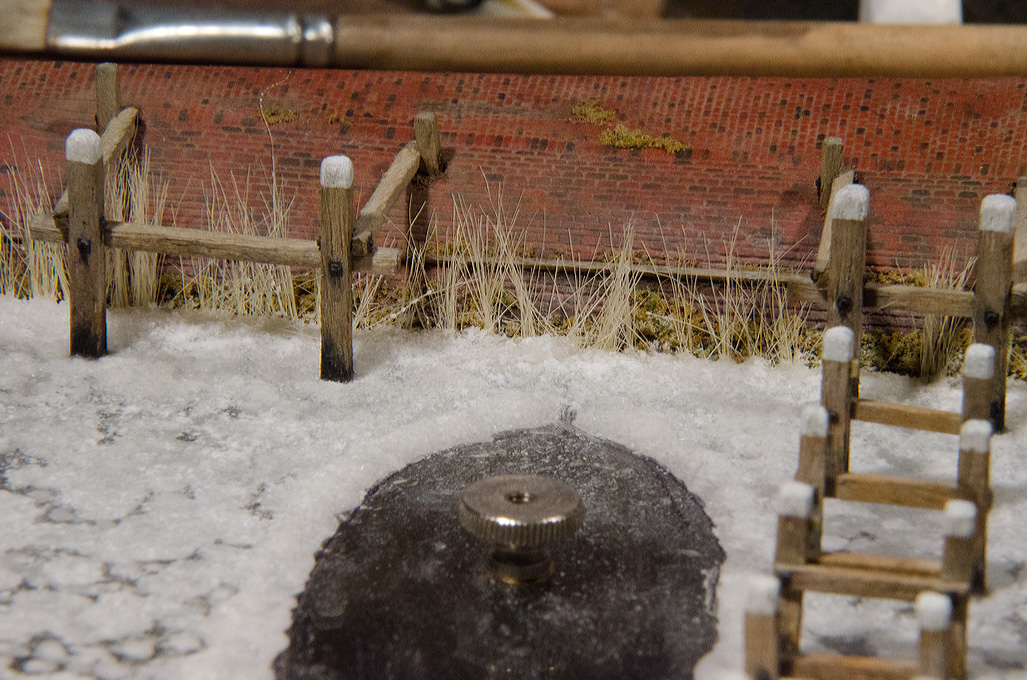
Actually, several years passed by since the pictures in the previous post was taken. In the meantime the piles and other woodwork further weathered and became gray. Well, pastels and white watercolour accelerated this process. Vegetation has began to encroach on the dyke. Reeds root at its toe and grass began to cover the brickwork. The severe frost, however, has made the grass to wilt.

Image

wefalck
Eberhard

Former chairman Arbeitskreis historischer Schiffbau e.V. (German Association for Shipbuilding History)

--------------------------------------------------------------------------------------------------------------------------------------------------------------------------------------------

Image Image Image Image
User avatar
LE BOSCO
Posts: 2261
Joined: Thu Aug 27, 2009 11:05 am
Location: Paris France

Re: Zuiderzee-Botter

Post by LE BOSCO »

Hello Welfack

blomk this is the sound that made ??my jaw when she fell to the ground :woo_hoo: it is simply sublime,it'll be a masterpiece
and by the way, a great mastery of your lathe :thumbs_up_1:
comgrats
Nicolas
User avatar
wefalck
Posts: 2079
Joined: Wed Sep 28, 2011 12:04 pm
Location: Paris
Contact:

Re: Zuiderzee-Botter

Post by wefalck »

French exaggeration ... :big_grin: ... well, Thanks ! We all try to give our best, at least trying that is.

********

The next step will be building the (Plexi)glass case, but this requires some preparations and it is very hot here in Paris ...

wefalck

Eberhard

Former chairman Arbeitskreis historischer Schiffbau e.V. (German Association for Shipbuilding History)

--------------------------------------------------------------------------------------------------------------------------------------------------------------------------------------------

Image Image Image Image
User avatar
LE BOSCO
Posts: 2261
Joined: Thu Aug 27, 2009 11:05 am
Location: Paris France

Re: Zuiderzee-Botter

Post by LE BOSCO »

wefalck wrote:French exaggeration ... :big_grin: ...
Welfack

I am really sincere :-D the ice is not melting in Paris ? :wink:
cheers
nicolas
User avatar
wefalck
Posts: 2079
Joined: Wed Sep 28, 2011 12:04 pm
Location: Paris
Contact:

Re: Zuiderzee-Botter

Post by wefalck »

For the moment, I keep the model in the freezer, just in case :big_grin:

wefalck
Eberhard

Former chairman Arbeitskreis historischer Schiffbau e.V. (German Association for Shipbuilding History)

--------------------------------------------------------------------------------------------------------------------------------------------------------------------------------------------

Image Image Image Image
User avatar
LE BOSCO
Posts: 2261
Joined: Thu Aug 27, 2009 11:05 am
Location: Paris France

Re: Zuiderzee-Botter

Post by LE BOSCO »

I had the same problem with this one :big_grin:

Image

Image

cheers
nicolas
User avatar
wefalck
Posts: 2079
Joined: Wed Sep 28, 2011 12:04 pm
Location: Paris
Contact:

Re: Zuiderzee-Botter

Post by wefalck »

Makes you feel immediately cool :cool_1: ...

wefalck
Eberhard

Former chairman Arbeitskreis historischer Schiffbau e.V. (German Association for Shipbuilding History)

--------------------------------------------------------------------------------------------------------------------------------------------------------------------------------------------

Image Image Image Image
User avatar
dafi
Posts: 996
Joined: Mon Mar 12, 2012 11:13 am
Location: Ludwigsburg/Germany
Contact:

Re: Zuiderzee-Botter

Post by dafi »

Oh thats really cool!

Both of you :-)

XXXDAn
To Victory and beyond ...
viewtopic.php?f=59&t=99050&start=60

See also our german forum for the age of Sail and History:
http://www.segelschiffsmodellbau.com
User avatar
wefalck
Posts: 2079
Joined: Wed Sep 28, 2011 12:04 pm
Location: Paris
Contact:

Re: Zuiderzee-Botter

Post by wefalck »

As I noted before, the model is now at a stage, where it needs protection from the domestic elements. The first step was the base-board with the scenic surroundings. The second step is a glass case.
In spite of the hot weather I started this � it turned out that the study/workshop is actually the most pleasant room in the appartment, but I had to restrict the lighting to a 100 W lamp ...

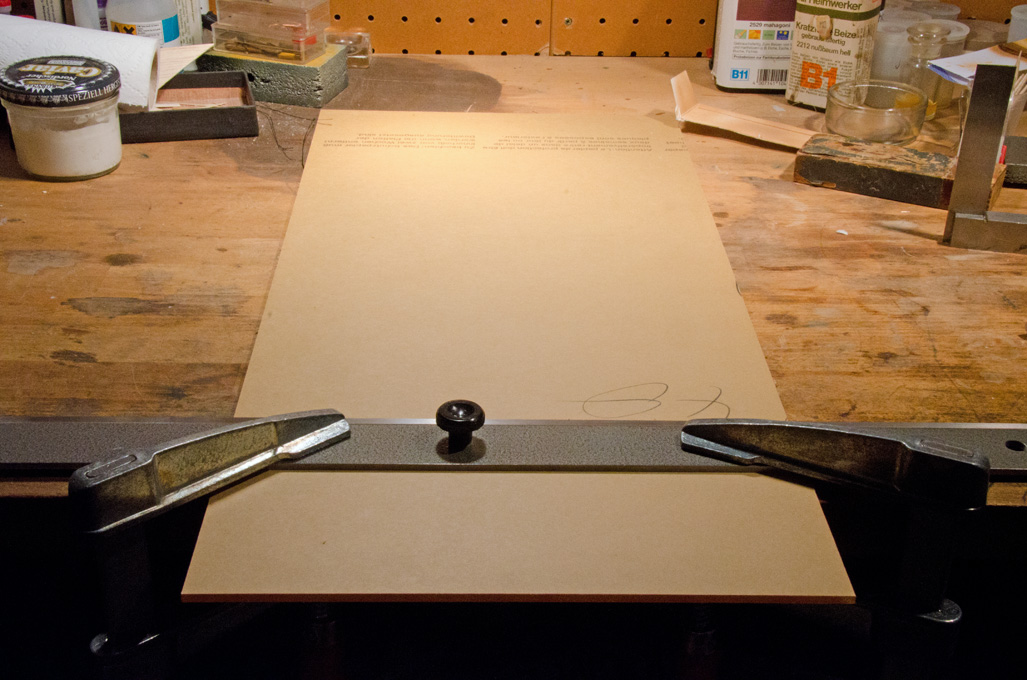
Image
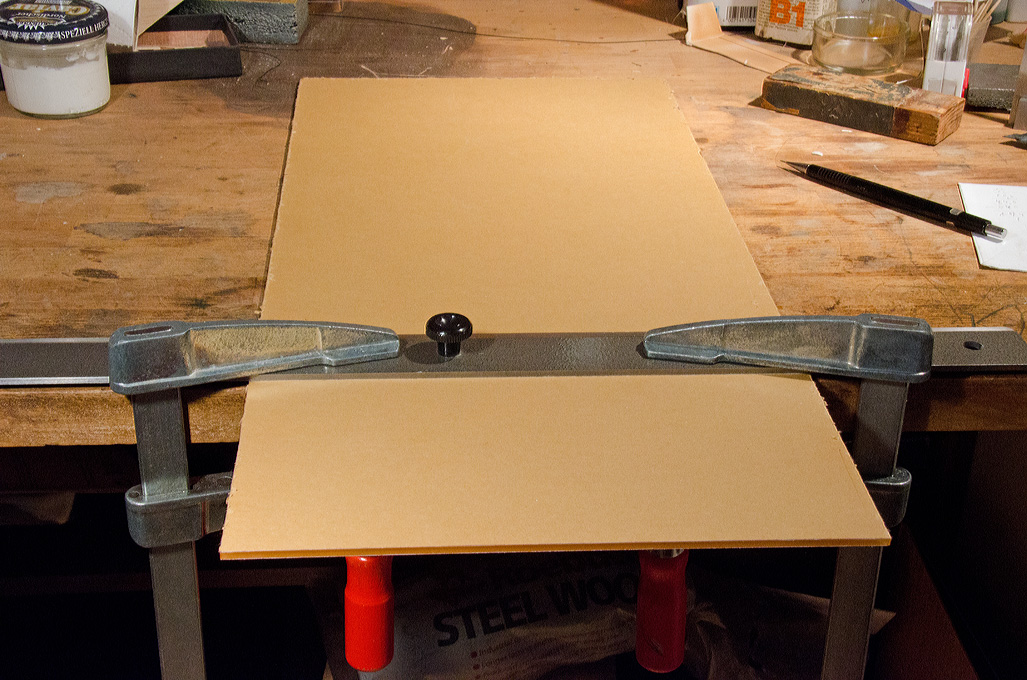
Scoring of the Plexiglass before breaking (it is covered in the brown protective paper).

The construction of the glass case is inspired by the design MCCAFFERY describes in his book �Ships in Miniature� of 1988. In the past I used silicate-glass for the purpose. Silicate-glass has the advantage, that it doesn�t scratch. From another project, however, I had a pile of 3 mm thick Plexiglas-sheets since 1980 in my materials hoard. My father then worked for a subsidiary of R�hm GmbH and we got the stuff quite cheaply. From that time I also have a copy of the very useful manual on how to work with Plexiglas.

Image
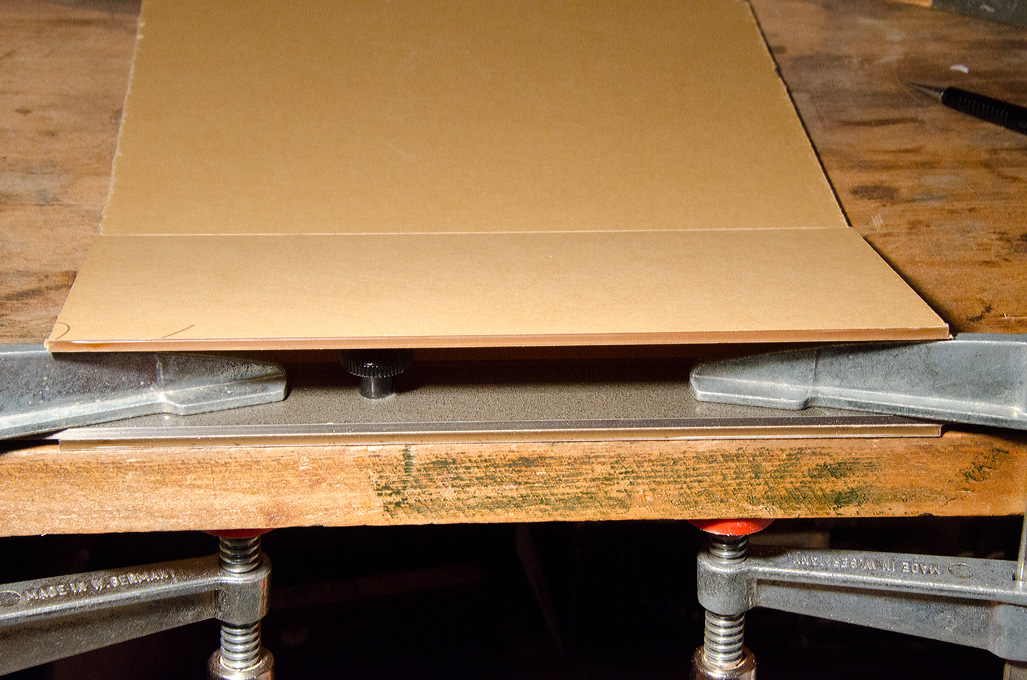
Fixing the sheet at the edge of the table

Lucky for me, the panels for the case could be cut from those sheets with just a few cuts. In a domestic context, when you don�t have a big table saw, sheets of that thickness are best broken, rather than sawed. When marked the sheets are scored with a �cutter� knife. Per milimeter of thickness it needs one go with the knife. It is important to score right to the edge of the sheet, otherwise corners may break out. The sheet then is clamped down with the scored line exactly at the table edge. Then, with a decided jerk, the plate is broken off. A clean, straight edge that needs little or no sanding before glueing is the result.

Image
The cut edge

To be continued soon ...

wefalck
Eberhard

Former chairman Arbeitskreis historischer Schiffbau e.V. (German Association for Shipbuilding History)

--------------------------------------------------------------------------------------------------------------------------------------------------------------------------------------------

Image Image Image Image
User avatar
Christian M.
Posts: 967
Joined: Sat Oct 06, 2012 4:34 pm
Location: Cologne / Germany, sometimes Poznan/ Poland and Chessington/ UK

Re: Zuiderzee-Botter

Post by Christian M. »

LE BOSCO wrote:I had the same problem with this one :big_grin:

Image

cheers
nicolas
Makes me more thinking "what the hack makes a French Frigate so far in the north or south in arctic conditions?" :cool_2:

However,
about the Botter and the display it is pure artist work what is shown here and stunning is an understatement of what I thought when seeing this here. :thumbs_up_1: :thumbs_up_1: :thumbs_up_1:
The advantage of wisdom is that you can play dumb; conversely, it is more difficult.
User avatar
Timmy C
Posts: 12437
Joined: Mon Jan 10, 2005 6:00 pm
Location: Ottawa, Canada

Re: Zuiderzee-Botter

Post by Timmy C »

Christian M. wrote:
Makes me more thinking "what the hack makes a French Frigate so far in the north or south in arctic conditions?" :cool_2:
Supporting secret French submarine operations in Canada's Arctic waters... ;)

Beautiful ice work, wefalck! I eventually do want to do an ice scene, so yours and Carl M's recent works are really inspirational.
De quoi s'agit-il?
Post Reply

Return to “Works in Progress”