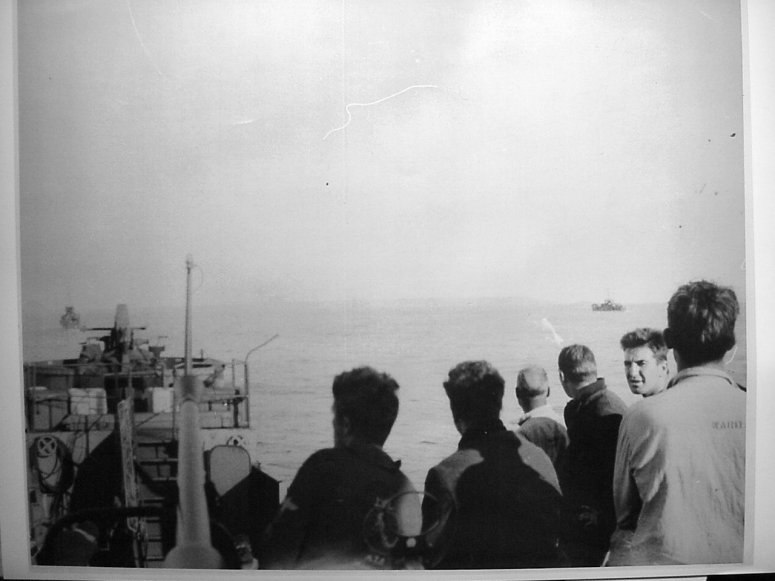
No, I didn't mislabel this thread; I'm not going to 'deep six' the Lindberg LCI. If you've visited my previous thread about building the LCI-30, you might have seen that one of the visitors brought up the suggestion of a waterlined LCI. I decided I'd give it a shot.
As a recap from my previous thread, the Lindberg LCI has a number of serious flaws that need to be fixed if one wishes to have a fairly representative example of an LCI. Those flaws make waterlining this kit a bit more challenging.
My inspiration for this kit is the following photo of the LCI(L)-361 along with LCI-30 unloading troops during the invasion of New Guinea.
The hull requires a lot of work to make it accurate, but I don�t want to rehash what I�ve previously written about in my LCI-30 thread. I�m going to try to keep the description of the hull modifications to a minimum and refer you to my previous thread on the LCI-30 for additional detail.
As with the LCI-30 project, the bow of the Lindberg kit is not correct, so I began by removing the bow. Before proceeding, I added gunwale detail with styrene strips:
- When this kit was released shortly after the earth cooled, it was motorized. The residual guides for the motor bulkhead provide a convenient place for a strengthening bulkhead of .060 inch styrene
John