Russ2146 seems to have beaten me to the punch with Roy Allen's question in another message thread.
To add to Russ' list of Barnegat class AVP variations................
roy allen wrote:Hi Carl
have just spent a very pleasant two hours going through the "calling all" of this class of ship. you certainly know your stuff i must say, if i ever get my hands on one i'll know who to call.
How many variations can you work from the one kit
Roy
Roy and Russ,
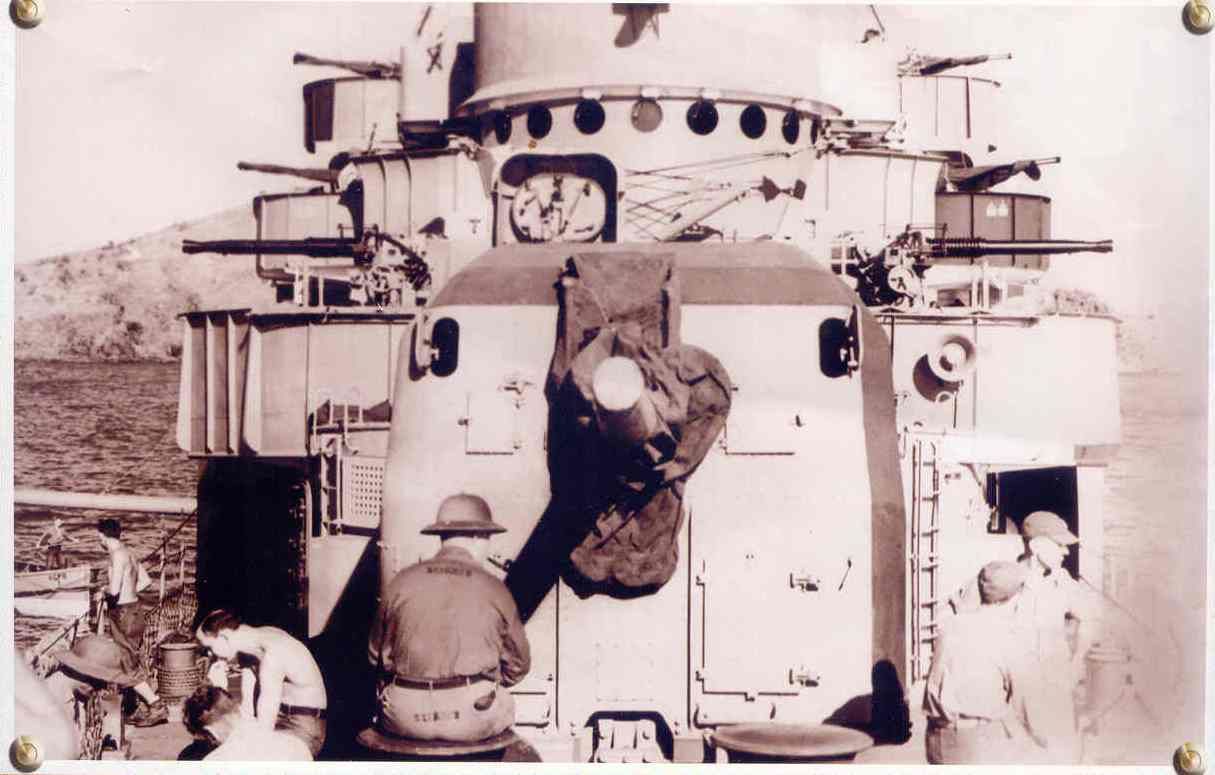
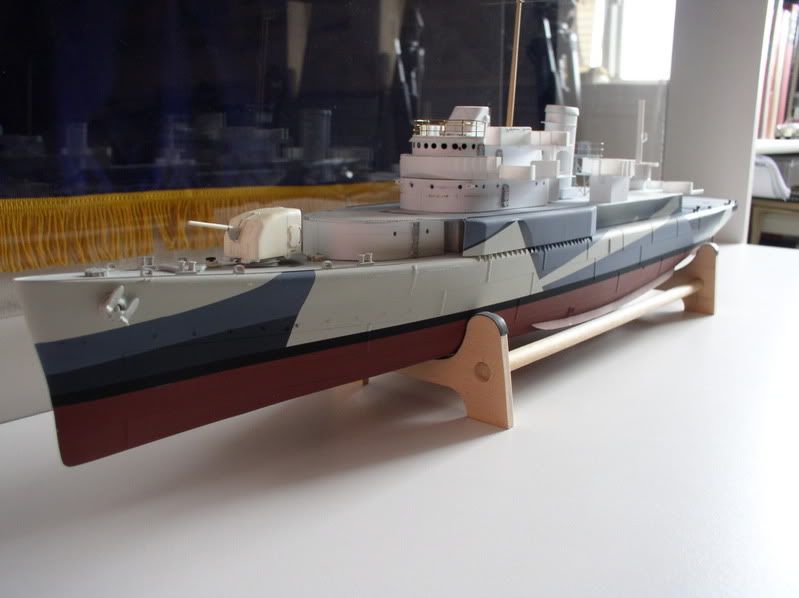
I'm sure that any variant of the Barnegat class of small seaplane tenders can be represented with the ISW USS Mackinac AVP-13. The basic hull and decks are the same and other areas of the kit can be converted by scratch building the modifications and use of after market parts. There are also differences in the number of portholes around the bridge varying from 7 to 9 to 11.
To make a list of the numerous variants of the Barnegat class AVP, I'll try by starting with this list:
There were a few "flights" of these Barnegat class AVPs.
AVP-10 thru 13 and 21-22 are pretty much the same at the time of their launchings/commissionings just before WWII. And each underwent modifications early in the war. Modifications being the boat crane, armament, addition of torpedo splinter shields p&s, radar and mast changes, and the elimination of the need to hoist planes aboard on the fantail.
AVP-23 USS Absecon was a one-of-a-kind variant. It was designed and built to be a platform to train seaplane pilots for cruiser and battleship catapult launching and retrieval. The Absecon had a cruiser size catapult and two cruiser cranes. Checkout Richard Sliwka's model in the Gallery, here on MWS.
AVP-24, 25, and 26 were another flight of the AVP and the differences being mostly in armament and small boat arrangements along with a modified superstructure around the bridge.
AVP-27 & 28 became AGP-7 and AGP-6, respectively, and were PT Boat Tenders and came with extension of the aft superstructure for additional repair shops for torpedoes and engines as well as different configuration of armament and bridge area. AVP-56 and AVP-57 became AGP-8 and AGP-9. AVPs 6,8,&9 were very similar to each other but AGP-7 USS Mobjack had noticable differences from the other three. USS Mobjack became C&GSS Pioneer, a geological survey ship.
AVP-29 thru 32 were built all of the same configuration. AVP-30 later becoming a survey ship.
AVP-33 and 34 were built as another configuration. (USS Bering Strait AVP-34 being one of them.)
AVP-35 thru 41 were another flight of AVPs. Radar, weapons arrangement, small boat arrangement, and fire control being a few of the differences. (My father's ship, USS Duxbury Bay AVP-38 being one of these.)
AVP-42 thru 47 were cancelled.
AVP-48 thru 55 were yet another flight of AVPs. AVP-55 USS Valcour later becoming a flagship for COMIDEASTFOR in the 1950's and 1960's along with USS Duxbury Bay AVP-38 and USS Greenwich Bay AVP-41. These three later received superstructure extension towards the stern and tripod masts and additional antennas for advanced communications and were painted white. USS Valcour was later designated as AGF-1.
In 1948 and 1949 18 of the USN AVPs were loaned to the USCG and were designated WAVPs and later WHECs. These 18 ships came from the various flights, listed above, and were modified, still, for USCG service. Some armaments were removed or changed, a weather balloon hangar was added, some had their cranes removed and replaced by an aft mast or antenna or radar. Also a towing rail was added around the perimeter of the fantial. Later on these WHECs were modified again with changes to their aft superstructures and removal of 40mm gun tubs and foundations.
In addition to the above listed variants, several of these AVPs went to foreign navy or maritime service in contries such as Norway, Greece, Thialand, South and North Vietnam, and the Philipine Navy. The USS Barnegat, herself, became a Greek cruise ship.