drilling port holes in 1 350,How?or alternative
Moderator: JIM BAUMANN
-
FEB
- Posts: 8
- Joined: Fri Oct 21, 2011 3:58 pm
- Location: Columbus,Ohio
drilling port holes in 1 350,How?or alternative
I have tried to drill out port holes with a small pin vice and different size bits,the outcome is not so good,some are off center,out of line with each other,no 2 are the same,etc.what is the best method to make them nice and clean or is there an alternative to drilling?
-
robertmelvin

- Posts: 2025
- Joined: Thu Aug 19, 2010 11:39 am
- Location: Harlan, Kentucky, U.S.A.
Re: drilling port holes in 1 350,How?or alternative
Feb, it isn't perfect and takes a degree of practice, but its the only method I've found. I've been afraid to try a Dremel or similar tool for fear of damge. A hand held pin vice seems to be the best way. However, you might try using a scribing tool or even a small nail or brad to mark a small guide point for the drill.
Bob
Bob
Give me a fast ship, for I would like to get out of harm's way!
-
EJFoeth
- Posts: 2924
- Joined: Wed Jan 21, 2009 1:51 pm
Re: drilling port holes in 1 350,How?or alternative
Yes, pricking in the first point is necessary. You can use some tape (I use the Tamiya tape) as a guide so they are all on one line. Plus, you can make marks on the tape. I start with a small drill (0.5mm), use a larger drill (final size) and then a reamer, all with the handheld pinvice.
-
FEB
- Posts: 8
- Joined: Fri Oct 21, 2011 3:58 pm
- Location: Columbus,Ohio
Re: drilling port holes in 1 350,How?or alternative
this advice may be my fix,I try to drill the size all at once by useing the the porthole itsself as a guide and it sometimes will get into the outer edge and become out of round and certainly out of alignment with the others and drilled crooked.
-
BillDickson

- Posts: 58
- Joined: Tue Dec 27, 2011 10:19 am
- Location: Alloa, Scotland
Re: drilling port holes in 1 350,How?or alternative
I have been wresteling with this issue.
The best way I have found to do this is to use a 1mm HSS drill bit, insert it in to a pin vice 3 jaw chuck and put this assembly into my variable speed drill, I mean a drill that is variable from 0-whatever speed your drill goes to. Many drills say they are vairiable speed but not from zero.
I put the drill into the middle of the port hole and start drilling very slowly at first gradually getting faster. I have found that doing it this way the drill bit bites into the plastic without slipping, the holes are the correct size and very clean and in a straight line as marked on the hull.
I have just done Academy's Graf Spee this way and am very pleased with the result. It is also a very fast way to drill out port holes
If you are getting slip put masking tape over the holes and push it into the depressions with some thing the same size as the port holes. eg the reverse end of the drill bit.
Bill
The best way I have found to do this is to use a 1mm HSS drill bit, insert it in to a pin vice 3 jaw chuck and put this assembly into my variable speed drill, I mean a drill that is variable from 0-whatever speed your drill goes to. Many drills say they are vairiable speed but not from zero.
I put the drill into the middle of the port hole and start drilling very slowly at first gradually getting faster. I have found that doing it this way the drill bit bites into the plastic without slipping, the holes are the correct size and very clean and in a straight line as marked on the hull.
I have just done Academy's Graf Spee this way and am very pleased with the result. It is also a very fast way to drill out port holes
If you are getting slip put masking tape over the holes and push it into the depressions with some thing the same size as the port holes. eg the reverse end of the drill bit.
Bill
-
robertmelvin
- Posts: 2025
- Joined: Thu Aug 19, 2010 11:39 am
- Location: Harlan, Kentucky, U.S.A.
Re: drilling port holes in 1 350,How?or alternative
I think you will also find that if you take a scribing tool, or other sharp implement and make a small guide hole as close to precisely in the middle of the porthole your drill bit will be less inclinded to wander across the plastic.
Bob
Bob
Give me a fast ship, for I would like to get out of harm's way!
-
JIM BAUMANN

- Posts: 5689
- Joined: Mon Jan 10, 2005 5:30 pm
- Location: Nr Southampton England
Re: drilling port holes in 1 350,How?or alternative
gentlemen!
EJfoeth hit the nail on the head-if you can excuse the pun...
If a 'virgin' hull..
apply tape. mark on tape intervals and position of port holes and indent the resin or plastic with a pushpin first
this will centre the drill-and a pushpin is easy to use, sharpen( on 800 grit wet-n-dry) and obtain
The apply drill in handheld pinvice--
pushpin--comes in pack of 50
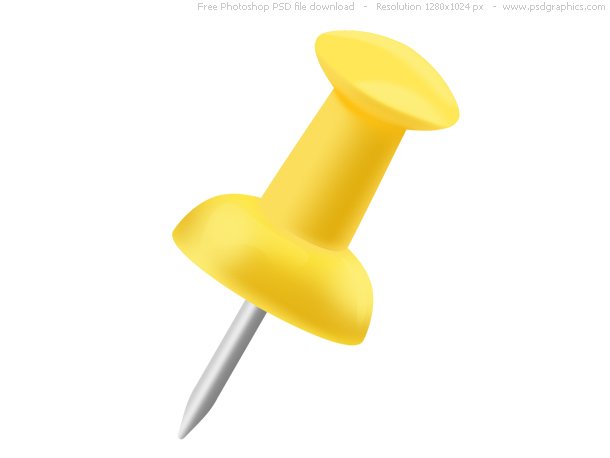
I doing a plastic kit hull with circular scribed holes-- rpeat as above in the centre of the hole
Good luck
Jim Baumann
EJfoeth hit the nail on the head-if you can excuse the pun...
If a 'virgin' hull..
apply tape. mark on tape intervals and position of port holes and indent the resin or plastic with a pushpin first
this will centre the drill-and a pushpin is easy to use, sharpen( on 800 grit wet-n-dry) and obtain
The apply drill in handheld pinvice--
pushpin--comes in pack of 50
I doing a plastic kit hull with circular scribed holes-- rpeat as above in the centre of the hole
Good luck
Jim Baumann
....I buy them at three times the speed I build 'em.... will I live long enough to empty my stash...?
http://www.modelshipgallery.com/gallery ... index.html
IPMS UK SIG (special interest group) www.finewaterline.com
http://www.modelshipgallery.com/gallery ... index.html
IPMS UK SIG (special interest group) www.finewaterline.com
-
robertmelvin
- Posts: 2025
- Joined: Thu Aug 19, 2010 11:39 am
- Location: Harlan, Kentucky, U.S.A.
Re: drilling port holes in 1 350,How?or alternative
Capitol idea! One of those simple things I wish I'd thought of. I'll be picking up a pack.
Bob
Bob
Give me a fast ship, for I would like to get out of harm's way!
-
Pagodaphile
- Posts: 546
- Joined: Tue Jan 19, 2010 9:06 am
Re: drilling port holes in 1 350,How?or alternative
And while we are on the topic.....any tricks out there to avoid snapping off those tiny bits ? 
"Why spoil the beauty of a thing with legalities"
Teddy Roosevelt .."The Wind & The Lion"
Teddy Roosevelt .."The Wind & The Lion"
-
EJFoeth
- Posts: 2924
- Joined: Wed Jan 21, 2009 1:51 pm
Re: drilling port holes in 1 350,How?or alternative
Stop hitting yourself in the eye, you'll go cross-eyed.
-
G.A.G.

- Posts: 89
- Joined: Wed Sep 07, 2005 3:08 pm
- Location: Thessaloniki, Greece
Re: drilling port holes in 1 350,How?or alternative
The techniques for aligning holes in a straight line have been covered by the fellow modelers above.
My two cents worth are on how to space the holes so that they are equidistant from each other. The technique is useful when portholes holes are totally missing on the model, or when handrails/footrails need to be added.
1)Tape an old saw blade from a hand saw on the bulkhead or hull, so that its teeth protrude from the tape.
2)Mark each hole with a sharp needle/pushpin every few "teeth" (always the same number of teeth). Let the needle hug the bottom of the "bay" formed by two adjacent teeth.
3)Remove the tape and saw blade and drill the holes using progressively larger drill bits, as JFoeth described above.
The above procedure maximizes the chances that the holes will be on a straight line and also equidistant from each other.
For tight spaces you need to cut small pieces of saw blade--I always keep some lying around. For bulkheads with curvature you need to prebend the blades, as the tape will not be able to hold them in place. Always be extra careful and wear protective glasses when bending the steel saw blades as they are very springy.
My two cents worth are on how to space the holes so that they are equidistant from each other. The technique is useful when portholes holes are totally missing on the model, or when handrails/footrails need to be added.
1)Tape an old saw blade from a hand saw on the bulkhead or hull, so that its teeth protrude from the tape.
2)Mark each hole with a sharp needle/pushpin every few "teeth" (always the same number of teeth). Let the needle hug the bottom of the "bay" formed by two adjacent teeth.
3)Remove the tape and saw blade and drill the holes using progressively larger drill bits, as JFoeth described above.
The above procedure maximizes the chances that the holes will be on a straight line and also equidistant from each other.
For tight spaces you need to cut small pieces of saw blade--I always keep some lying around. For bulkheads with curvature you need to prebend the blades, as the tape will not be able to hold them in place. Always be extra careful and wear protective glasses when bending the steel saw blades as they are very springy.
- Here is the blade of the hand saw, taped on a piece of plastic for testing--actually a piece of the bottom of the hull of Varyag which was cut off for waterlining.
- Here is a closer look at the teeth of the saw blade, protruding from the tape.
- And here is a closer look at some test holes drilled. Pieces of plastic rod has been placed in the holes, to support a footrail, which was what I wanted to test for at the time.
George A. Georgopoulos
-
FEB
- Posts: 8
- Joined: Fri Oct 21, 2011 3:58 pm
- Location: Columbus,Ohio
Re: drilling port holes in 1 350,How?or alternative
thanks for all the advice,I have far better results now.
-
MatthewB
- Posts: 2269
- Joined: Wed Aug 05, 2015 9:25 am
- Location: Los Angeles and Houston
Re: drilling port holes in 1 350,How?or alternative
Several very good tips.
One thing I had completely overlooked was to drill out existing portholes, and then tape a piece of Styrene over them, and then drill out that piece of styrene to get a temporary Template.
And the saw as a guide.... That will really help.
MB
One thing I had completely overlooked was to drill out existing portholes, and then tape a piece of Styrene over them, and then drill out that piece of styrene to get a temporary Template.
And the saw as a guide.... That will really help.
MB
OMG LOOK! A signature
Working on:
1/700 (All Fall 1942):
HIJMS Nagara
HIJMS Aoba & Kinugasa
USS San Francisco
USS Helena
USS St. Louis
USS Laffey & Farenholt
HIJMS Sub-Chasers No. 4 - 7
HIJMS Sub-Chasers No. 13 - 16
Working on:
1/700 (All Fall 1942):
HIJMS Nagara
HIJMS Aoba & Kinugasa
USS San Francisco
USS Helena
USS St. Louis
USS Laffey & Farenholt
HIJMS Sub-Chasers No. 4 - 7
HIJMS Sub-Chasers No. 13 - 16
-
John W.

- Posts: 518
- Joined: Tue Mar 27, 2007 12:34 pm
- Location: Smithfield, Virginia
Re: drilling port holes in 1 350,How?or alternative
Sure! I have been down a similar path and have never been satisfied with the results of drilling. A couple of things to consider: airports / portholes are flush to the hull shell plating. When the hull flares a great deal, the porthole looks oval from the side when properly done. Secondly, and most importantly from my perspective, the inside of the porthole is essentially flush or very nearly so with the shell plating in the cases I've seen. (Exceptions may abound, and feel free to point them out.) That is to say that the glass or metal blocking plate (deadlight) which swings in in place of the glass are inset no more than a (scale) inch, if that.FEB wrote:I have tried to drill out port holes with a small pin vice and different size bits,the outcome is not so good,some are off center,out of line with each other,no 2 are the same,etc.what is the best method to make them nice and clean or is there an alternative to drilling?
The method I use is to smooth the side of the hull filling in any portholes cast in the resin or plastic. I then mark the location of the center of the portholes on the hull. Then I use the appropriate size and shape of P/E portholes. I use acrylic gel medium or Gator glue, or something similar, sparingly to hold the porthole in place and in the proper orientation if there's an "eyebrow". Then paint over the whole shooting match with the final colors.
If you choose to show "glass" in the porthole, a carefully placed gloss dark gray drop of paint at the end does the job. On the other hand, if you are modeling a warship at GQ, the blanking plates would be in place and they would be the same color as the surrounding hull color(s). This, of course, saves the need for the extra steps.
Heres a picture of a USN WWII-era porthole, viewed from inside the hull, showing the various moving parts. Other nations may use other variations, but suffice it to say that during combat, the ship wanted to keep as much glass as possible out of the line of fire while maintaining splinter- and watertight integrity.
- PortHole.jpg (26.93 KiB) Viewed 8397 times
Personally, I like these results better than drilling holes. Not sure my heart could take trying to do this in a smaller scale than 1/350.
Two companies that make portholes as separate P/E sheets that I know of are Flyhawk and Northstar. There may be others.
Some people make you happy, then they leave.
Others make you happy when they leave. (apologies to Oscar Wilde if he ever said anything similar, of which there is some doubt . . .)
Others make you happy when they leave. (apologies to Oscar Wilde if he ever said anything similar, of which there is some doubt . . .)
-
pascalemod

- Posts: 2013
- Joined: Sat Jul 30, 2016 5:33 pm
- Location: Stockholm, Sweden
Re: drilling port holes in 1 350,How?or alternative
Interesting advice. I have a 1/350 subject at hand, virgin hull and PE portholes with eyebrows. What would be the way you would tackle the installation? I dont have a choice of not doing (im making Duke of York out of Prince of Wales hull in 1/350, so no way at all to just NOT do it).JIM BAUMANN wrote:gentlemen!
EJfoeth hit the nail on the head-if you can excuse the pun...
If a 'virgin' hull..
apply tape. mark on tape intervals and position of port holes and indent the resin or plastic with a pushpin first
this will centre the drill-and a pushpin is easy to use, sharpen( on 800 grit wet-n-dry) and obtain
The apply drill in handheld pinvice--
pushpin--comes in pack of 50
I doing a plastic kit hull with circular scribed holes-- rpeat as above in the centre of the hole
Good luck
Jim Baumann
So in short, you install PE porthole without drilling and then add gloss paint as last step to make it appear as if glass is there. You dont think predrilling first, adding the PE porthole second, and then FROM INSIDE of the ship adding gloss acryllic like Kristal Klear or whatever is the name is the way to go? I mean it is also a PITA (so thats a matchJohn W. wrote:Sure! I have been down a similar path and have never been satisfied with the results of drilling. A couple of things to consider: airports / portholes are flush to the hull shell plating. When the hull flares a great deal, the porthole looks oval from the side when properly done. Secondly, and most importantly from my perspective, the inside of the porthole is essentially flush or very nearly so with the shell plating in the cases I've seen. (Exceptions may abound, and feel free to point them out.) That is to say that the glass or metal blocking plate (deadlight) which swings in in place of the glass are inset no more than a (scale) inch, if that.FEB wrote:I have tried to drill out port holes with a small pin vice and different size bits,the outcome is not so good,some are off center,out of line with each other,no 2 are the same,etc.what is the best method to make them nice and clean or is there an alternative to drilling?
The method I use is to smooth the side of the hull filling in any portholes cast in the resin or plastic. I then mark the location of the center of the portholes on the hull. Then I use the appropriate size and shape of P/E portholes. I use acrylic gel medium or Gator glue, or something similar, sparingly to hold the porthole in place and in the proper orientation if there's an "eyebrow". Then paint over the whole shooting match with the final colors.
If you choose to show "glass" in the porthole, a carefully placed gloss dark gray drop of paint at the end does the job. On the other hand, if you are modeling a warship at GQ, the blanking plates would be in place and they would be the same color as the surrounding hull color(s). This, of course, saves the need for the extra steps.
Heres a picture of a USN WWII-era porthole, viewed from inside the hull, showing the various moving parts. Other nations may use other variations, but suffice it to say that during combat, the ship wanted to keep as much glass as possible out of the line of fire while maintaining splinter- and watertight integrity.
Is this method a PITA? Why, yes, of course it is. This is modeling - it's not meant to be easy!
Personally, I like these results better than drilling holes. Not sure my heart could take trying to do this in a smaller scale than 1/350.
Two companies that make portholes as separate P/E sheets that I know of are Flyhawk and Northstar. There may be others.
 ) but that does give you a flush fitting you're after with added benefit of super black dark porthole color with some reflection. Almost good enough for the ship to have lights inside. Too much hassle?
- @Shipific on IG
my gallery
my gallery
-
John W.
- Posts: 518
- Joined: Tue Mar 27, 2007 12:34 pm
- Location: Smithfield, Virginia
Re: drilling port holes in 1 350,How?or alternative
Pascale -
Sorry to be rude and take so long to reply. Forgot to look back at my postings for a need to reply to this post.
My answer is that I have never liked the result of drilling holes into the hull because no matter how careful I try to be, they do not seem to be in line - especially on a hull with many compound curves. Second problem was I did not like my results trying to get the "glass" part of even depth. When a liquid is put into the hole as a drop of liquid, it never comes out flat, but is always closer to the surface on the outer edge of the hole than in the center of the hole when it dries. If one marks the kit hull where the porthole is currently drilled, then fills and sands the hull flat there, there is a flat hull surface to work from and no dip in the center.
I have used Acrylic floor polish (Future) as a bonding agent for the photoetch portholes I use. One advantage of this is that a small drop will hold the P/E, and it can be adjusted and/or rotated to position it and make sure the 'eyebrow' it properly located before the acrylic sets up. Once it sets, the porthole is well attached - never had one come loose without a lot of persuasion. At this point, I spray the hull color which further 'glues' the P/E. Fair warning, make sure the paint is applied only as thick as necessary for color or your work will get globbed up and become largely invisible. (ask me how I know.)
At this point, you now consider how the model is to be displayed. With the same patience you displayed positioning the portholes in the first place, a small drop of dark grey paint on the end of a piece of brass wire touched in the center of the porthole will produce an open porthole of flat glass when dry. Practice to minimize the amount of paint. On the other hand, if your model happens to be a warship engaged in combat, you need not do this last step as I have described above. With the ship set for General Quarters, the glass has been swung inside the hull and a metal plate swung into the hole in its place. In the USN, the exposed plate is colored the same as the external hull shell plating (including the camo color). Much easier.
To see what this looks like on a 1/350 model, look at the CASF Aircraft Carrier, CV-8 USS HORNET thread on pages 29 & 30 and you can see my HORNET in partial construction with this technique visible. This is a Lo-Res photo and so you can barely see the portholes on the hull as well as the painted-on hull plating. Full disclosure: old photo - I eventually smoothed the hull a bit and removed the P/E hull portholes because there was too much paint. I have redone all the portholes and it looks much more realistic, yet subtle. To my eye it looks right when compare to photos. Wish it hadn't taken a few tries to get it all done right. Now that I have the technique down, it takes much less time to do the two hundred or so P/H on the hull.
HTH, sorry for the delay in responding.
Sorry to be rude and take so long to reply. Forgot to look back at my postings for a need to reply to this post.
My answer is that I have never liked the result of drilling holes into the hull because no matter how careful I try to be, they do not seem to be in line - especially on a hull with many compound curves. Second problem was I did not like my results trying to get the "glass" part of even depth. When a liquid is put into the hole as a drop of liquid, it never comes out flat, but is always closer to the surface on the outer edge of the hole than in the center of the hole when it dries. If one marks the kit hull where the porthole is currently drilled, then fills and sands the hull flat there, there is a flat hull surface to work from and no dip in the center.
I have used Acrylic floor polish (Future) as a bonding agent for the photoetch portholes I use. One advantage of this is that a small drop will hold the P/E, and it can be adjusted and/or rotated to position it and make sure the 'eyebrow' it properly located before the acrylic sets up. Once it sets, the porthole is well attached - never had one come loose without a lot of persuasion. At this point, I spray the hull color which further 'glues' the P/E. Fair warning, make sure the paint is applied only as thick as necessary for color or your work will get globbed up and become largely invisible. (ask me how I know.)
At this point, you now consider how the model is to be displayed. With the same patience you displayed positioning the portholes in the first place, a small drop of dark grey paint on the end of a piece of brass wire touched in the center of the porthole will produce an open porthole of flat glass when dry. Practice to minimize the amount of paint. On the other hand, if your model happens to be a warship engaged in combat, you need not do this last step as I have described above. With the ship set for General Quarters, the glass has been swung inside the hull and a metal plate swung into the hole in its place. In the USN, the exposed plate is colored the same as the external hull shell plating (including the camo color). Much easier.
To see what this looks like on a 1/350 model, look at the CASF Aircraft Carrier, CV-8 USS HORNET thread on pages 29 & 30 and you can see my HORNET in partial construction with this technique visible. This is a Lo-Res photo and so you can barely see the portholes on the hull as well as the painted-on hull plating. Full disclosure: old photo - I eventually smoothed the hull a bit and removed the P/E hull portholes because there was too much paint. I have redone all the portholes and it looks much more realistic, yet subtle. To my eye it looks right when compare to photos. Wish it hadn't taken a few tries to get it all done right. Now that I have the technique down, it takes much less time to do the two hundred or so P/H on the hull.
HTH, sorry for the delay in responding.
Some people make you happy, then they leave.
Others make you happy when they leave. (apologies to Oscar Wilde if he ever said anything similar, of which there is some doubt . . .)
Others make you happy when they leave. (apologies to Oscar Wilde if he ever said anything similar, of which there is some doubt . . .)
-
drasticplastic
- Posts: 1439
- Joined: Sun Aug 20, 2017 9:46 am
- Location: Montreal, Canada
Re: drilling port holes in 1 350,How?or alternative
Place the bit quite far back in the pin vice. Only leave a few millimeters exposed. There will be less bit to bend and stress, and finally break!Pagodaphile wrote:And while we are on the topic.....any tricks out there to avoid snapping off those tiny bits ?
-
Vladi

- Posts: 810
- Joined: Mon Feb 21, 2011 6:38 am
- Location: Czech Republic
- Contact:
Re: drilling port holes in 1 350,How?or alternative
Hi guys,
I have been drilling portholes in the past until I reached the same conclusion as John W. - they should NOT be drilled to appear realistic. If you don't want to use PE portholes and those on the kit are depicted in the correct places you may try to use small pieces punched from a plastic sheet as I've just shown in my WIP Astoria thread viewtopic.php?f=59&t=314508&p=929819#p929819. FWIW
I have been drilling portholes in the past until I reached the same conclusion as John W. - they should NOT be drilled to appear realistic. If you don't want to use PE portholes and those on the kit are depicted in the correct places you may try to use small pieces punched from a plastic sheet as I've just shown in my WIP Astoria thread viewtopic.php?f=59&t=314508&p=929819#p929819. FWIW
Battle of Savo Island Collection (all 1/700)
Recently completed: HMAS Australia | USS Patterson DD-392
At works: USS Astoria CA-34
Prep stage: USS Vincennes CA-44 | Yubari | Kako
Recently completed: HMAS Australia | USS Patterson DD-392
At works: USS Astoria CA-34
Prep stage: USS Vincennes CA-44 | Yubari | Kako