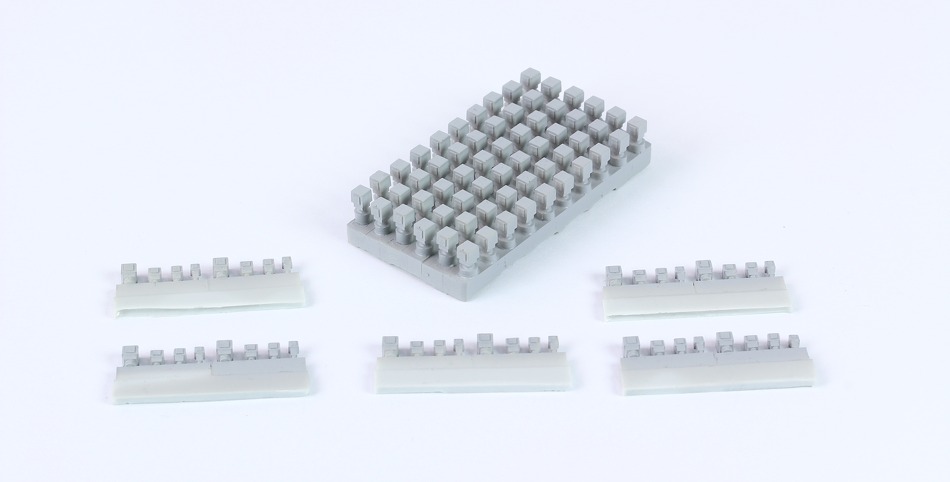
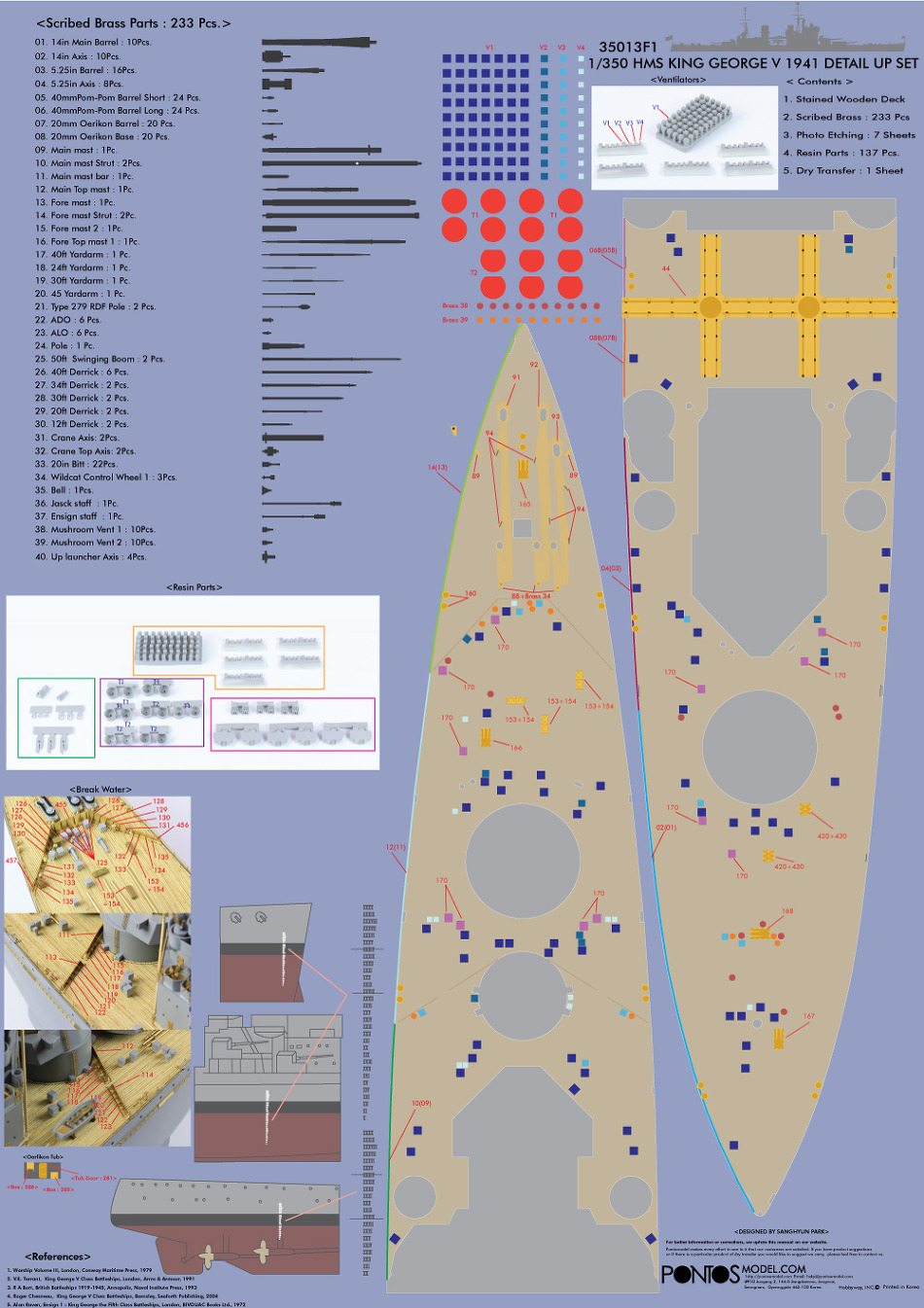
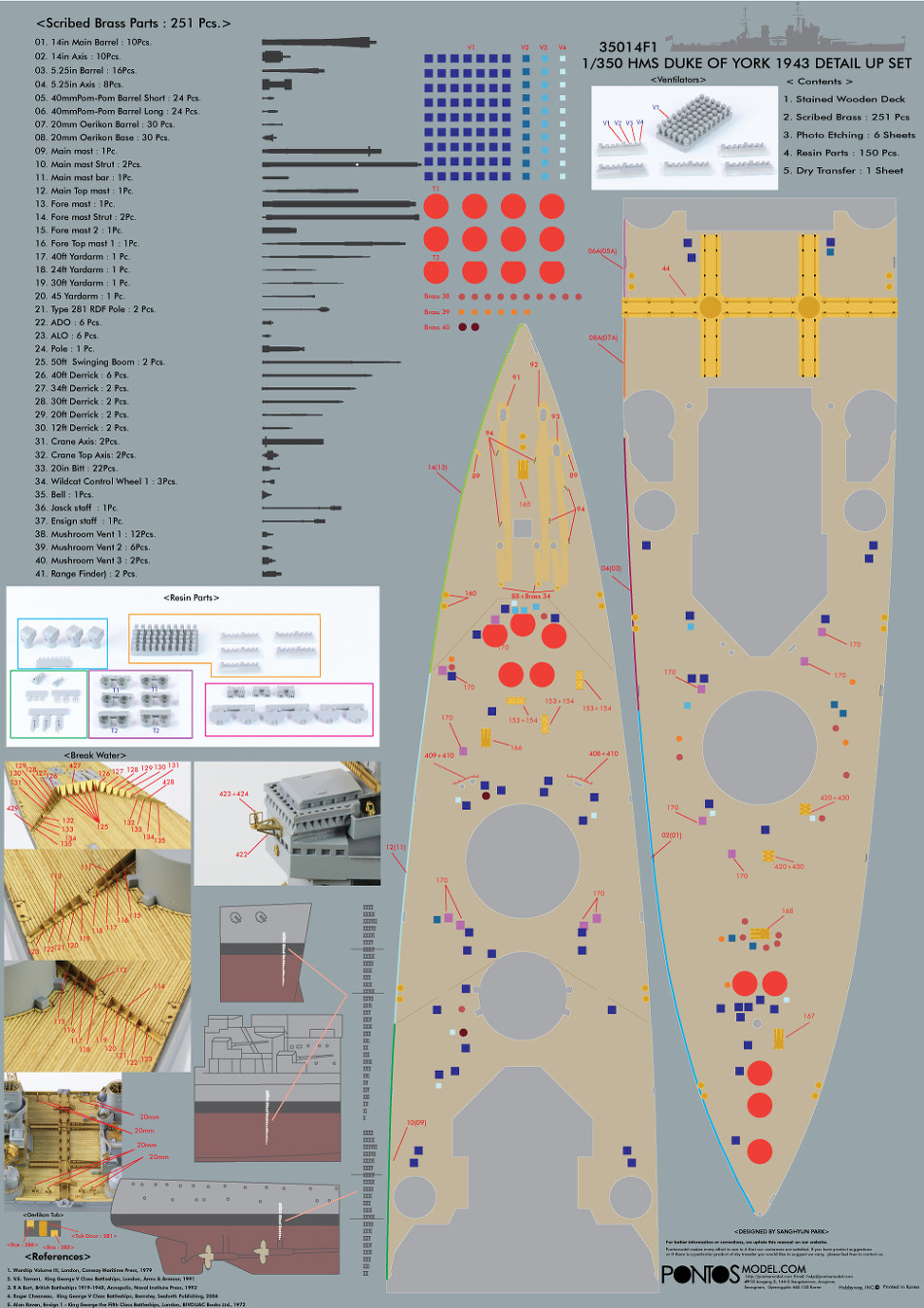
When we start to draw the later KGV class ships we will develop this quad Pompom and will release quad pompom only for the last PoW.
Thank you
Kim
Hi Angeleyes (I love that film!),
I hope you don't mind me sticking my oar in but the above quote seems to indicate that they are planning a late war KGV set.
In 1757 Admiral John Byng was shot "pour encourager les autres". Voltaire
That would be them, probably better termed hatches or deadlights for the windows behind. There were a few more of similar shape scattered around on the lower levels of the superstructure.
Woops, didn't realise I wasn't logged in for the last post.
EJFoeth,
You wouldn't happen to have a similar image of KGV's stern as you posted above but from the port side by any chance? My next build is KGV in her 1944/45 guise and trying to get decent photos of her sides showing which scuttles and openings were plated over in the refit has been problematic to say the least. I have some for the bow and midship areas but nothing for the stern showing any level of detail.
As an interesting aside, the scuttles (portholes) on the hull of HMS Prince of Wales were made of Aluminium (with monel dead lights) and those on the superstructure were made of brass / bronze .....
On the wreck, all the hull ones have rotted away due to dissimilar metal corrosion (the Aluminium acts as a sacrificial anode) and the deadlights have all fallen in.
(Galvanic corrosion). Any idea why they would use different materials, aluminum being lighter? If they outfitted the hull you'd think material availability and cost were not really an objection?
We were very surprised. I would have thought aluminium to be a liability as it would melt easily in a fire and then allow water in.
Perhaps they were still paying lip service to the 35,000 ton limit? The Bronze / brass scuttles are reputedly very heavy!
In older ships such as Repulse and Exeter they are all of the standard Admiralty pattern bronze type.
What's also surprising is that if they apply different materials, you'd expect the aluminum scuttles in the superstructure for being lighter and aluminum being a weaker material than bronze. As normal scuttles in the hull have to endure wave slamming.
So, you visited the wreck? Do you take paint samples from the hull above the original water line?
I suspect it was so that the ones on the superstructure could be polished!
Re paint... no at 70 years since she sank there is little evidence of the original paint though we didn't try to look at it. The results of our finding are published here are were presented at the Royal institute of Marine Architects.
The damage to her is most impressive, particularly the starboard outer prop shaft now resting on the inner! The hole in the hull are quite substantial.
I've seen one of Garzke's presentations at the annual Sname a few years ago. I think they dived a considerable distance in the hull along the shaft line to survey the extent of the damage.
Yes..... all the way to the engine room bulkhead. That was a friend of mine who followed on the year after we did the initial survey (the first comprehensive one done as the wreck was too deep for divers in the 60's when they previously attempted one). I had filmed the broken end of the shaft and sent the video to John Roberts who noticed that the flange on the end should not have been visible.... therefore the shaft had been pulled out and was broken. There was a report from the sinking that described that but it was discounted at the time. Craig swam the length of the tunnel (being able to get in shows how big the hole is!) and filmed all the breaks in the shaft and where each piece was. All the glanding had been destroyed for the length of the tunnel allowing fairly easy access once inside. The shaft was obviously whipping around and caused massive disruption. It would have been doing about 280-300 rpm at the time of the hit.
If you would like I can send you a copy of my original report...with photos.
Even with no damage you want to do a shaft line calculation to see if shaft whirling isn't going to be a problem. I doubt any ship could have taken such a hit without taking massive damage; much worse than a jammed rudder.