MartinJQuinn wrote:I don't have that book - thank you very much!
Do you know in what order they were spotted on the deck? I'm assuming Hellcats first, Helldivers last?
Sorry for the delay, Martin, but I don't know, and you're welcome on the book (it's pretty good).
I tried to hunt up Carrier Air Group Two's report in fold3 for the "mission beyond darkness", and didn't find it (either under the air group or the carrier). I looked up TG 58.1's report, and it just mentions that all carrier's in the group launched deckload strikes.
I'll keep looking, and if I find anything, I'll post it for you.
ModelMonkey wrote:Those are some shocking single-mission losses, probably catastrophic for the squadrons involved. Really brings home the gravity of the fighting.
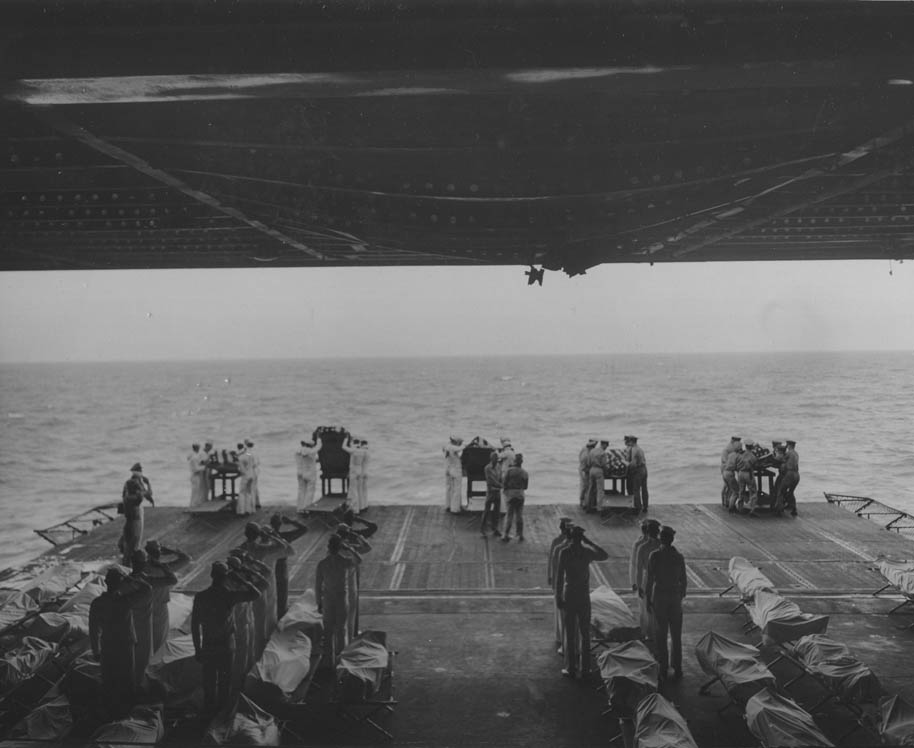
Not to make light of it, but it's potentially not as catastrophic as you might believe. The "lost operationally" doesn't mean lost during the mission, and it doesn't necessarily mean the air crew was lost as well. This is an excerpt from Hornet's War Diary for the day:
6-20-1944 War Diary
Note that they specifically count one pilot and two air crew. Lots of wrecks though.
MFH wrote:Sorry for the delay, Martin, but I don't know, and you're welcome on the book (it's pretty good).
I tried to hunt up Carrier Air Group Two's report in fold3 for the "mission beyond darkness", and didn't find it (either under the air group or the carrier). I looked up TG 58.1's report, and it just mentions that all carrier's in the group launched deckload strikes.
I'll keep looking, and if I find anything, I'll post it for you.
No need to apologize - appreciate you looking.
Martin
"Tomorrow is the most important thing in life. Comes into us at midnight very clean. It's perfect when it arrives and it puts itself in our hands. It hopes we've learned something from yesterday." John Wayne
MartinJQuinn wrote:Do you know in what order they were spotted on the deck? I'm assuming Hellcats first, Helldivers last?
This is as good as a point as any to mention this. One thing that has held up my much delayed Essex class book is deck spotting. I started writing the actual text a couple of years ago and found that while I had a lot of information on the SHIPS and the AIR GROUPS, I had nothing on the interface between the two.
It turns out this is another case where "It's easier to theorize than actualize" is very true. It's one thing to say "I'm going to include information about how decks were spotted and how the carriers worked to turn around air groups and quite another to actually find that information. No one seems to know where one might find that and if any of it was kept. I've talked with Dr. Friedman, Doug Siegfried (Tailhook association Archivist), Dana Bell, I think Bob Cressman, and two different archives staff members who specialize in Naval records and no one can remember seeing any manual or materials for deck operations.
US WWII Carriers had what was known as a Flight Deck Officer, and there must have been some institutionalized training and procedures for them, but I've found bugger all in the records of BuShips (not surprising), BuAir, Chief of Naval Operations, Commander of Aircraft Carriers, Pacific. There's still a couple of other record accessions to look through, but for the time being I'm going to press on and treat it as a dead topic. No publisher so there's probably enough time for one more research trip, but we'll weight time spent on that against the other details that are coming up missing in the writing. Those points were whittled down by a fair amount on my trip last week.
There were so many carriers... there ought to be a handful of flight deck officers or their assistants still alive out there who might be able to give some insight (not saying they'd likely remember what the whole procedure was, just that they might recall how they got trained for the task)?
Tracy's right about the losses--American airplane losses were bad (ditchings and crashes), but in the summer of 1944, production was in high gear, so replacing the aircraft took a few weeks, if that.
And the aircrew losses weren't near that bad. According to Barrett Tillman in "Clash of the Carriers", p 286, "After search and rescue operations, missions on the twentieth cost sixteen pilots and twice as many aircrew."
The flow of replacement pilots and crews to the fleet replaced them in relatively short order (I hope that doesn't come across as too callous), and a new carrier (Franklin) joint TF 58 just a few weeks after the battle, further increasing American dominance.
The Japanese, on the other hand, lost hundreds (~3) of aircraft and aircrew, and thousands of sailors on their damaged and sunk ships. And they didn't have anything close to the American search and rescue plan in place to save their downed pilots & aircrew.
MartinJQuinn wrote:Do you know in what order they were spotted on the deck? I'm assuming Hellcats first, Helldivers last?
I've continued to look, and this is not definitive, but it appears that CV-9 often times spotted F6F, TBF/M, then SB2C. I ran across something last night with CV-9/CVG-15 stating that SB2Cs had a longer deck run than TBFs/Ms.
Looking at Hornet's report for 20 June 1944, it states that at 1619, Strike 1A was launched "(15 VF, 8 VT and 14 VB) to attack enemy fleet." Perhaps this means spot was Hellcats, Avengers, & Helldivers.
However, on other days on the same cruise, the order between VT & VB are swapped, so I can't be positive. Maybe there's some photographic (still or motion) evidence of the day's launch...
Thank you! Looking at photos, it seems that the Helldivers are always spotted at the rear of the flight deck, so that makes the most sense. I thank you very much for your time and effort - greatly appreciated!!
Martin
"Tomorrow is the most important thing in life. Comes into us at midnight very clean. It's perfect when it arrives and it puts itself in our hands. It hopes we've learned something from yesterday." John Wayne
MartinJQuinn wrote:Thank you! Looking at photos, it seems that the Helldivers are always spotted at the rear of the flight deck, so that makes the most sense. I thank you very much for your time and effort - greatly appreciated!!
Depends on when. Randolph had her flight deck length restored before leaving for the Pacific and Tico did not. Tico's forward flight deck was restored before she left for the Pacific, but her after section was not rebuilt until after her [URL=http://www.researcheratlarge.com/Ships/CV14/Kamikaze/PSNSWarReport.html]January 1945 Kamikaze hit. She did not receive the extra quad 40mms until after this same attack. Randolph, on the other hand, was modified at Hunter's Point in January after reaching the Pacific theater and came away with the extra catwalk and starboard sponson quad 40MMs So, after about April 1945 they're pretty close, but before then, there are some substantial differences.
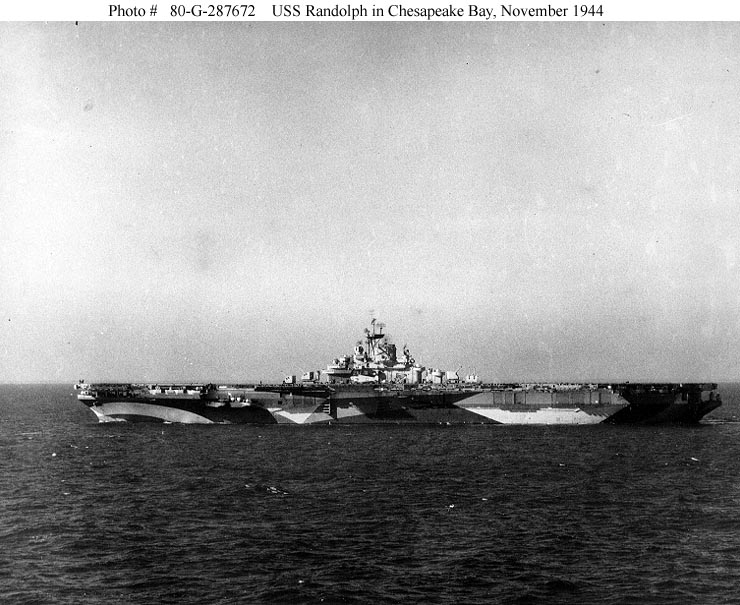
To me, the appeal of Randolph is that 6 color dazzle scheme (7 if you count the white countershading) - just to show off the difference between all the standard USN colors of the day. I believe she had that painted out just after arriving in the Pacific, or maybe before... so the thought of her requiring the short deck to be accurate for this time period is scaring me - since I've already built her! But per this photo: http://www.navsource.org/archives/02/021513.jpg
it looks to me like a full-length deck was in-place at least in November '44, while she was still in dazzle. Dodged that bullet!
Tracy White wrote:Depends on when. Randolph had her flight deck length restored before leaving for the Pacific and Tico did not. Tico's forward flight deck was restored before she left for the Pacific, but her after section was not rebuilt until after her [URL=http://www.researcheratlarge.com/Ships/CV14/Kamikaze/PSNSWarReport.html]January 1945 Kamikaze hit. She did not receive the extra quad 40mms until after this same attack. Randolph, on the other hand, was modified at Hunter's Point in January after reaching the Pacific theater and came away with the extra catwalk and starboard sponson quad 40MMs So, after about April 1945 they're pretty close, but before then, there are some substantial differences.
When does the 1/350 Tico from Trumpeter depict her?
Planned projects
1/700 USS Macon CA-132
1/350 USS Wasp CV-18
1/350 USS Alabama BB-60
Typically the trumpeter kits are vague on precise time frame (i.e. not technically correct for any time frame). I'll need to take a look at a kit to make a more firm determination, something I had promised Angel_Cypher a couple of weekends ago. I'll try and get you an answer this weekend (busy work week).
The closest the kit depicts would be shakedown cruise, but there are still details that are incorrect (missing flight deck notch, incorrectly shaped flag bridge platform are two that jumped out) so it's hard for me to say that someone who wants a "correct" build is going to find it satisfying without a lot of detail work. The problem with the ships is that no two were ever the same, and no ship was ever the same. Even a fairly complete set like the Pontos ones will have "incorrect" details for any specific ship. That said, they are awesome builds and have a great presence in any display, please be clear that I'm not trying to dissuade anyone from building one!
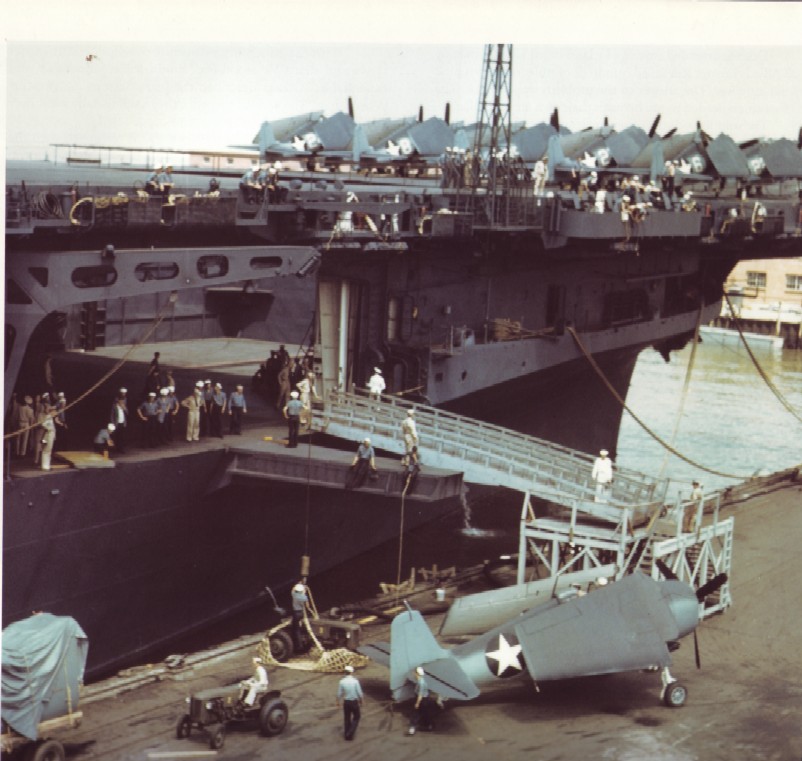
Here's a little detail I stumbled across on my last research trip. The photo caption did not list ship name, but I am fairly certain that this is CV-19 Hancock:
Probably CV-19 Hancock March 1, 1945
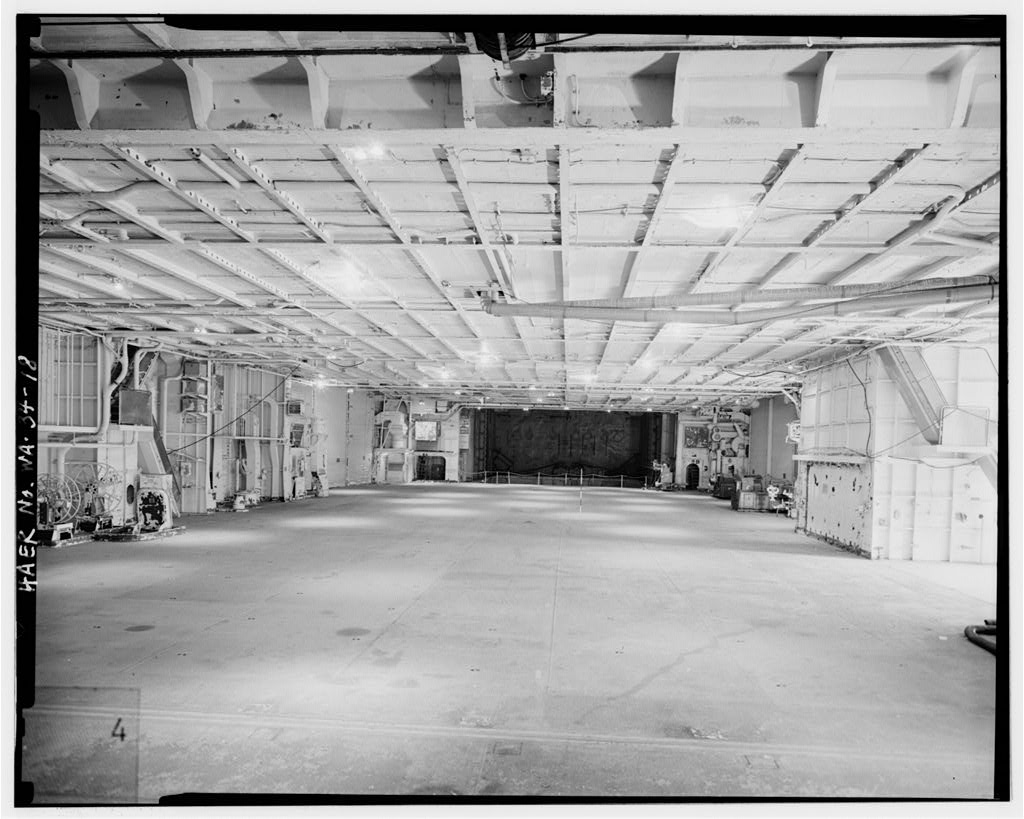
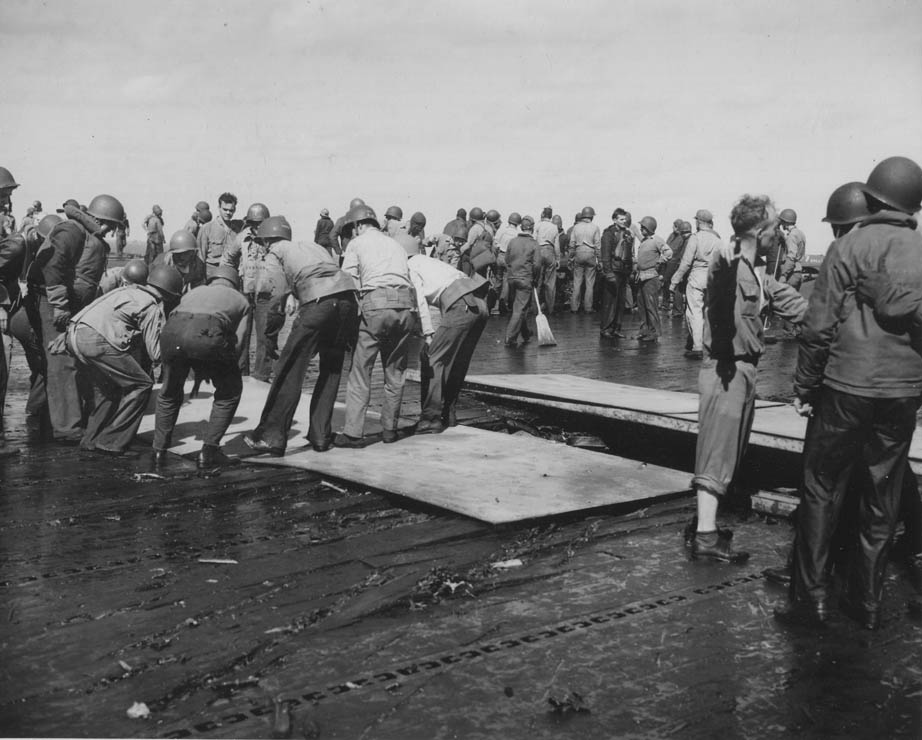
Note the patched flight deck inboard of the elevator. On January 21, 1945, Hancock had an Avenger suddenly explode after landing, causing over 100 casualties. The deck was repaired and the ship continued fighting until April of that year, but I hadn't seen any photos of the repairs before. The photo was dated March 1, on which date Hancock lists having three F6Fs as "damaged." This is a very vague term and can mean anything from "damaged and later repaired" to "damaged beyond repair and scrapped." We do, however, have this picture of some form of temporary repairs and the patches line up nearly perfectly with the tie-downs in this picture of her distorted hangar bay overhead. I don't have a complete photo showing how close to the island the patch came, but this should be a decent start for builders of the ship (I will be once eventually).
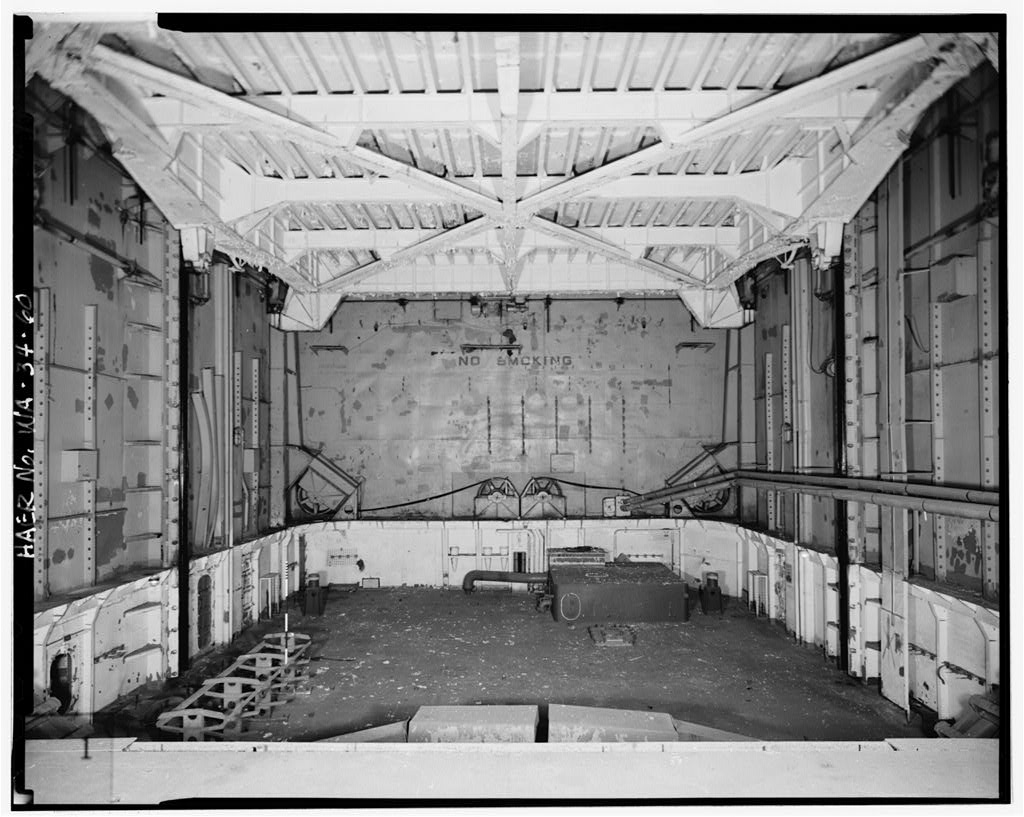
I've just started my build of CV-9, currently in the early stages, but notice the kit centre-line elevators are both up and down position at the same time! As I'm having both elevators up, am having to cut out the elevators in the hangar deck and create an elevator pit with a portion of 2nd Deck. I've referenced photo of Hornet's forward elevator pit (copied below), does anyone know of any photo of the aft elevator? I'm assuming it is much the same, but naturally without the forward end bulkhead.
I also noticed the bulkheads around the forward elevator are painted grey (similar to the outer vertical surfaces), whereas the rest of the internal hangar bulkheads appear to be white.
One more point, I noticed that the 'Anatomy of a ship' book for Intrepid shows two direct acting hydraulic jacks under each elevator, but none visible on the Hornet photo, just elevator ropes and pulleys suggesting indirect acting jacks under the the elevator pit, I'm wondering if different types of centre-line elevators may have been used in different members of the class?
(images courtesy of NavSource.org)
Last edited by Rob-UK on Sat Jan 14, 2017 1:15 pm, edited 6 times in total.
I haven't found any good "walkaround" photos of the elevator pits. The "best" I've seen is one ship (at least) had horizontal hose racks on the starboard wall. The aft elevator pit also had a secondary elevator (labeled "emergency elevator" in plans) that was brought up to hangar deck level to facilitate aircraft movement. I haven't found any documentation yet that states if this happened automatically whenever the main elevator moved or if there was a secondary control for it. I've seen enough photos where it it is not in view to know that there was at least an override.
Part of the problem is that the insides of these ships changed and were improved as much as the outsides, but of course a hangar bay isn't as sexy as flight decks and operations, so it's harder to find good coverage of areas. I'm still looking for even one shot of the area under the front twin 5" mounts and the associated ammunition chutes as well as starboard side just aft of the aft elevator. I'm sure myself or one of the research mob will stumble on that magical photo right after the book goes to print....
With regards to the elevator well bulkheads, this was an area that evolved over time as well. With the Essexes, they started with Navy Blue, as you can see in this CV-10 shot on Navsource. Later, procedures came about for warming up aircraft inside the hangar at night, and this called for dropping the forward and aft elevators down three feet. This document was written for CVLs but we see the same pattern on Enterprise and the Essex class - note that paragraph six calls for a six-foot thick black band at the top of the elevator well (three feet above the elevator when lowered three feet and three feet below). I don't have a corresponding document for the Essex class to know precisely when it was ordered, but I would guess late 1943 and certainly by 1944.
Thanks for these comments. After looking at the Hornet photos of the fwd elevator and a Boxer photo of the aft elevator, combined with a set of Hornet plans and the Anatomy of a ship plans for intrepid, I'm going with the fwd elevator having guides to port & stbd of the elevator on its centre-line and being raised by rope hoisting points on both sides front and rear (ie. four corner points) and the aft elevator with a guide fwd and aft of the elevator positioned offset toward the stbd side and lifted with two direct acting jacks underneath. The aft elevator will be mainly out of site though so am not too concerned, but the fwd one will be quite visible through open shutters so will add a bit more scratch building there.



 But per this photo: