Many thanks Devin!

I have met Adrian at SMC in the Netherlands last october. It will be good to see him again!
We'll be thinking of you!


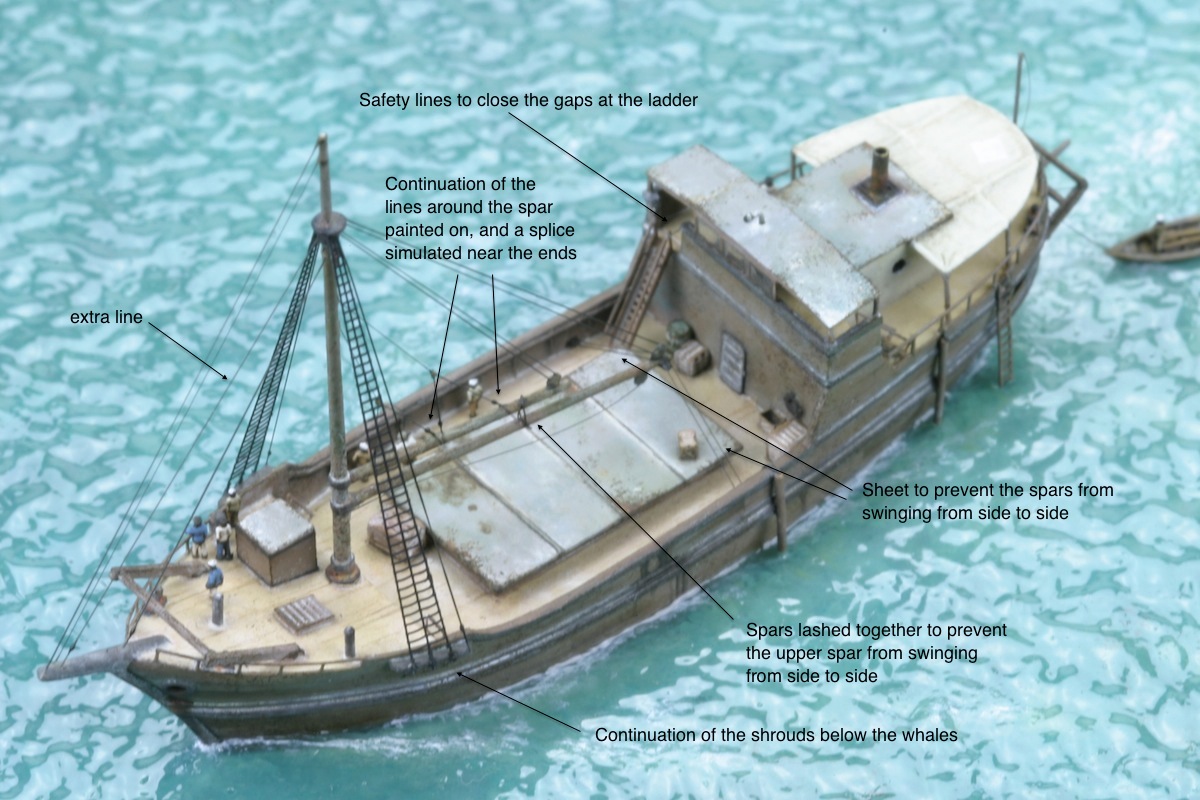
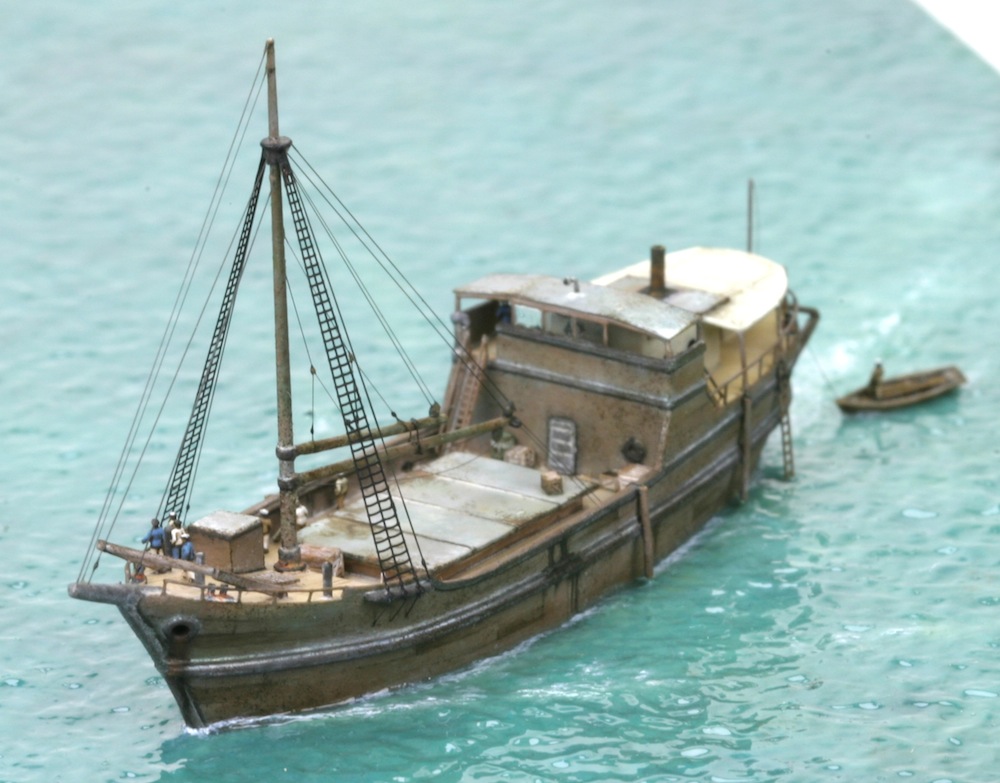
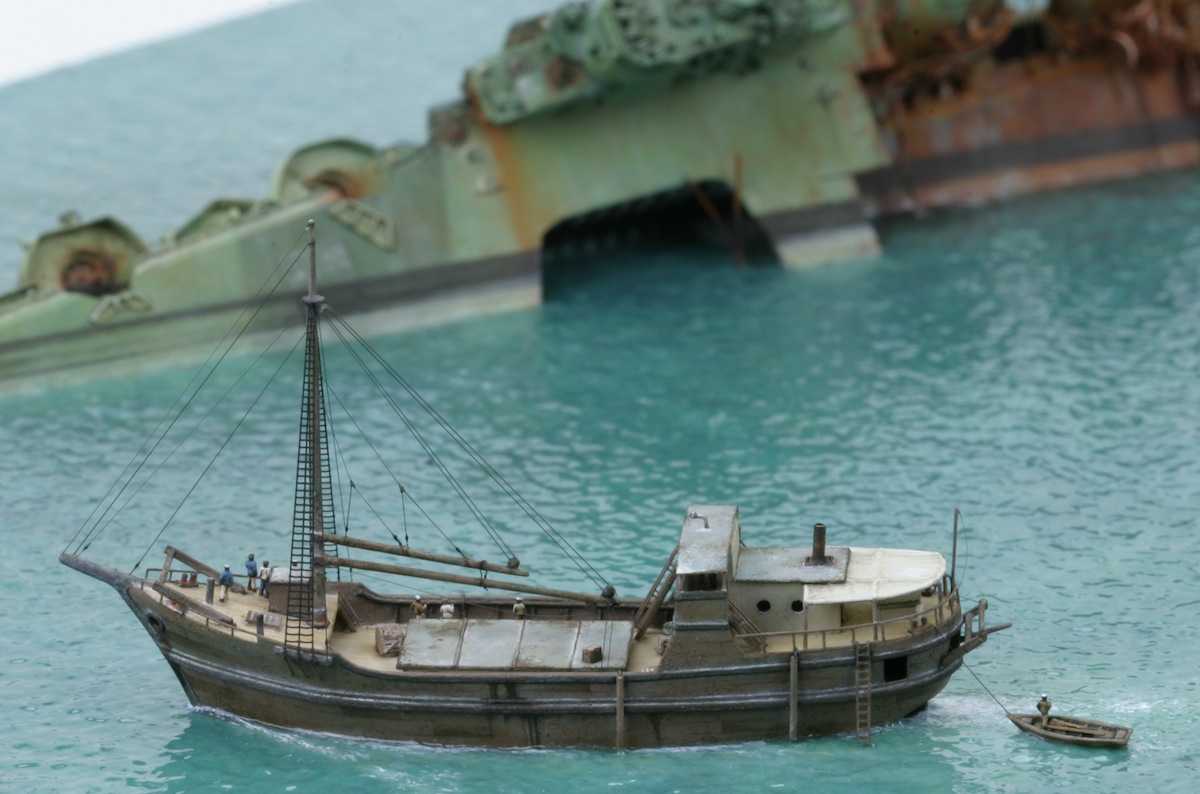
The planking is done completely freehand with a good quality 000 size brush, which I feel is easier for a small model in this scale.
This is the process I used:
- drawing horizontal lines with very dark brown (humbrol flat black + raw umber oil paint), but making sure to keep them discontinuous. You only want to suggest them, not continue the lines over the entire length which would look too stark and cartoonish.
- draw a couple of vertical lines. But again not too many, and often only part of them (only towards the seam above or below, but not to both). You can quickly get an 'excel-sheet'-look if you overdo it, so keep it subtle.
- add a local glaze of thinned paint to some of the planks, mostly towards their ends. On this model I only used some raw umber oil paint, but with different base colours this might vary, or I might use a couple of different colours to get more variation.
The aged and weathered look of the hull wood is the result of a combination of the filters before the planking, and some 'chipping' (dabbing with a small stiff brush as described in a previous post for rust chips) with more fresh looking colour (again raw umber in this case).
For large hulls in 1/350 scale, it might not be necessary to keep planking or plating detail discontinuous for a subtle result, so the use of tape and paint can work good than. In 1/700 however, I feel only the heaviest plating looks good and in scale when added in a full and continuous way. For anything less I would prefer to do it this way.
On a larger 1/700 scale hull, it might help to use tape as a guide to keep the lines straight. I would however place the tape a millimeter or so above or below the line I would paint, because for painting fine lines like this I need to correct them constantly with a clean brush moistened slightly with white spirit, and the tape would get in the way of that.
I hope this helps!
Cheers,
Marijn


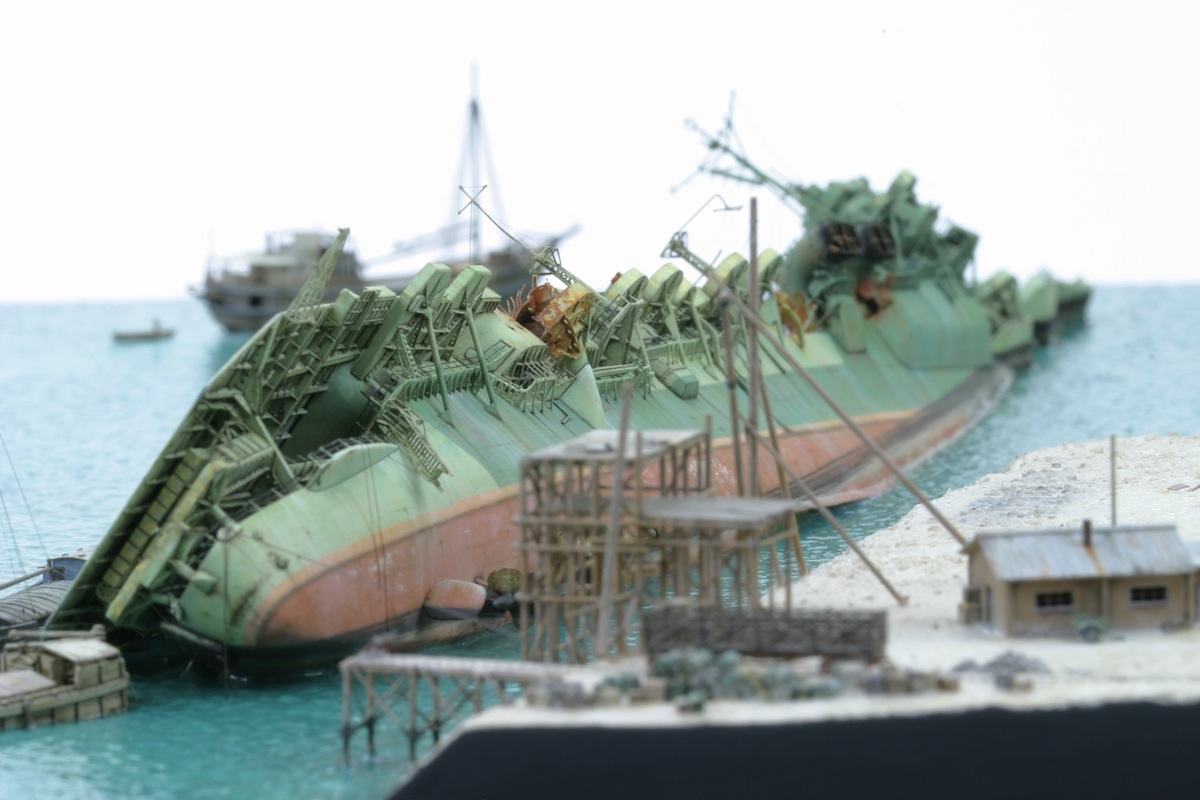

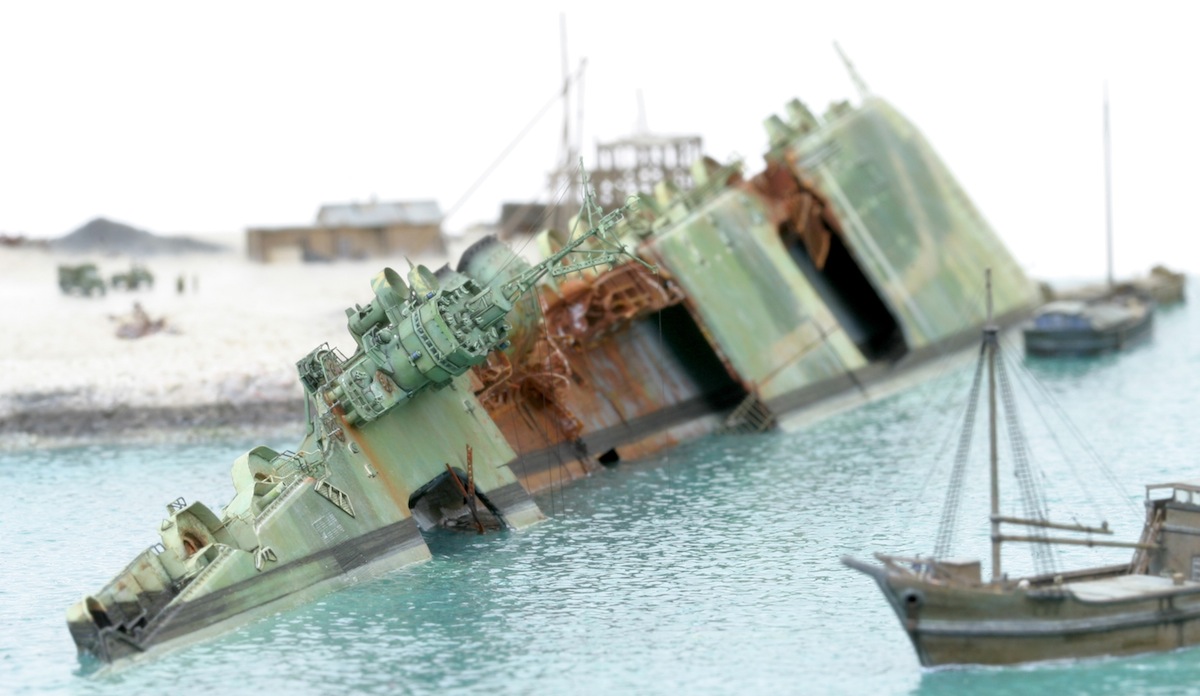
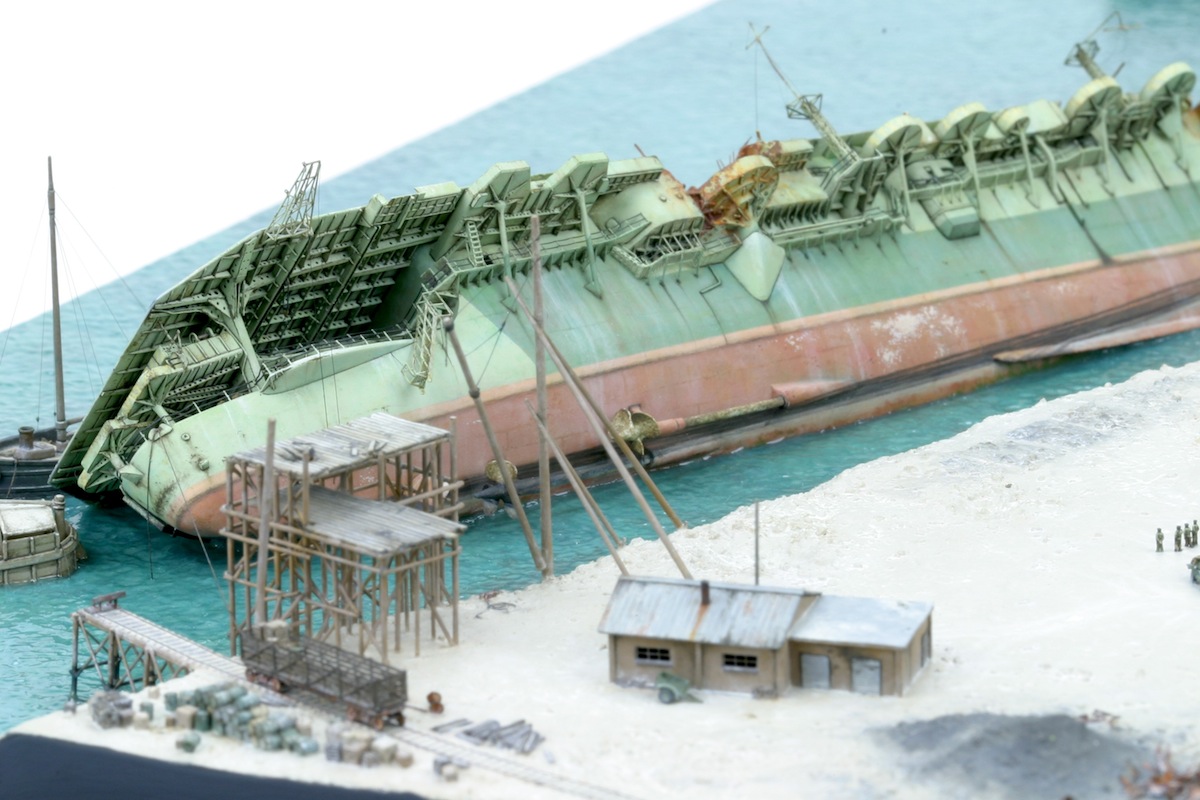
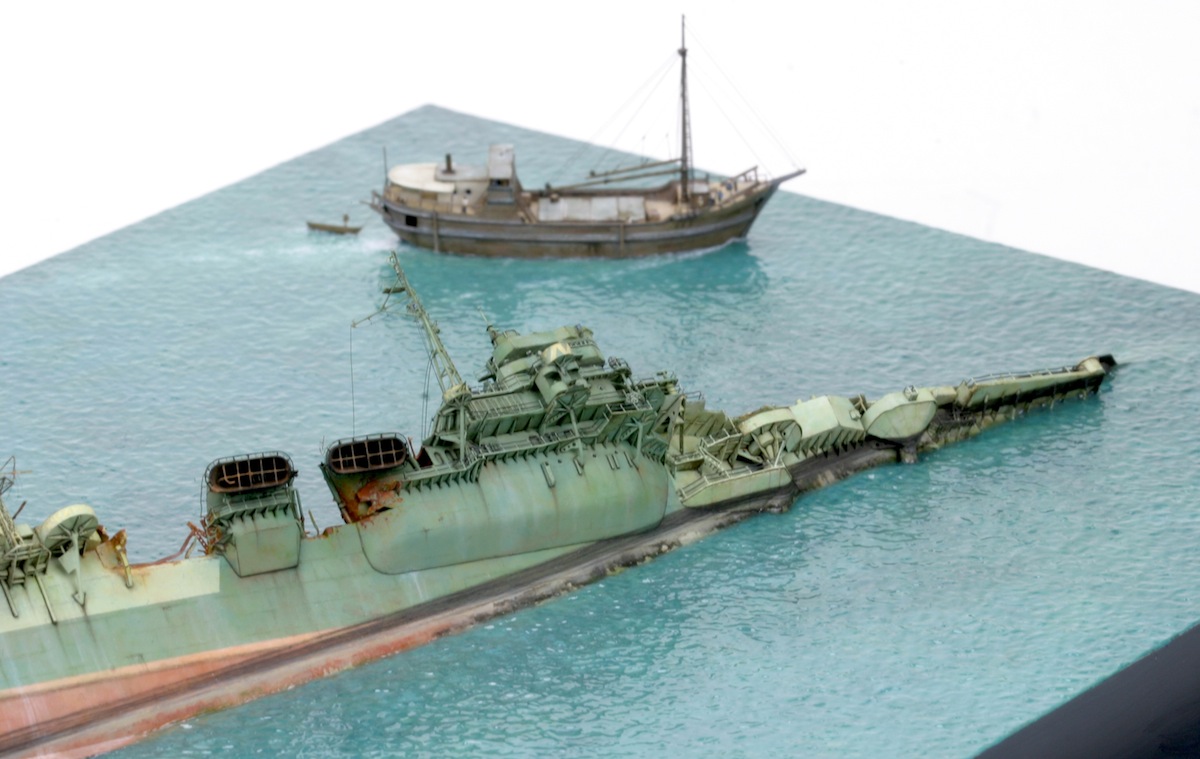






 Its impossible level!Excellent!