Are all the planned NEXT Fujimi Kongo class kits supposed to be early or later war?
I'm hoping they also make an early war/early WW2 Kongo and Haruna.
For the "Next" series of Fujimi in 1/700, no early war IJN Haruna definitely, 100% no chance SADLY. Early IJN Kongo might be released by end of 2018 together with some other goodies(IJN Tosa etc).
Edit:I would like to inform you that MOST Japanese manufactures will follow the snap together trend albeit with great attention to detail same as the old classic/traditional versions. Some releases will be with the classic way (Glue and file) but will be branded as an "expert" version and priced accordingly, with lots of PE for bonus. Well this is the trend the marketing team is informing us.
Are all the planned NEXT Fujimi Kongo class kits supposed to be early or later war?
I'm hoping they also make an early war/early WW2 Kongo and Haruna.
For the "Next" series of Fujimi in 1/700, no early war IJN Haruna definitely, 100% no chance SADLY. Early IJN Kongo might be released by end of 2018 together with some other goodies(IJN Tosa etc).
Edit:I would like to inform you that MOST Japanese manufactures will follow the snap together trend albeit with great attention to detail same as the old classic/traditional versions. Some releases will be with the classic way (Glue and file) but will be branded as an "expert" version and priced accordingly, with lots of PE for bonus. Well this is the trend the marketing team is informing us.
I wish that the "Expert" kits with PE would go the full distance and make the kits explicitly for Photo-Etch (so they cannot be completed without it) along with registration markings and moldings for the PE.
Such as slots or tabs for handrails, or deck railings, or alignment tabs for degaussing cables, or jigs for folding complex PE geometry.
This would make the complete integration of PE more seamless.
MB
OMG LOOK! A signature
Working on:
1/700 (All Fall 1942):
HIJMS Nagara
HIJMS Aoba & Kinugasa
USS San Francisco
USS Helena
USS St. Louis
USS Laffey & Farenholt
HIJMS Sub-Chasers No. 4 - 7
HIJMS Sub-Chasers No. 13 - 16
I was looking at Kongo�s TROM, showing two drydockings and upgrades in 1942 from her 1941 outfit.
These are in 23rd April � 2nd May and 1st Aug � ??? Of 1942.
The April of 42 refit says that two of the Type 96 AA guns around the forward stack are repositioned from the 1941 positionsto give a better arc of Fire.
Do we know where they were moved to, and if the 1941 version of the kit even has them in the right place to begin with.
The Aug of 42 refit says a Type 21 Air/Surface Search Radar is added to the rangefinder.
I assume the rangefinder isn�t especially altered, and that it is still painted white?
MB
Last edited by MatthewB on Sat Jun 16, 2018 12:38 pm, edited 1 time in total.
OMG LOOK! A signature
Working on:
1/700 (All Fall 1942):
HIJMS Nagara
HIJMS Aoba & Kinugasa
USS San Francisco
USS Helena
USS St. Louis
USS Laffey & Farenholt
HIJMS Sub-Chasers No. 4 - 7
HIJMS Sub-Chasers No. 13 - 16
I'm not sure about the AA placement. I'll try to check the Ishibashi book tonite. From what I have, it doesn't even seem like there were 25mm twins emplaced up on the funnel before 1942.
MatthewB wrote:
The Aug of 42 refit says a Type 21 Air/Surface Search Radar is added to the rangefinder.
I assume the rangefinder isn�t especially altered, and that it is still painted white?
MB
The structure connecting/supporting the radar and the rangerfinder is different from IJN Haruna. IJN Haruna has "better" pictures of the support structure available, but most companies/modellers use the same typically style. Close look/clear pictures are non-existence.
The Ishibashi book shows only Haruna with 25mm AA emplaced on a platform on #1 funnel in 1941. Kongo and Kirishima do not have any AA in that position at that time. Hiei also has AA in that area, but her arrangement is different in those are on a standalone platform in front of the funnel.
Ishibashi book is the best but not 100% accurate if we remember the IJN Yamashiro Surigao strait profile which I believe is 100% wrong.Simple put there is no info of IJN Yamashiro's location and postions of her final AA equipment.
True, but there is far more documentation in 1941 than 1944. I believe Ishibashi has this aspect correct.
Regarding the Type 21 radar set-up, the images below may help, even if they are circa 1944. These are 1-200 models displayed in Gakken #21, and I believe they were built by members of the same modeling association that Mucho is a member of. There are subtle differences between the two rangefinder bases.
What colour should Kirishima's spotter planes be in 1941? I'm building the Fujimi 1/700 kit and the instructions call for "IJN grey" but I've seen people paint these aircraft anything from white, to silver, to green. I'm guessing these are just variations over time but when did the changes occur?
Hi Vlad, although I am not sure what colour wore Kirishima�s planes in 1941 neither/nor what exactly they mean by "IJN Grey", it may be a reference to Hairyokushoku (ash green colour), the basic IJN pre/early war a/c colour used e.g. on A6Ms and D3As in time of the Pearl Harbor attack. Tamiya XF-76 is a fairly good representation of that colour. FWIW
Definitely not white or silver (1930s). Maybe a light IJN grey like Tamiya XF-12 for 1/700. Best place to ask this this question is over on the Japanese Navy Aircraft Message Board: http://www.j-aircraft.org/smf/index.php?board=3.0
I'm consulting the Thorpe volume for IJNAF color, camo and markings. Silver migrated to segmented green and brown blotches in 1937-38 as the war in China intensified. From late 1941 on, all seaplanes adopted a light grey scheme with black cowlings. (Yes, we know there were some exceptions where the green brown blotched were retained for longer.) Around mid 1943, the schemes changed to the same as other aircraft, all with yellow ID markings on the leading wing edges.
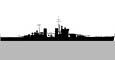
Guys, is there anyone with drawings-plans for Kongo ca 1914 - as built? I need the hull cross section plans to make full hull construction possible. Anyone?
The Kongo's were an interesting type and were reflected in much thought amongst US Naval planners. Really they presented an interesting contrast to the US battle line which was far to slow for operation with the carriers. Enough thought was put into thins to reflect the development and utilization of the fast Battleships, especially the Iowa's and the Alaska's. The similarity in utility of the Kongo's and Alaska's is rather reflected in their many similarities. As such the Kongo's lived and died a pretty exciting war compared to most of the Japanese battle line. As such however they suffered from the vulnerabilities of a battle cruiser type.





 Im not going to BAE Systems and asking them for 103 year old japanese battlecruiser plans...