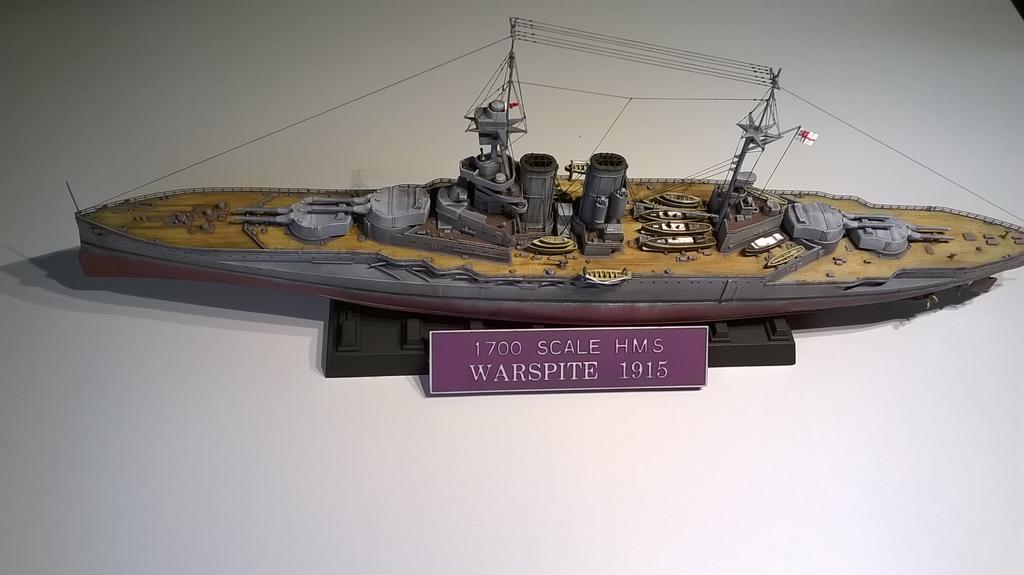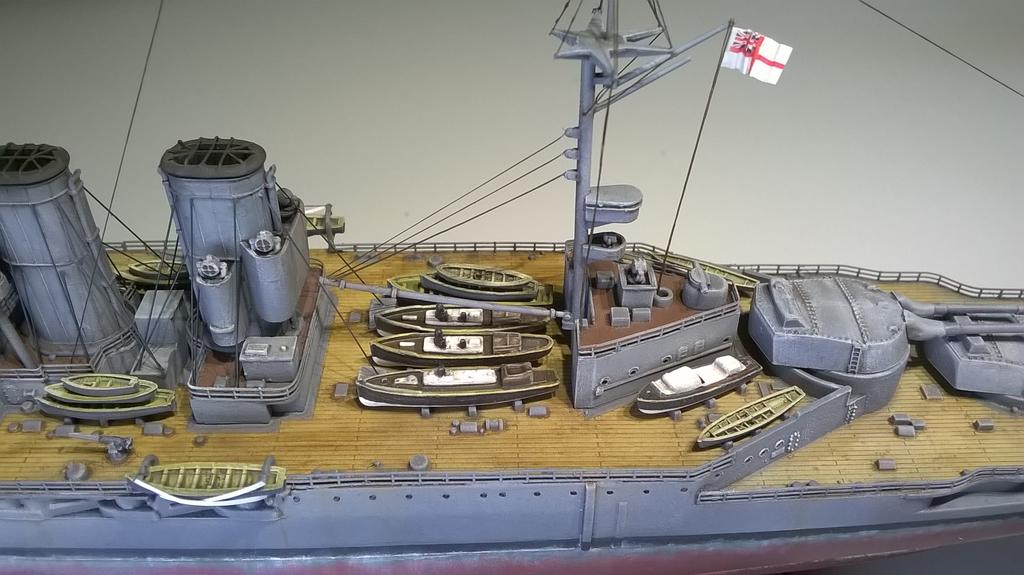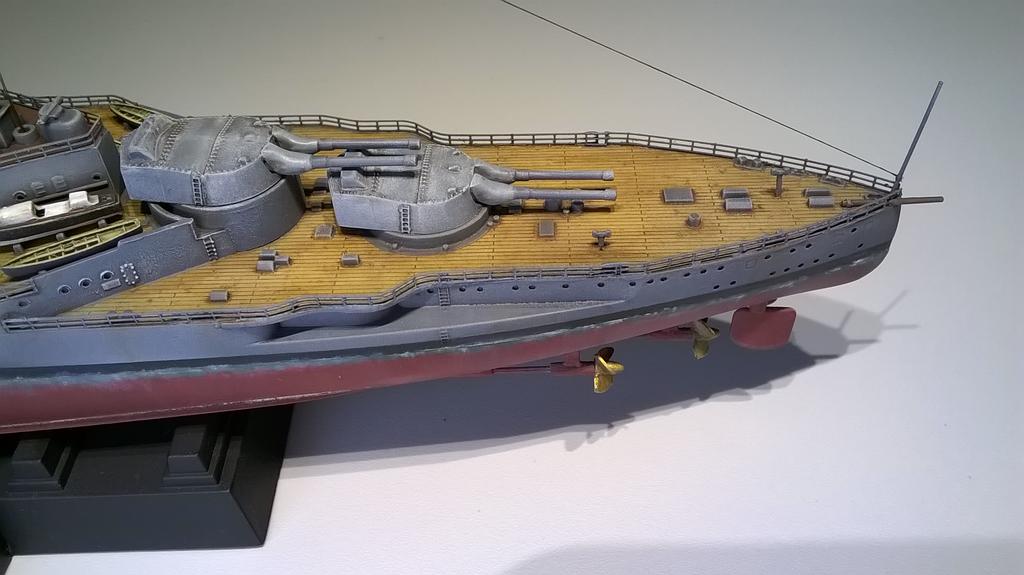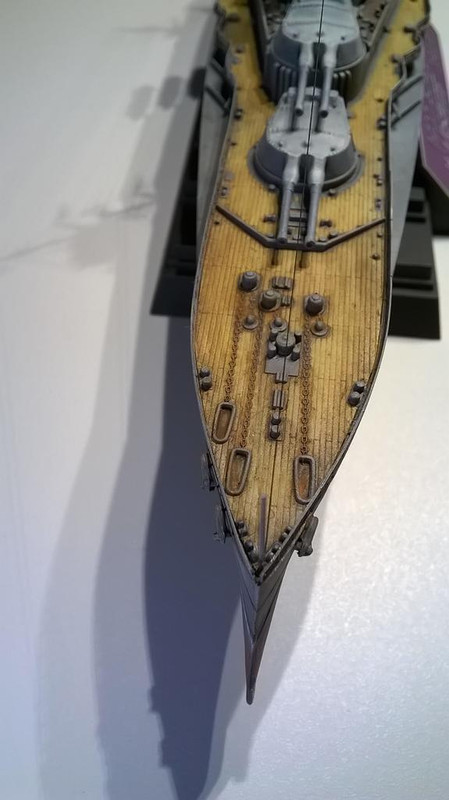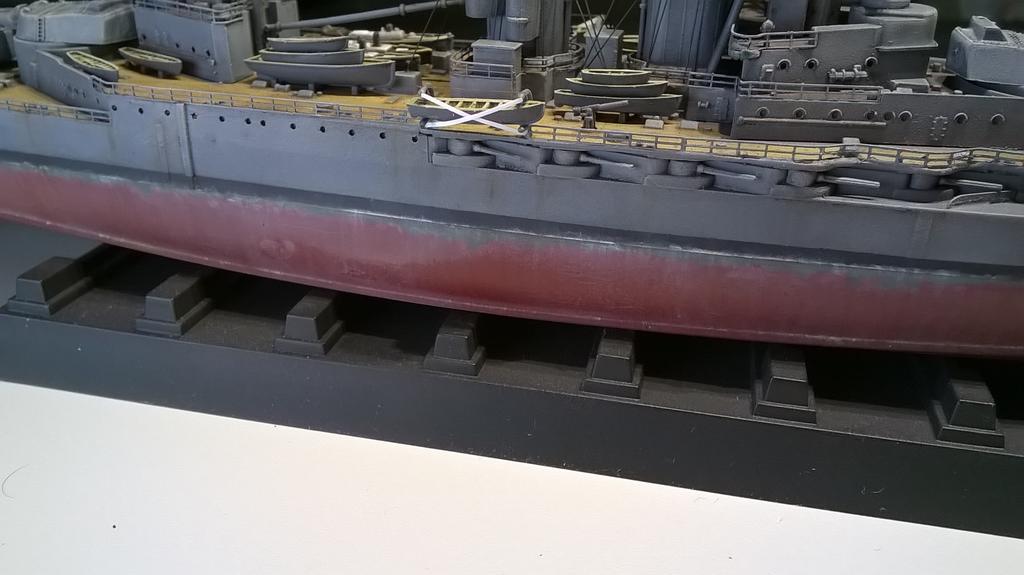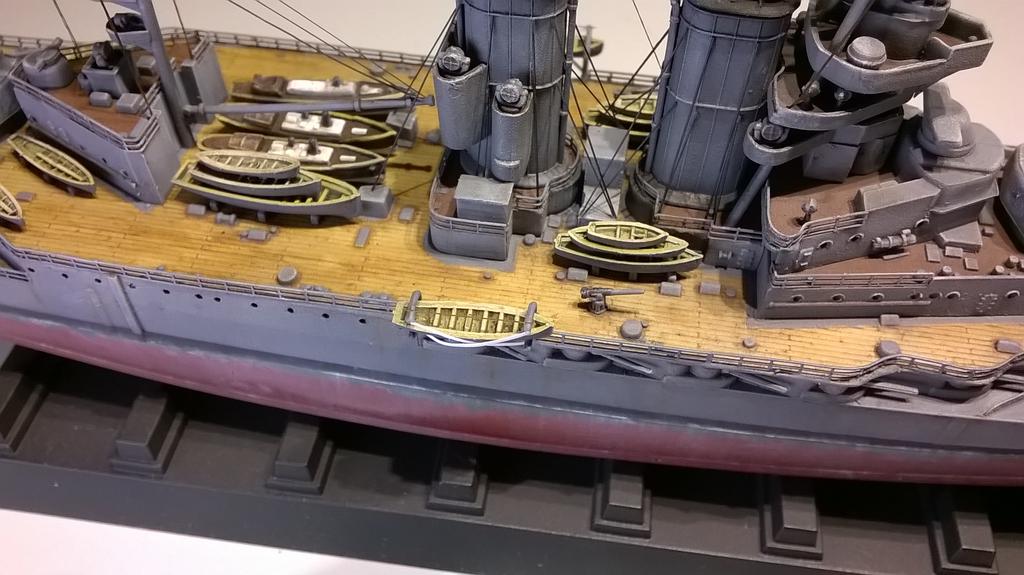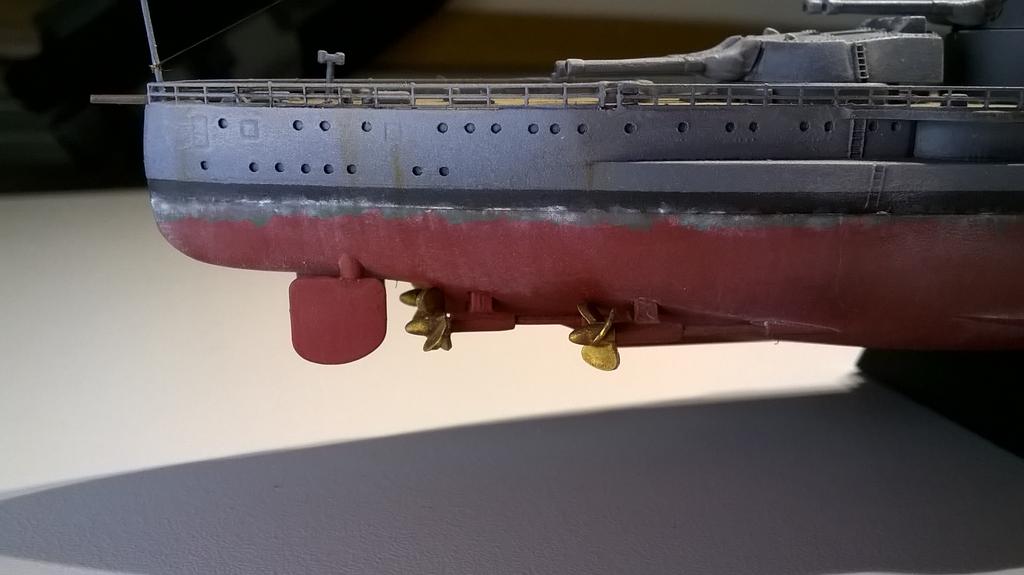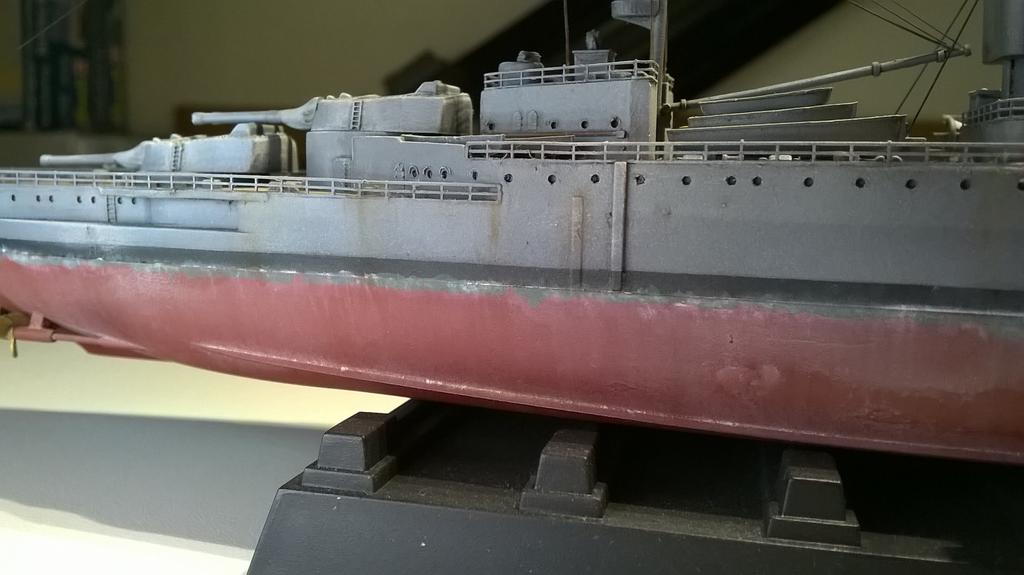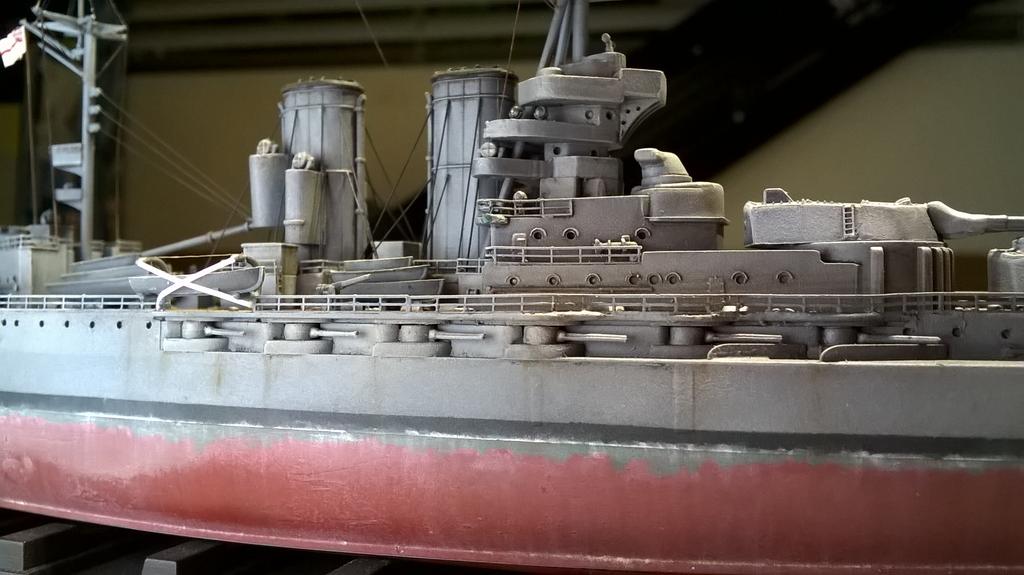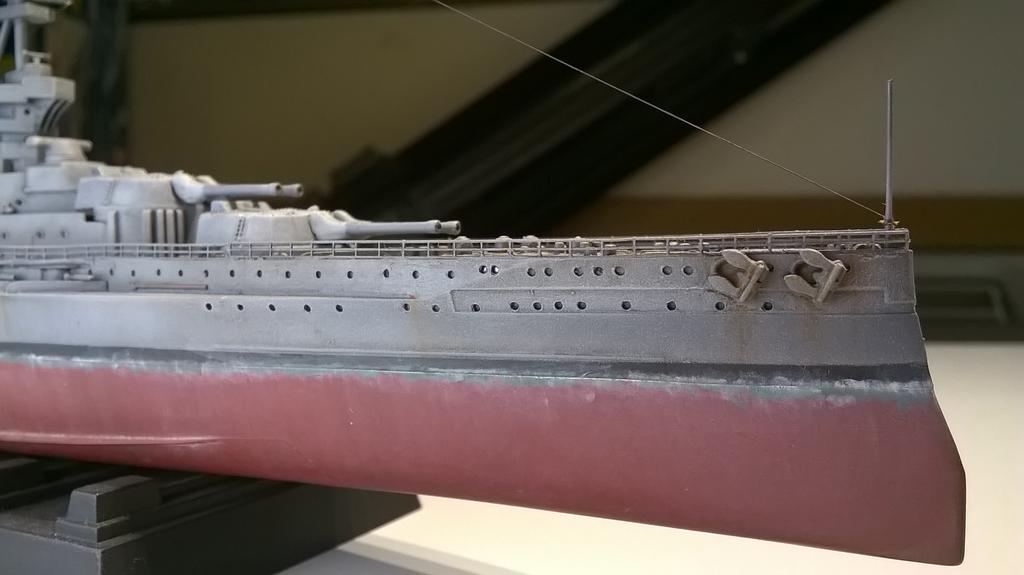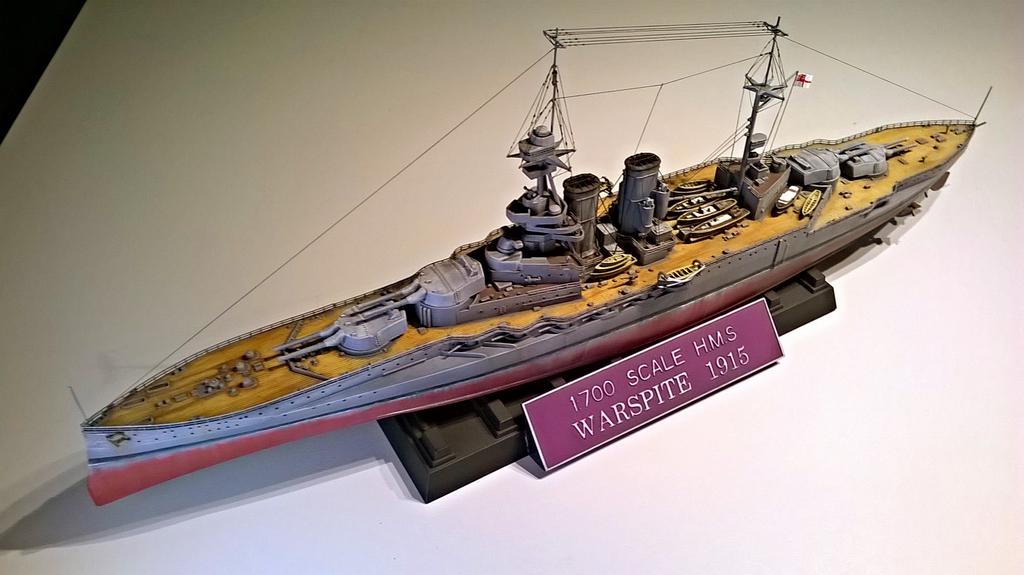
The kit is labeled as 1915 Warspite but seems identical to the 1918 Queen Elizabeth offering.
I tried to replicate, without too much research, the 'as built' configuration of Warspite. The Anatomy of the Ship book (I have an older copy) focuses primarily on the WWII config and only has a few line drawings of how she looked towards the end of the first war. The rig and mast configuration was modified significantly either just before or just after Jutland it seems. Class experts please weigh in, as I am curious.
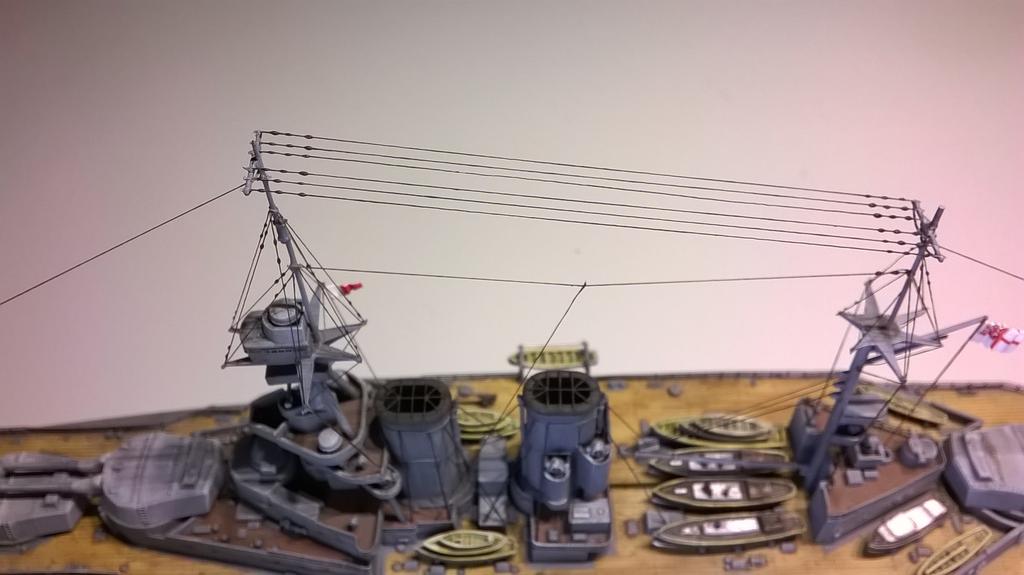
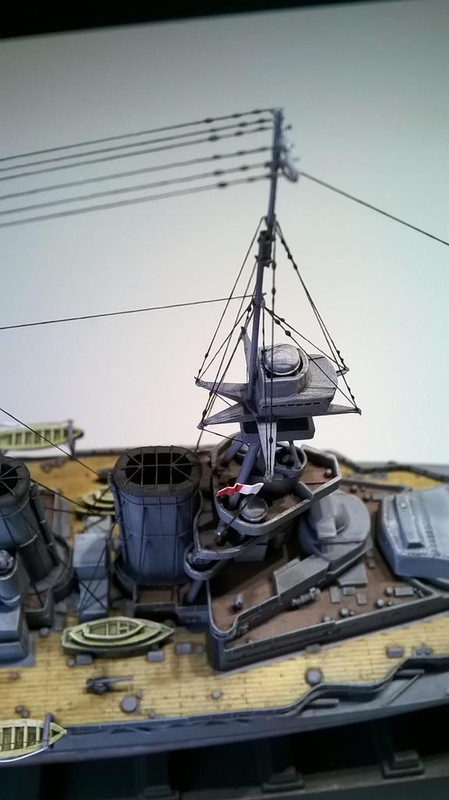
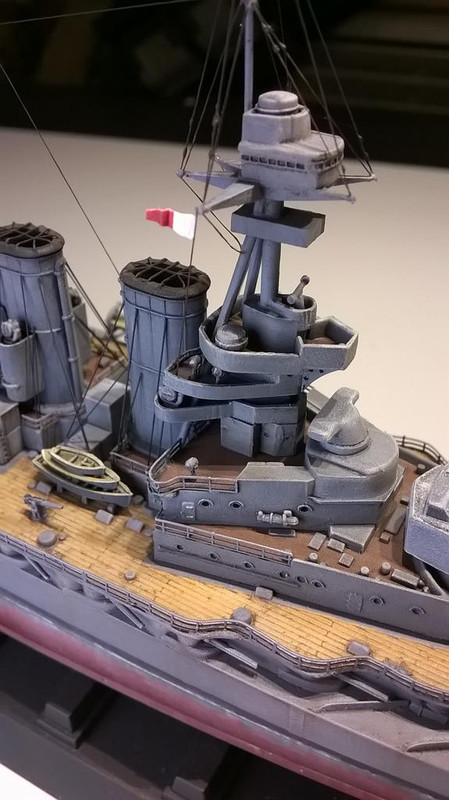
I neglected to add the spars for the signal flags but I did replace both topmasts with piano wire and added a very basic radio setup.
All in all it was a rather fun build of a handsome ship - I've always preferred the QEs in their earliest configurations. Too bad they don't make one in 1/350.
I found this to be a good challenge and excellent practice for someone like me who until recently built only larger scales.
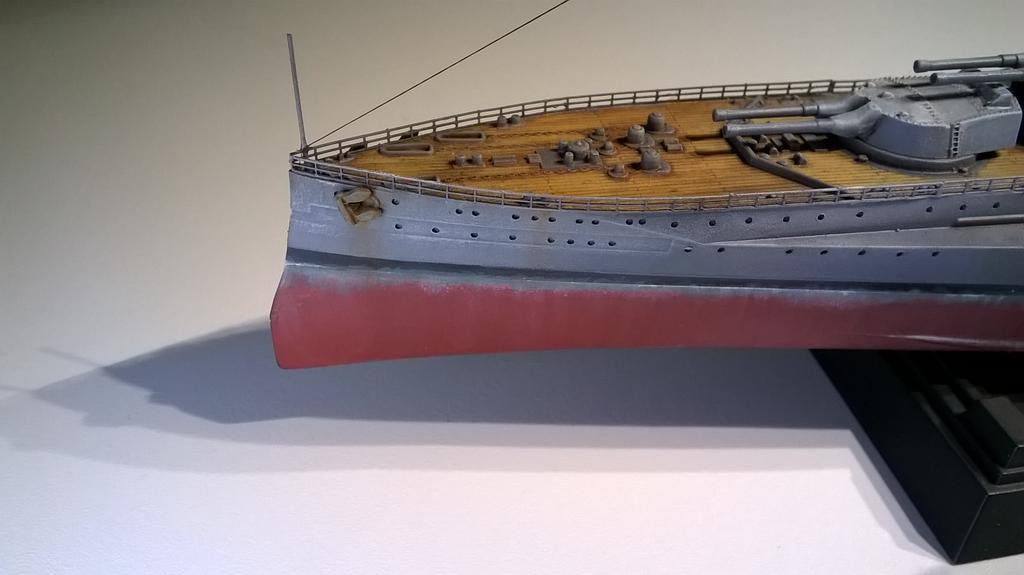
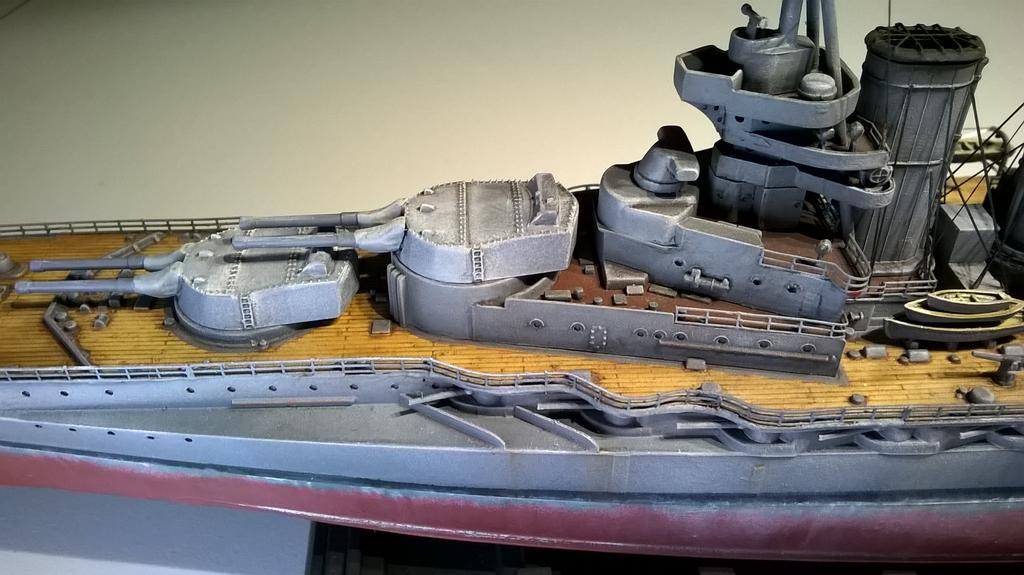
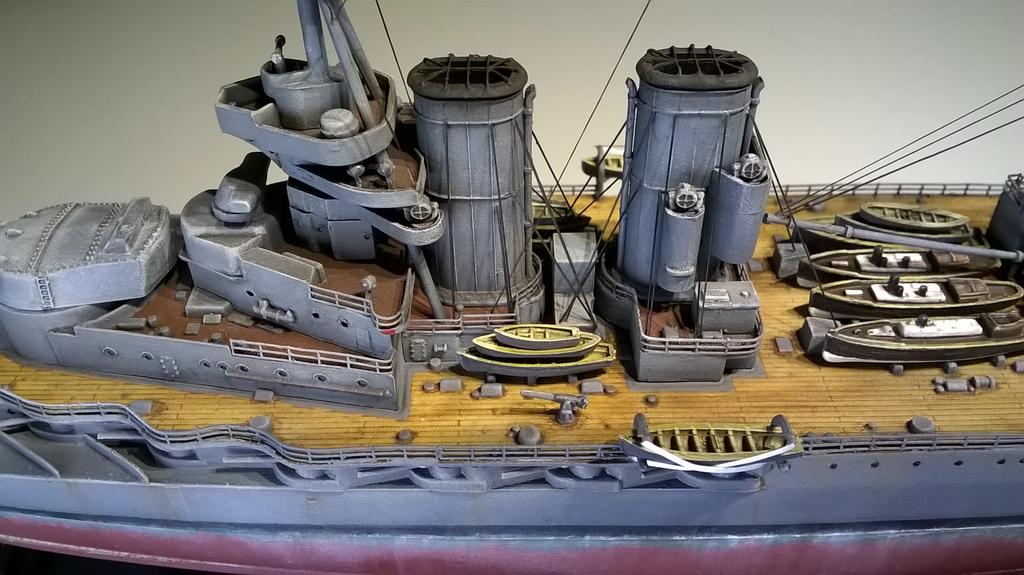
Photoetch was generic and I used ladder to similate windows around the main tower top. Piano wire was also used to replace the jackstaff and ensign staff. I used stretched sprue for funnel stays and crane and fine silk thread for the remainder of the rig. White printer paper cut very finely provided the retaining straps for the two boats on davits.
I thought of Jutland when I placed the answering pennant on the halyard. Figured she was responding to some signal.
At odds with a Jutland config are the ships steam launches - in peacetime finery. Those were probably the most difficult part of the build for me. I copied them from a book on Norman Ough - there was a color spread of a QE BB model during the 1920s with boats of these colors. Hull color was either black or very dark blue, which I used.
It's a nice kit and not too many parts for a battleship. I think the topmasts are too weak to use, but otherwise it was perfect for my needs. If you like this sort of ship and can find one at a good price, be sure to grab one.