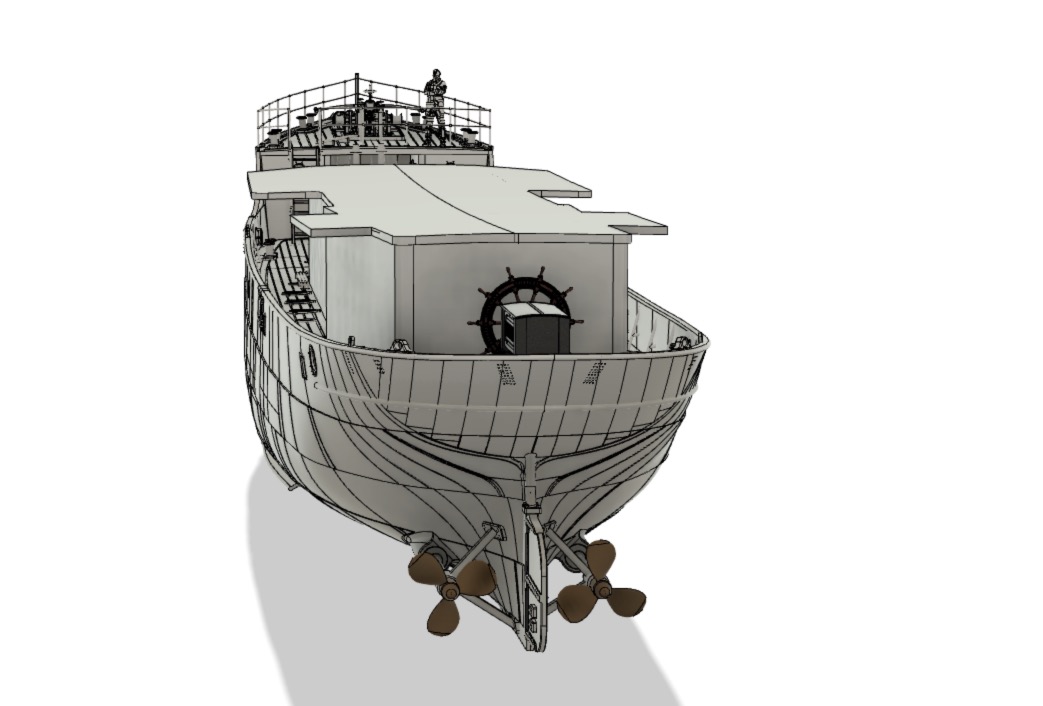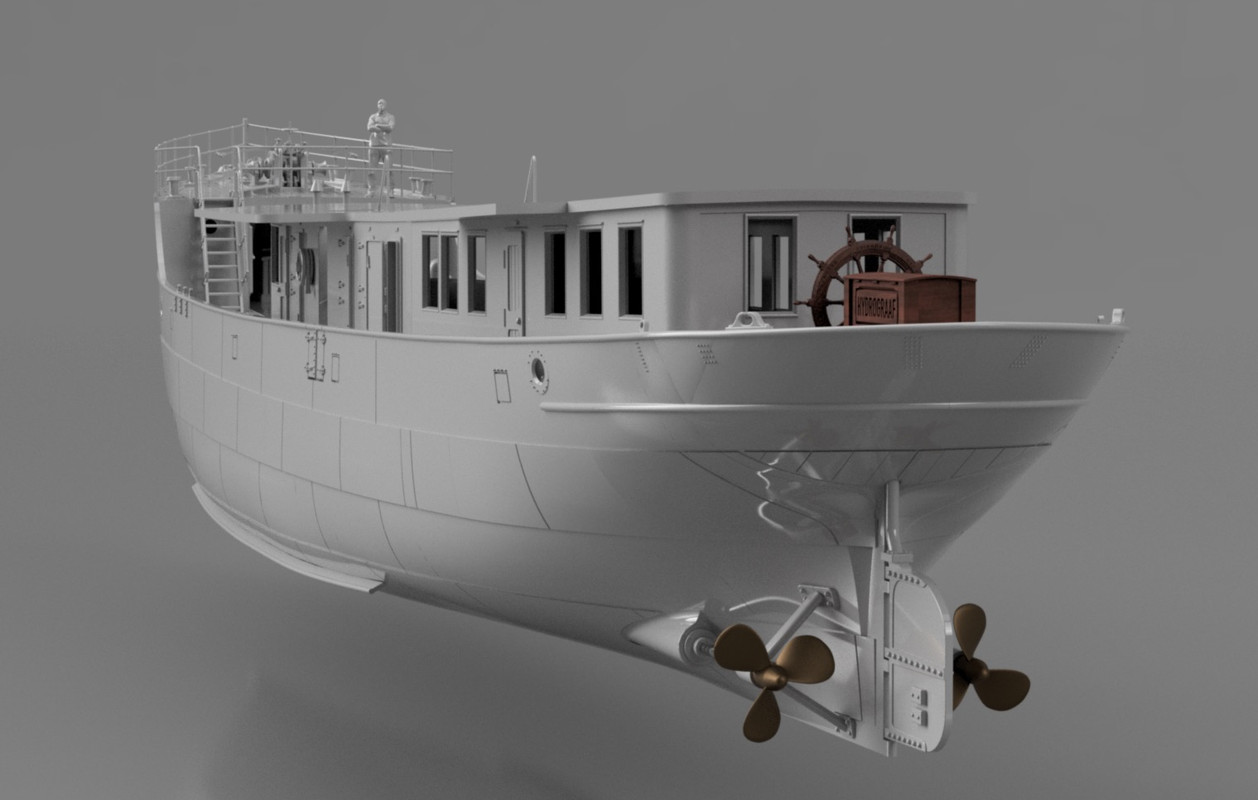

Don't know, how it was really done, but then they would have probably rigged a boring-bar of nearly the diameter of the shaft, coupled to the engine shaft, checked optically with a sort of theodolite the alignement against markers at the end of the bar. There then probably would have been a travelling steel-holder, the movement of which is coupled to the rotation of the boring-bar to give a defined longitudinal feed.
To avoid this boring operation, also Babbit-bearings were used: the propeller-shaft was carefully aligned, passing through a cast-iron bearing housing. The shaft then would be covered in graphite as a releasing agent at the place of the bearing and liquid white-metal was poured into the housing. In this way, the bearing would be perfectly aligned.
Still, manipulating these bits of pieces that may weigh several tons is not so easy ...