Hi guys,
could it be that someone have some pics or drawings ov open Arizona's hangar doors ? I want to make one of them open with Kingfisher pulling out with crane.
Any help is very appreciated,
thanks in advance,
Slider
USS Arizona's hangar door ??
Moderators: Timmy C, Gernot, Olaf Held, ArizonaBB39, JWintjes
-
Werner

- Posts: 2299
- Joined: Mon Jan 10, 2005 1:10 am
- Location: (42.24,-87.81)
-
Slider
-
Timmy C

- Posts: 12472
- Joined: Mon Jan 10, 2005 6:00 pm
- Location: Ottawa, Canada
Possibly on the catapults themselves: http://www.navsource.org/archives/01/013852.jpg
De quoi s'agit-il?
-
Devin

- Posts: 2503
- Joined: Mon Jan 10, 2005 10:46 am
- Location: Hoboken, NJ
- Contact:
-
Werner
- Posts: 2299
- Joined: Mon Jan 10, 2005 1:10 am
- Location: (42.24,-87.81)
There is a perverse logic about the hanger issue which was developed in all those Newport wargames.
Cruisers would likely serve on detached missions or scout into unfavorable weather. The float planes are an essential part of the scouting mission. The hangers therefore have important warfighting value
The battleships use float planes for spotting at extreme ranges. Since many battleships always operate together (in theory), the essential nature of each floatplane is lost. Other battleships or the screen cruisers and their floatplanes (the Omahas), the destroyers or the attached carrier's planes could also serve this role. Note that the Omaha as a screen cruiser does not have hangers either.
The US 8-inch heavy cruiser evolved as the distant scout for the battle force. As such, it's other mission was to protect the carrier, the other part of the scouting force against the Japanese cruisers.
In the older battleships, airplanes were added long after the design. To carve out hangers would destroy "officer's country" aft. On modern battleships, there is insufficient depth there because of the tunnel stern. A large open space aft would disrupt watertight protection and weaken the ships structure.
Only the high, square sterned cruisers of the late '30s and '40s have hangers aft. This led to some surprises, particularly in the way these ships responded to strong winds. Designs in process when the war started would have moved hangers and aircraft back amidships.
Cruisers would likely serve on detached missions or scout into unfavorable weather. The float planes are an essential part of the scouting mission. The hangers therefore have important warfighting value
The battleships use float planes for spotting at extreme ranges. Since many battleships always operate together (in theory), the essential nature of each floatplane is lost. Other battleships or the screen cruisers and their floatplanes (the Omahas), the destroyers or the attached carrier's planes could also serve this role. Note that the Omaha as a screen cruiser does not have hangers either.
The US 8-inch heavy cruiser evolved as the distant scout for the battle force. As such, it's other mission was to protect the carrier, the other part of the scouting force against the Japanese cruisers.
In the older battleships, airplanes were added long after the design. To carve out hangers would destroy "officer's country" aft. On modern battleships, there is insufficient depth there because of the tunnel stern. A large open space aft would disrupt watertight protection and weaken the ships structure.
Only the high, square sterned cruisers of the late '30s and '40s have hangers aft. This led to some surprises, particularly in the way these ships responded to strong winds. Designs in process when the war started would have moved hangers and aircraft back amidships.
If an unfriendly power had attempted to impose on America the mediocre educational performance that exists today, we might well have viewed it as an act of war.
-- "A Nation at Risk" (1983)
-- "A Nation at Risk" (1983)
-
Tracy White
- Posts: 10628
- Joined: Mon Jan 10, 2005 11:02 am
- Location: EG48
- Contact:
I missed this thread for a while.
No hangars on battleships; aircraft were stored on the cats themselves and on a trolly cart that could be moved about the deck. Airzona was no exception.
No hangars on battleships; aircraft were stored on the cats themselves and on a trolly cart that could be moved about the deck. Airzona was no exception.
Tracy White -Researcher@Large
"Let the evidence guide the research. Do not have a preconceived agenda which will only distort the result."
-Barbara Tuchman
"Let the evidence guide the research. Do not have a preconceived agenda which will only distort the result."
-Barbara Tuchman
-
waynec
- Posts: 7
- Joined: Sun Mar 18, 2007 9:31 pm
- Location: colorado, usa
- Contact:
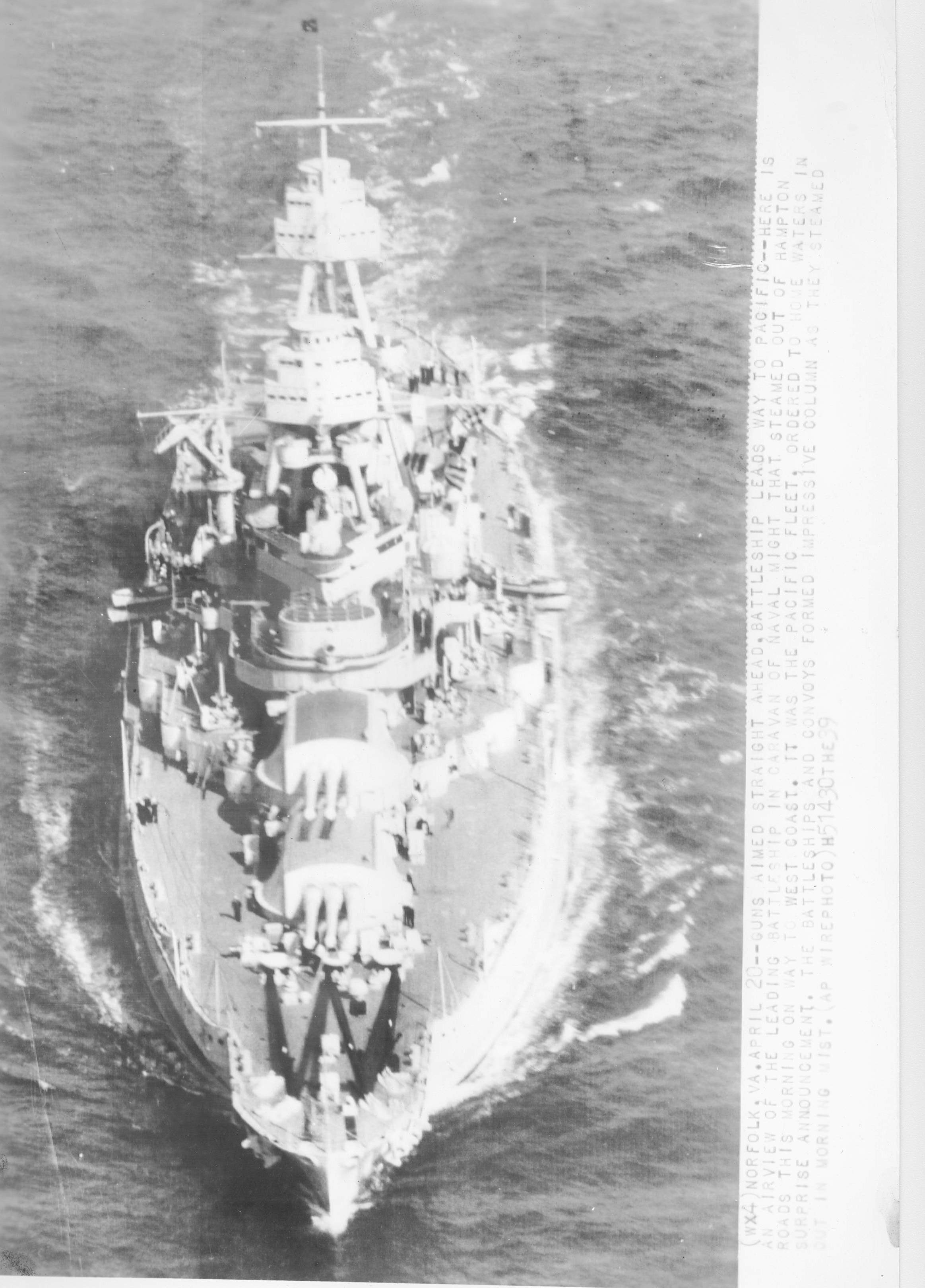
my top plans just call it a bolted plate. my cutaway side view shows them at the aft end of the engine rooms so they could be a way to get large engine components out without cutting into the hull.Slider wrote:ok, than where were airplanes stored on US battleships ? Each carried 3 of them,Werner wrote:Er, no hangers on USN battleships.
and, those big metal plates on each side of the x turret - didn't was that hangar/aircraft stovage compartment ?

-
Werner
- Posts: 2299
- Joined: Mon Jan 10, 2005 1:10 am
- Location: (42.24,-87.81)
Maybe those were "leftovers" from all the turbine troubles Arizona had between commissioning and 1920.waynec wrote:[my top plans just call it a bolted plate. my cutaway side view shows them at the aft end of the engine rooms so they could be a way to get large engine components out without cutting into the hull.
If an unfriendly power had attempted to impose on America the mediocre educational performance that exists today, we might well have viewed it as an act of war.
-- "A Nation at Risk" (1983)
-- "A Nation at Risk" (1983)
-
Tracy White
- Posts: 10628
- Joined: Mon Jan 10, 2005 11:02 am
- Location: EG48
- Contact:
They were known as "soft patches" and they were for the removal of engine components in general. While they were bolted down, they were ALSO covered with wood and the only indication of their presence was an outline in wood on the deck. You can see them in Stillwell's Arizona book in some of the pictures of Marines exercising.
Tracy White -Researcher@Large
"Let the evidence guide the research. Do not have a preconceived agenda which will only distort the result."
-Barbara Tuchman
"Let the evidence guide the research. Do not have a preconceived agenda which will only distort the result."
-Barbara Tuchman