Iceman 29 wrote:I'm looking for American flag decals around 1/200, 48 stars. Any ideas?
Pascal,
Tomorrow I'll go out to the shop and look thru my 1:200 MISSOURI kit leftovers box - I may have the flag set that came with the kit - I'll check and see.
Hope this helps,
Hank
HMS III
Mocksville, NC
BB62 vet 68-69
Builder's yard:
USS STODDARD (DD-566) 66-68 1:144, Various Lg Scale FC Directors Finished:
USS NEW JERSEY (BB-62) 67-69 1:200
USN Sloop/Ship PEACOCK (1813) 1:48
ROYAL CAROLINE (1748) 1:47
AVS (1768) 1:48
I do indeed have some remaining U.S. flags (1/200) from my BB-63 kit. Here is what they look like:
PM me or email me and we can go from there.
Hank
HMS III
Mocksville, NC
BB62 vet 68-69
Builder's yard:
USS STODDARD (DD-566) 66-68 1:144, Various Lg Scale FC Directors Finished:
USS NEW JERSEY (BB-62) 67-69 1:200
USN Sloop/Ship PEACOCK (1813) 1:48
ROYAL CAROLINE (1748) 1:47
AVS (1768) 1:48
It's very friendly for doing this research, I have a friend in France who is going to print me several 48 stars flag decal plate and also the blue-and-white flag on the forecastle, today.
Iceman 29 wrote:Thanks Hank!
It's very friendly for doing this research, I have a friend in France who is going to print me several 48 stars flag decal plate and also the blue-and-white flag on the forecastle, today.
Pascal,
OK, good that you can source that locally!
FYI - the "blue & white flag on the forecastle" is called the U.S. Navy Jack and is flown on the jackstaff on the bow of U.S. vessels that are moored or anchored.
I'm really enjoying your build!!!
Hank
HMS III
Mocksville, NC
BB62 vet 68-69
Builder's yard:
USS STODDARD (DD-566) 66-68 1:144, Various Lg Scale FC Directors Finished:
USS NEW JERSEY (BB-62) 67-69 1:200
USN Sloop/Ship PEACOCK (1813) 1:48
ROYAL CAROLINE (1748) 1:47
AVS (1768) 1:48
Glad that Pascal was able to locally source the decals he needed. Hank: Question about the Union Jack, has the number of stars changed as have those on the national flag over the years? I haven't paid attention to this!
Fliger747 wrote:Glad that Pascal was able to locally source the decals he needed. Hank: Question about the Union Jack, has the number of stars changed as have those on the national flag over the years? I haven't paid attention to this!
Cheers: Tom
Tom,
I have a top-level team (of one) consisting of a former USN Capt. working diligently on this question in order to make sure the answer you receive is the answer you deserve! Maybe not the CORRECT answer, mind you - but, the answer you deserve!!!!
Election Eve Hijinks!!!!!
Hank
HMS III
Mocksville, NC
BB62 vet 68-69
Builder's yard:
USS STODDARD (DD-566) 66-68 1:144, Various Lg Scale FC Directors Finished:
USS NEW JERSEY (BB-62) 67-69 1:200
USN Sloop/Ship PEACOCK (1813) 1:48
ROYAL CAROLINE (1748) 1:47
AVS (1768) 1:48
The Union Jack became the standard �Navy Jack� on June 14, 1777. And except for a symbolic 14-month period during the 1976 U.S. Bicentennial celebrations, it was in constant U.S. Navy service. The only change was a gradual expansion of the numbers of white stars on the banner as more states joined the union.
Hank
HMS III
Mocksville, NC
BB62 vet 68-69
Builder's yard:
USS STODDARD (DD-566) 66-68 1:144, Various Lg Scale FC Directors Finished:
USS NEW JERSEY (BB-62) 67-69 1:200
USN Sloop/Ship PEACOCK (1813) 1:48
ROYAL CAROLINE (1748) 1:47
AVS (1768) 1:48
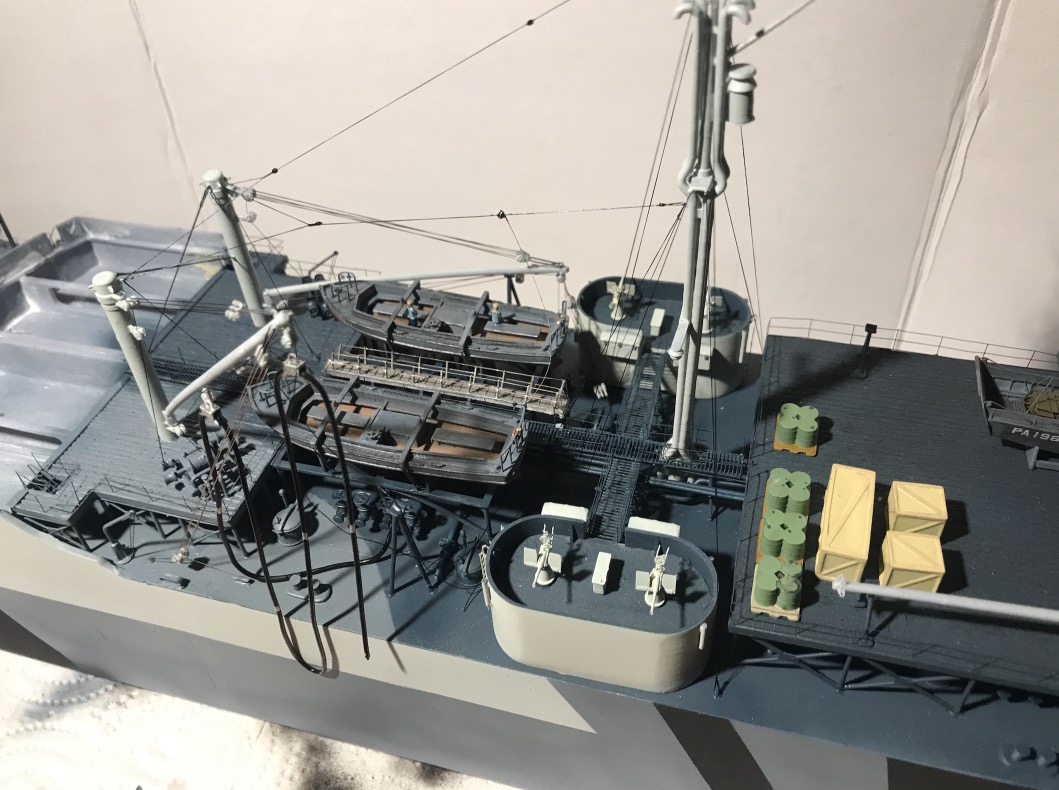
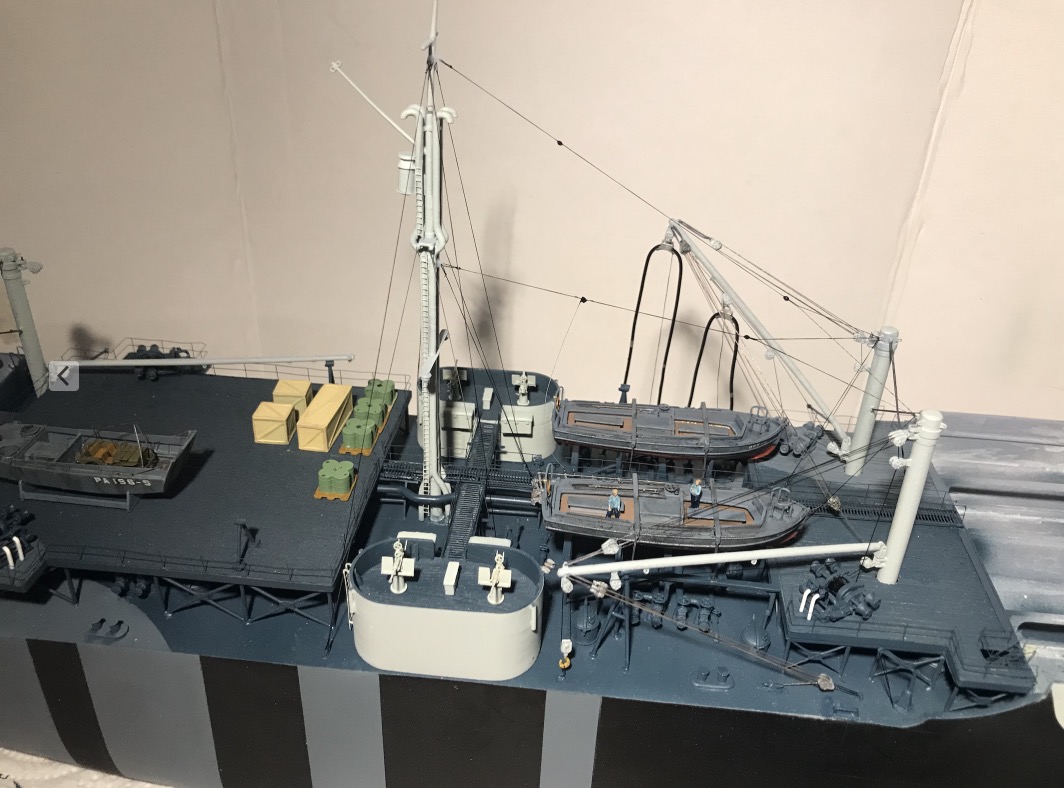
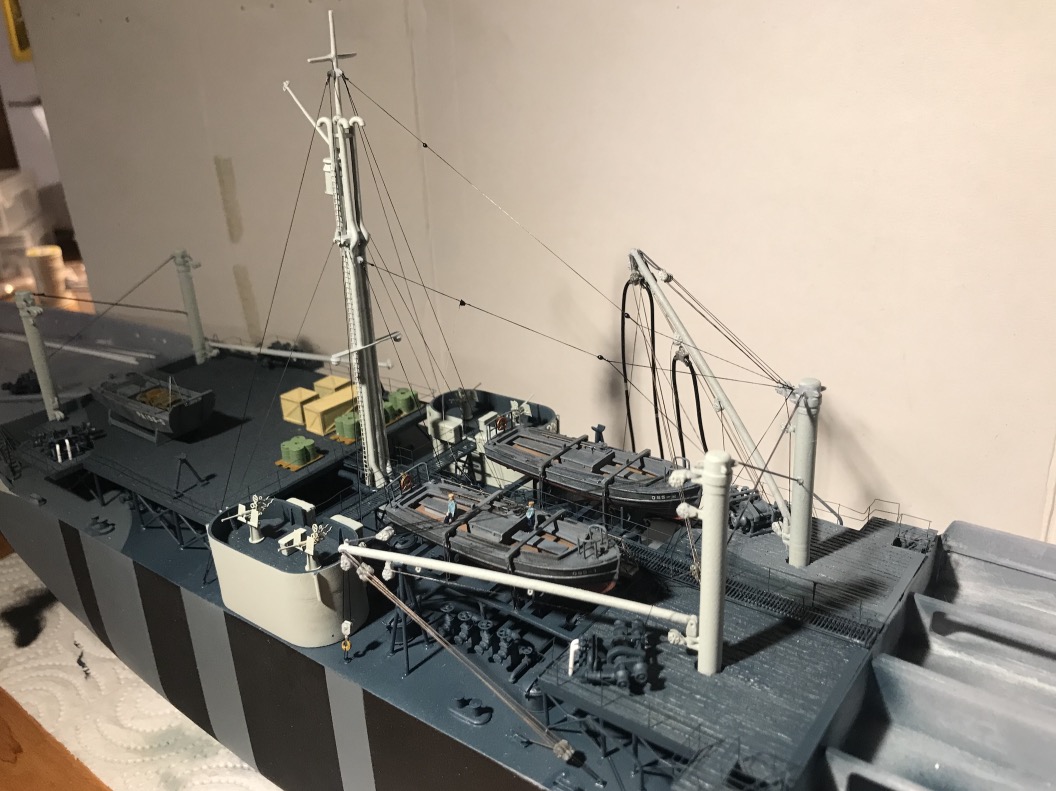
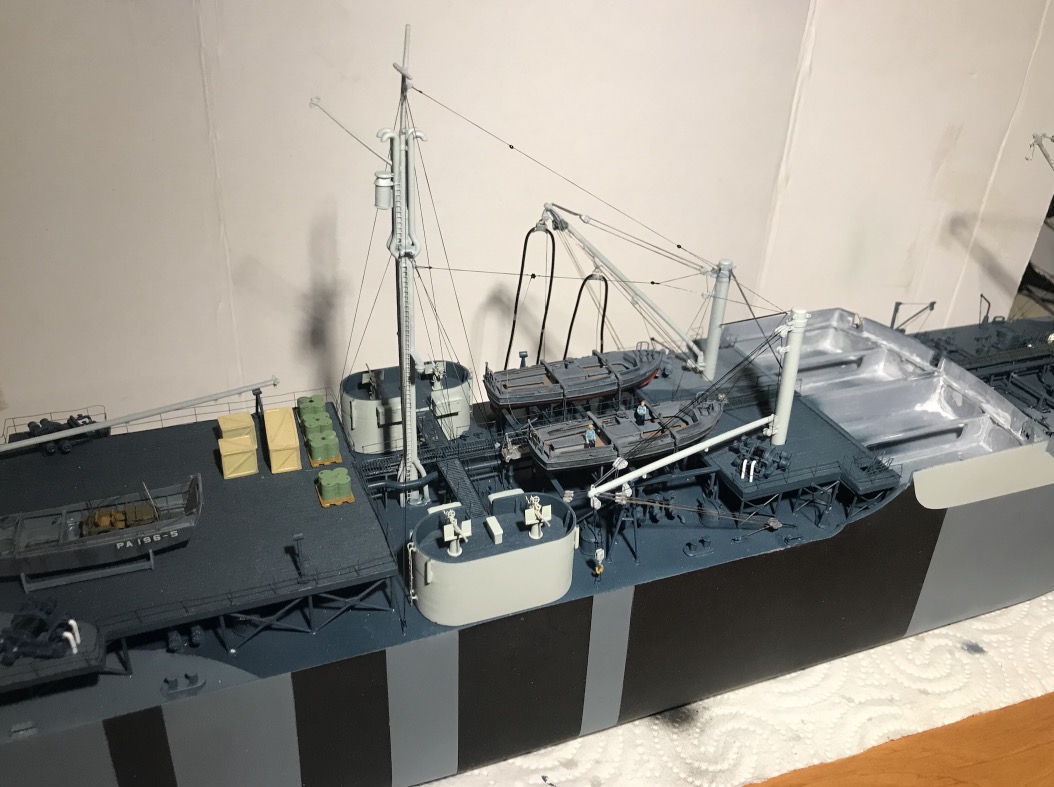
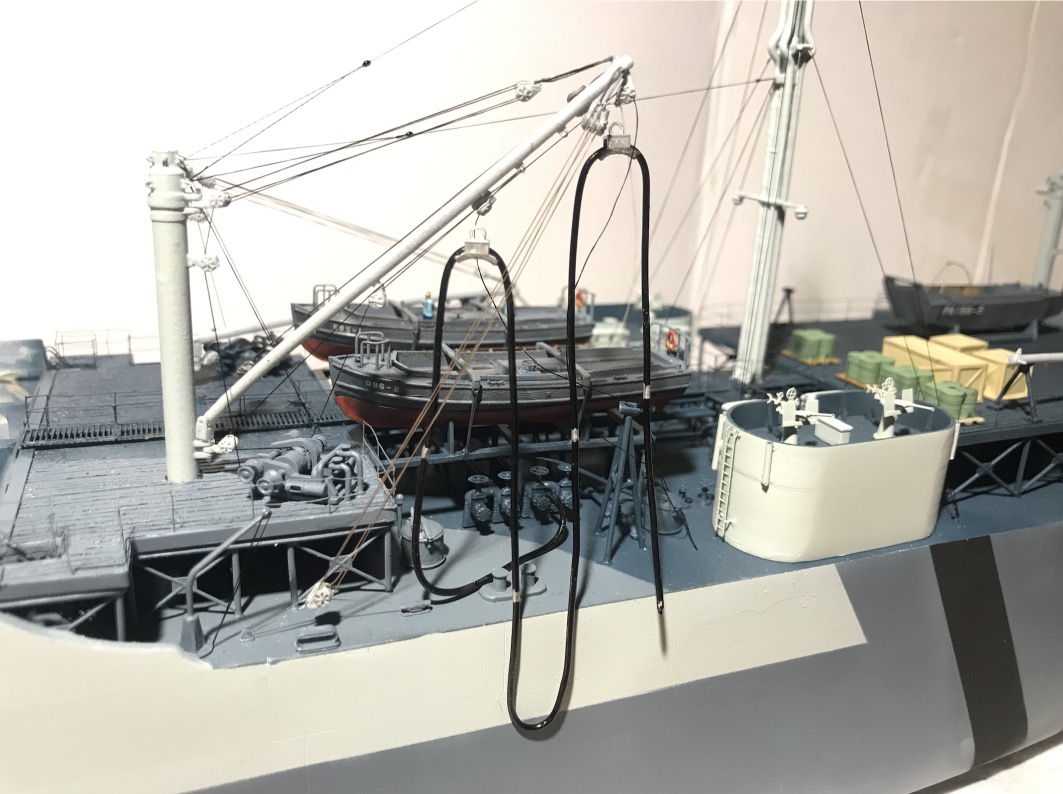
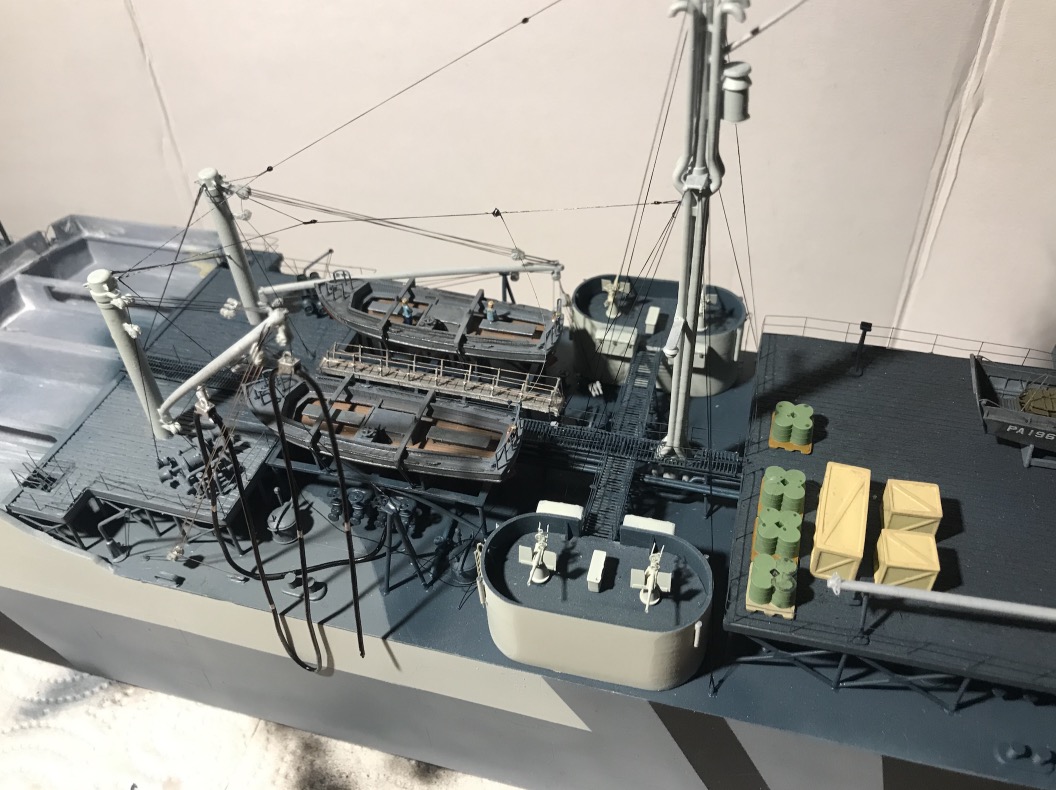
I just spent 2 days on this part of the ship to almost finish it, I'm missing stairs coming from the Arsenal 2.0 (White Ensign), I know it doesn't show much...
The rigging is always a part... of pleasure. You have to take your time and start again if it's not at the level of what you want. I used the stretched plastic method for a rigging, it was a first, it works well, and I have the expected effect of bending with the wind. To be renewed.
A tutorial:
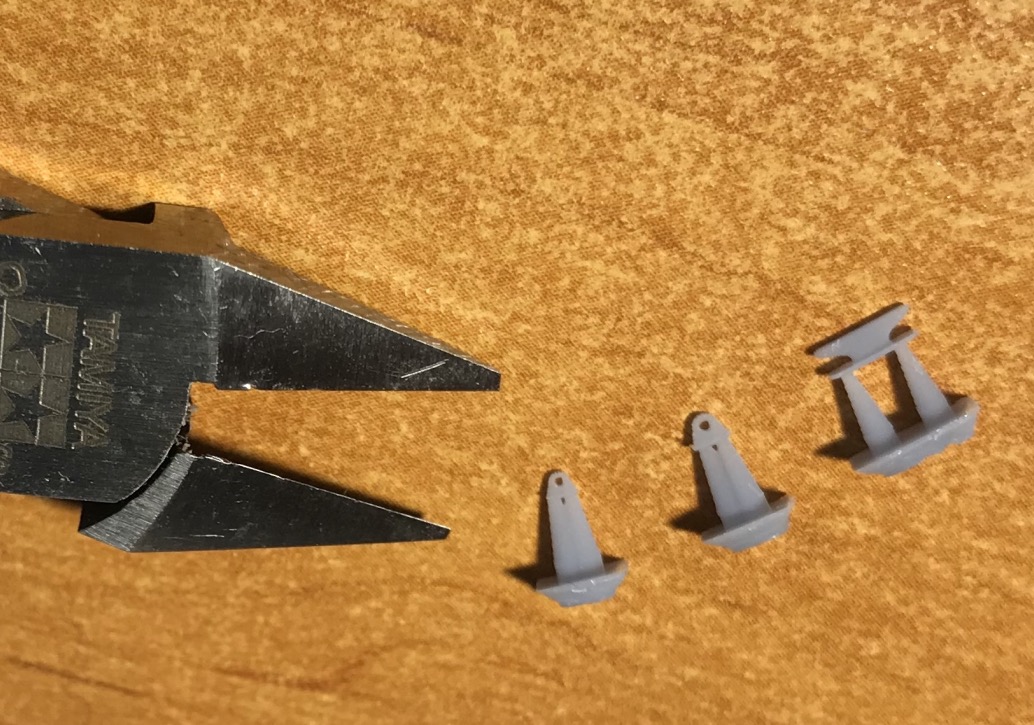
Prints of the deck rings and masts and cleats. It's getting smaller and smaller...
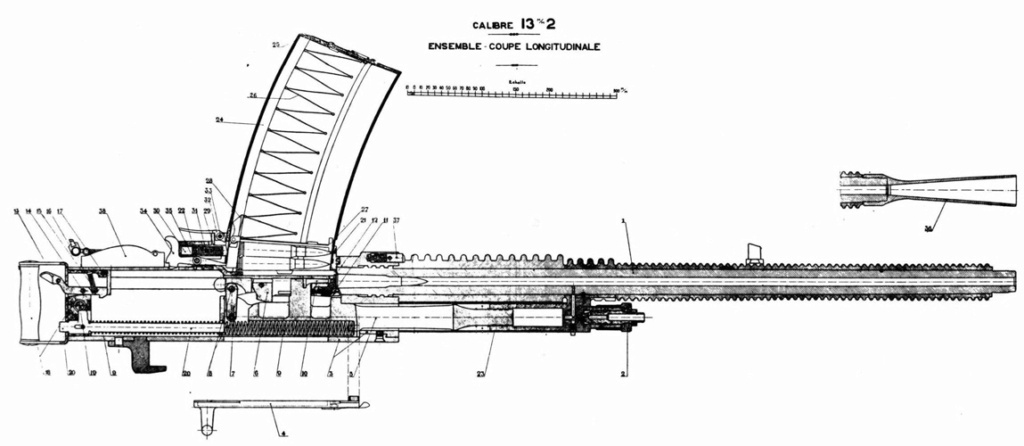
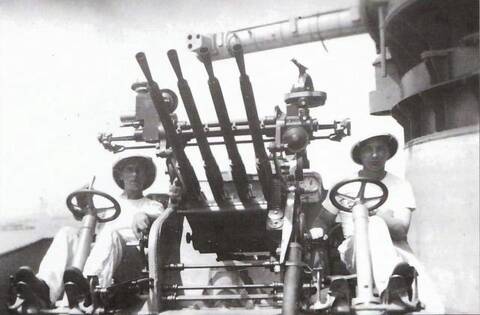
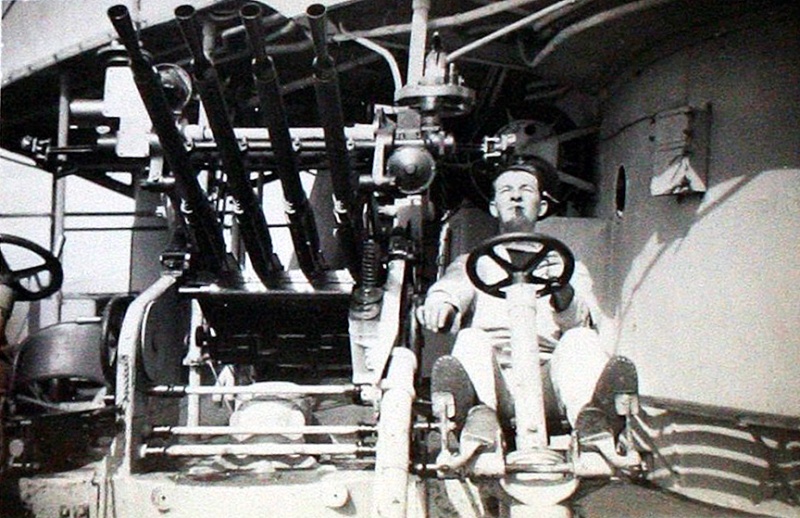
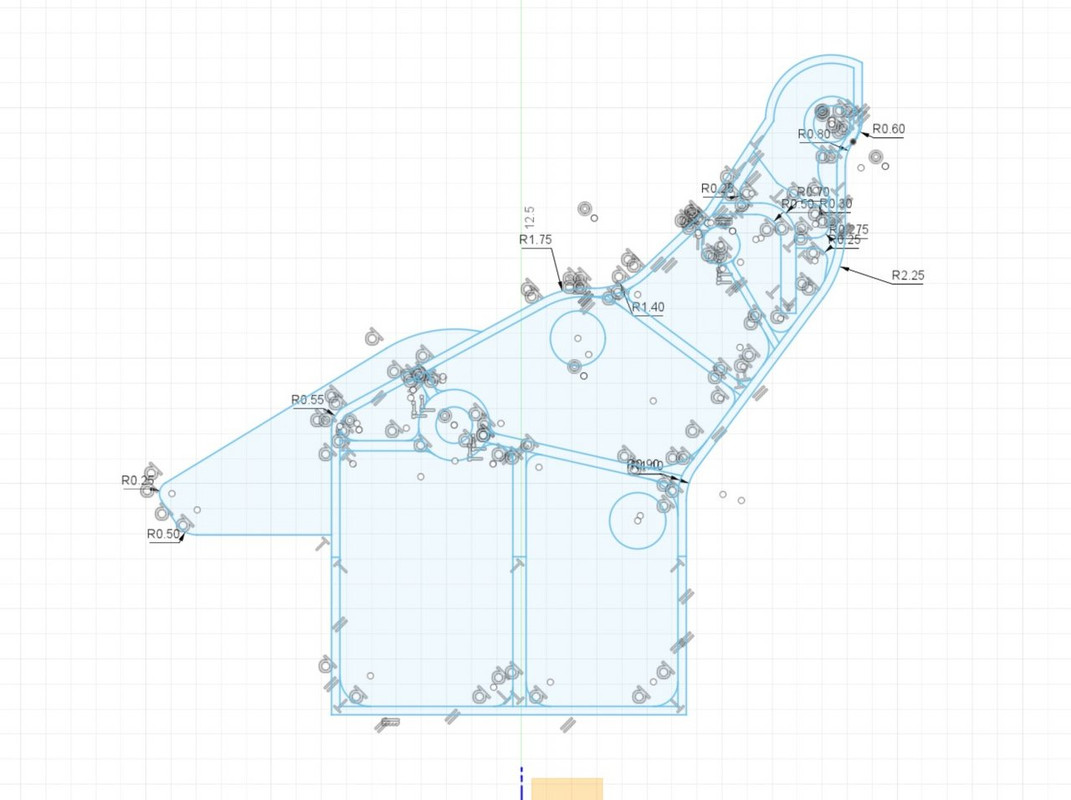
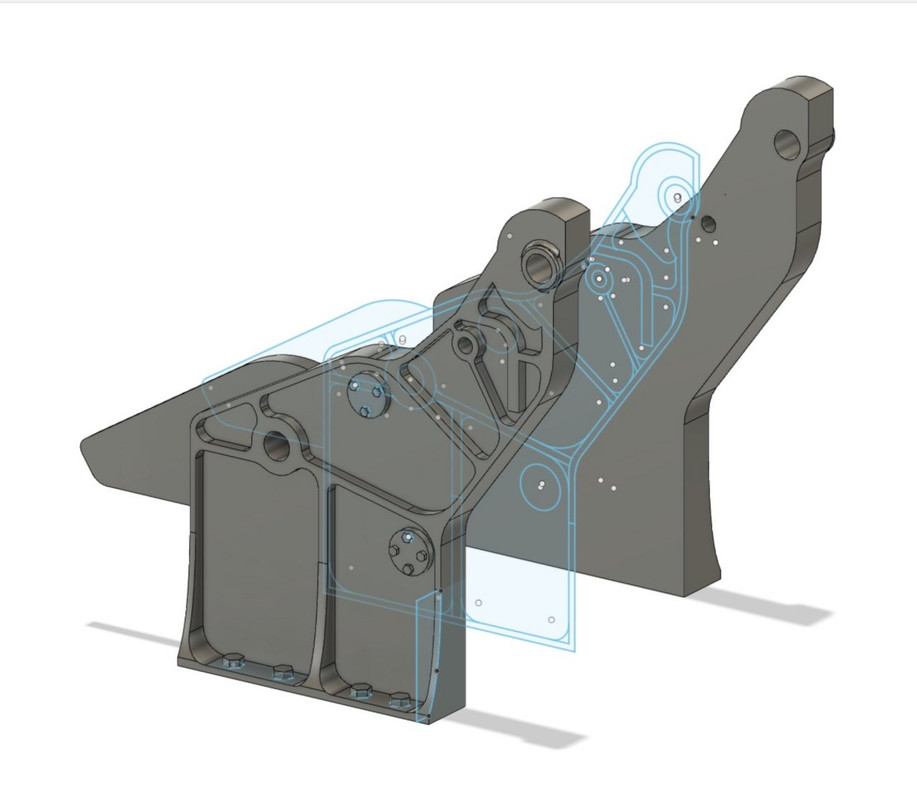
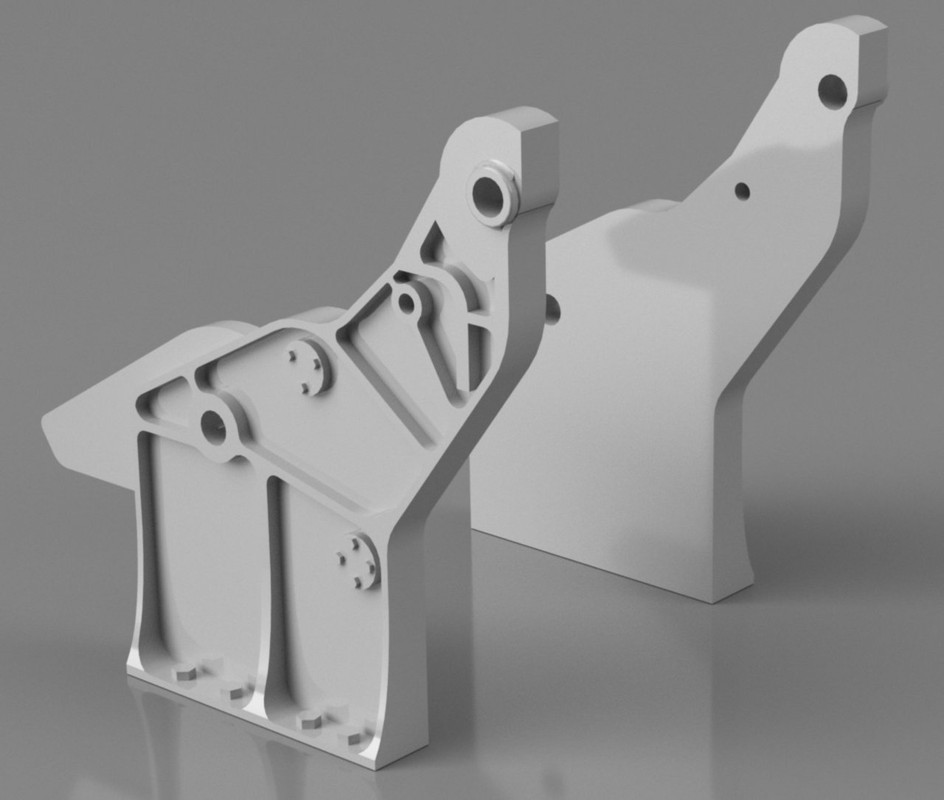
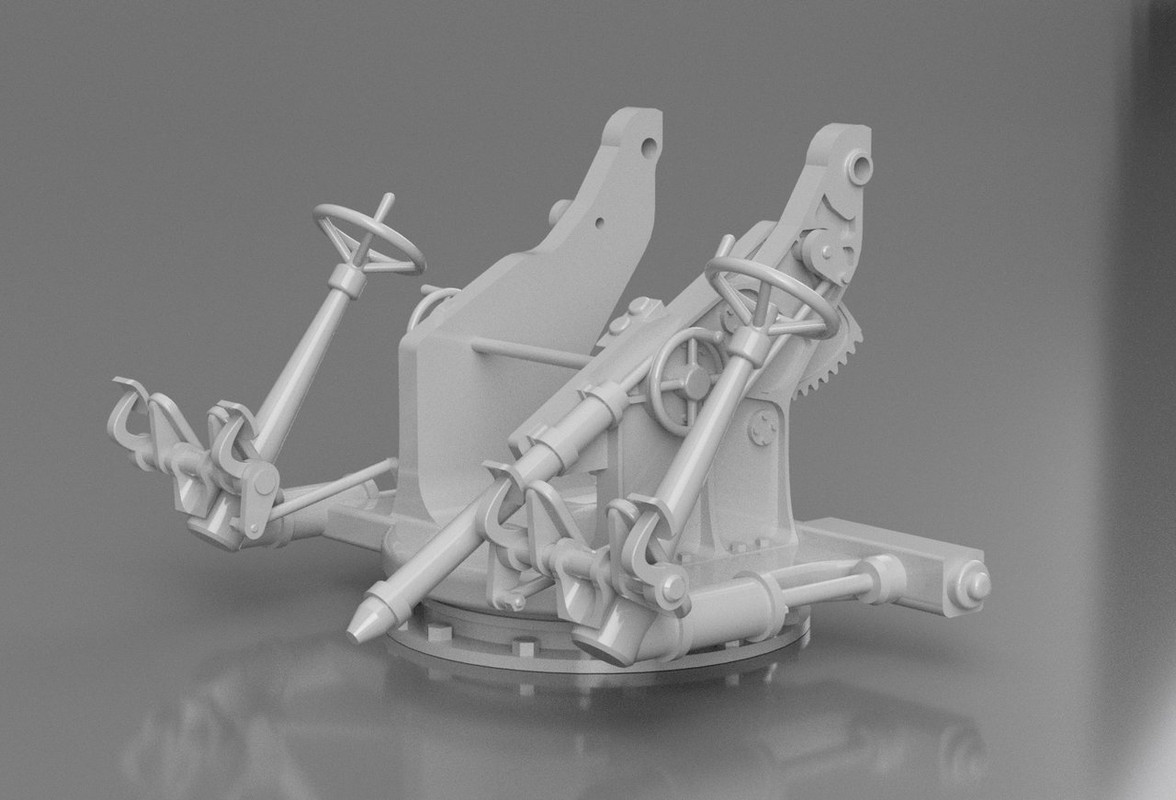
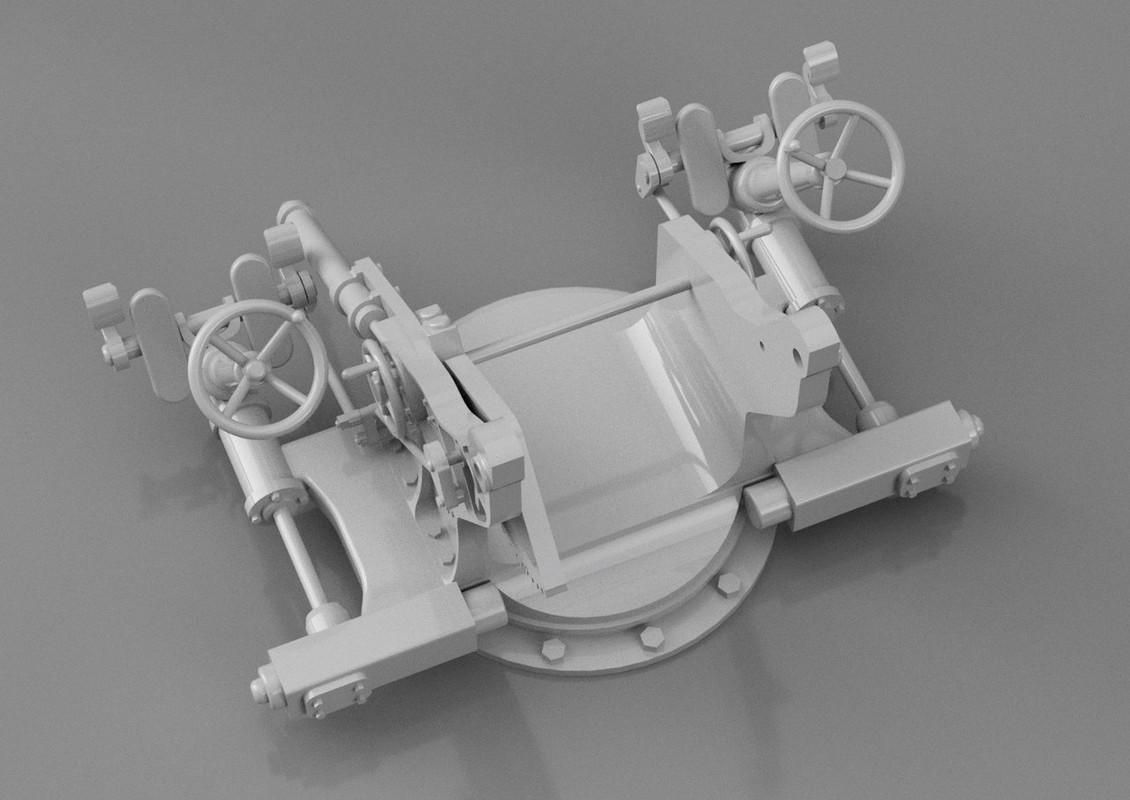
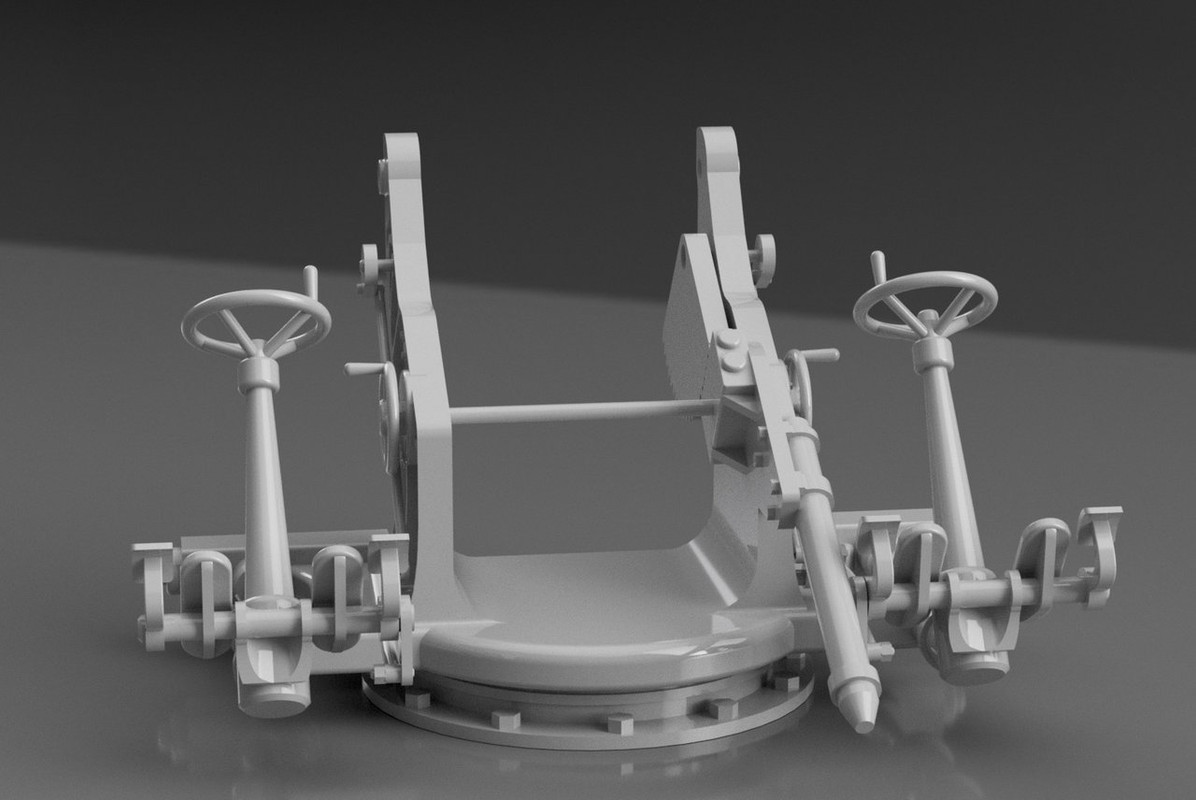
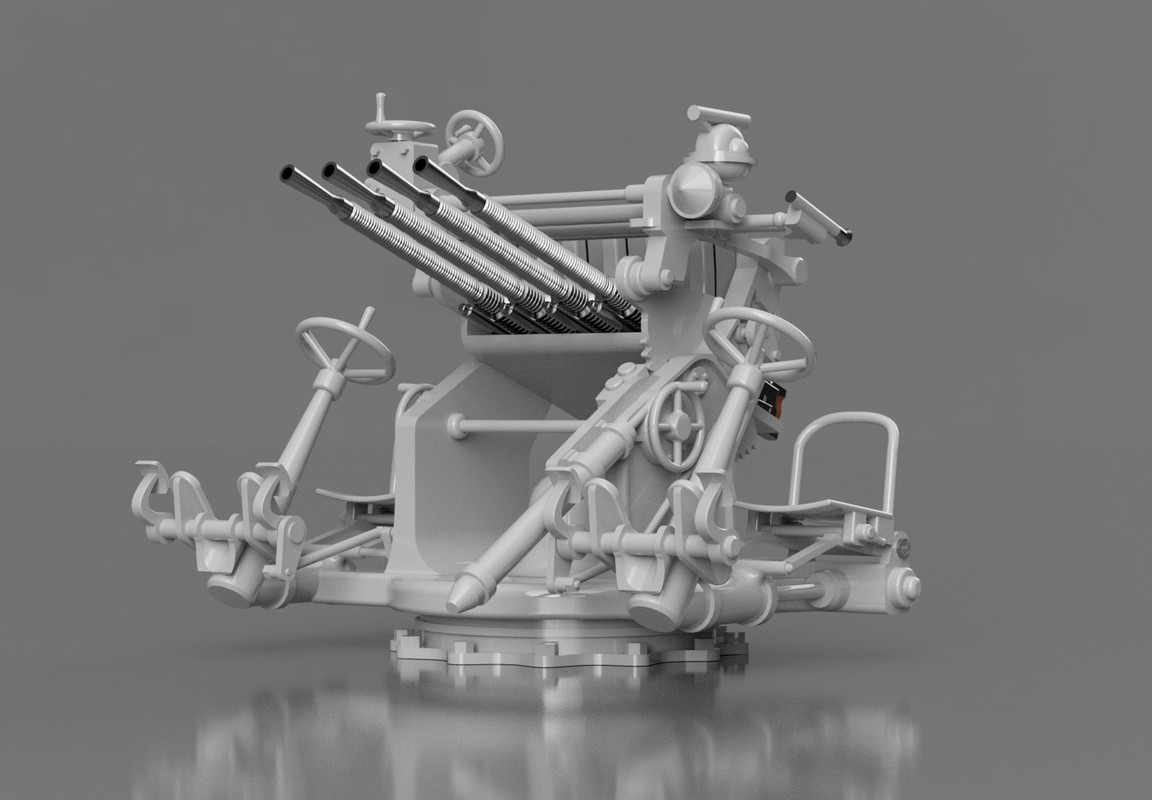
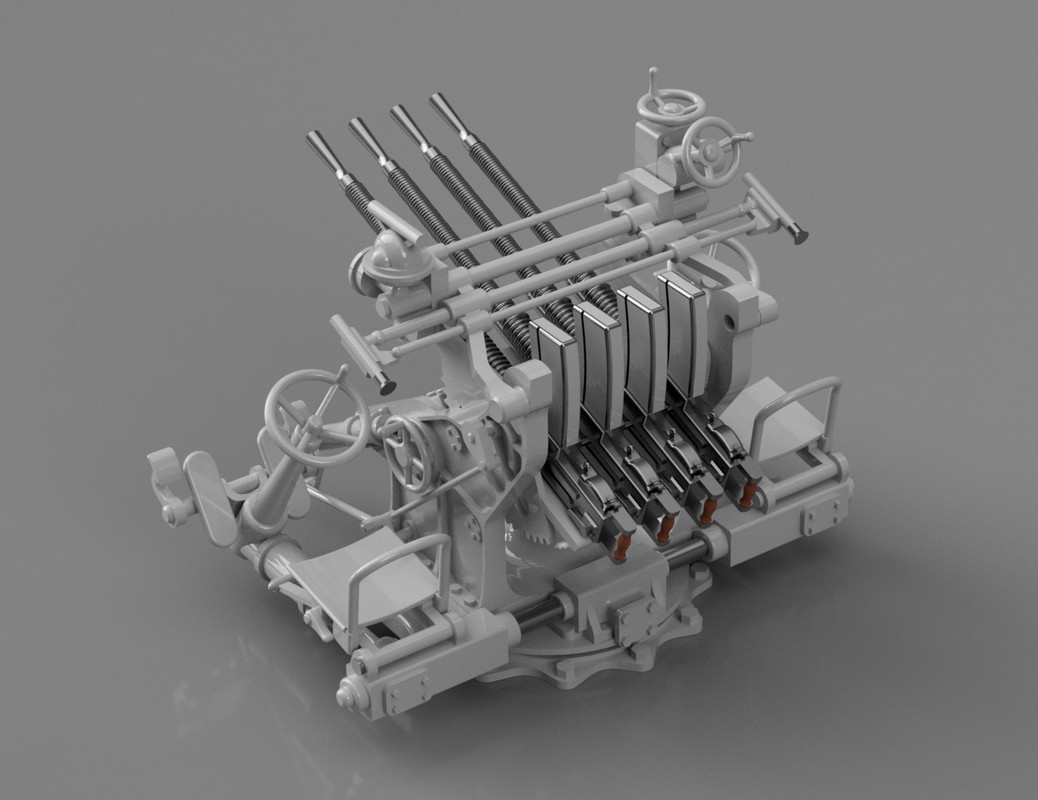
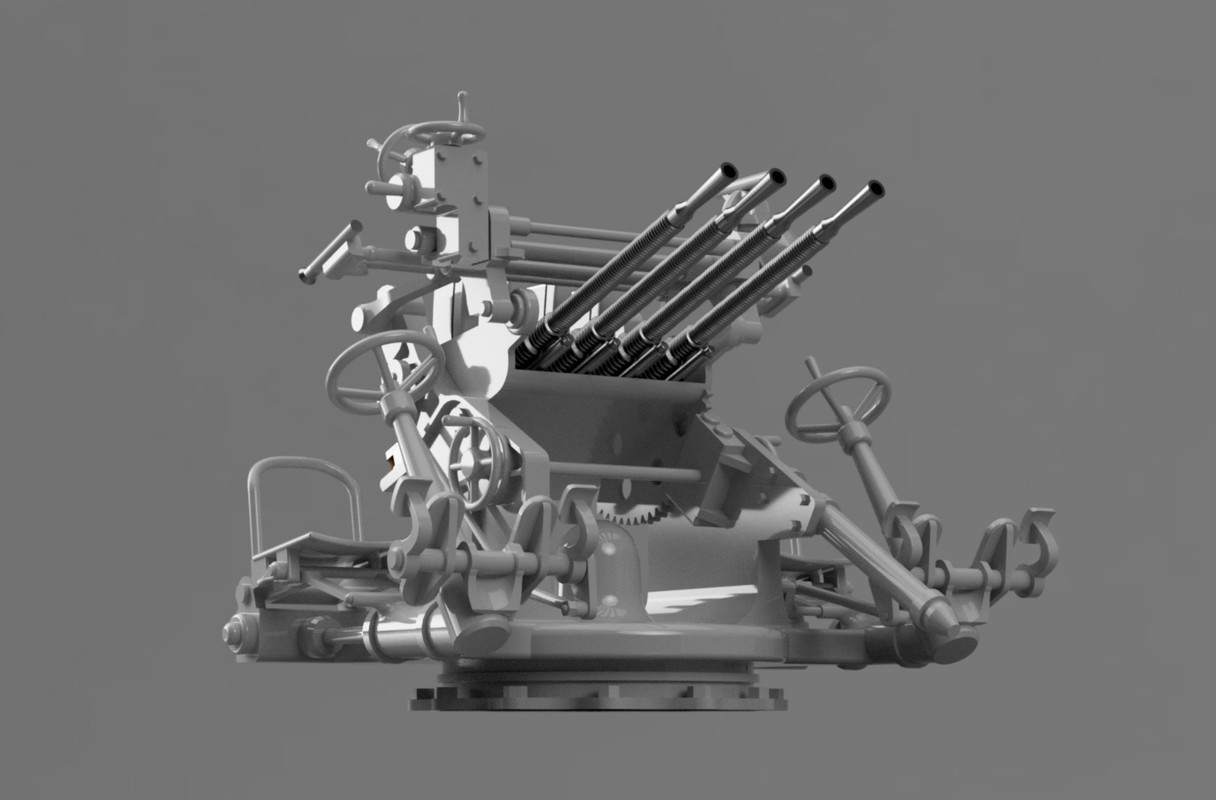
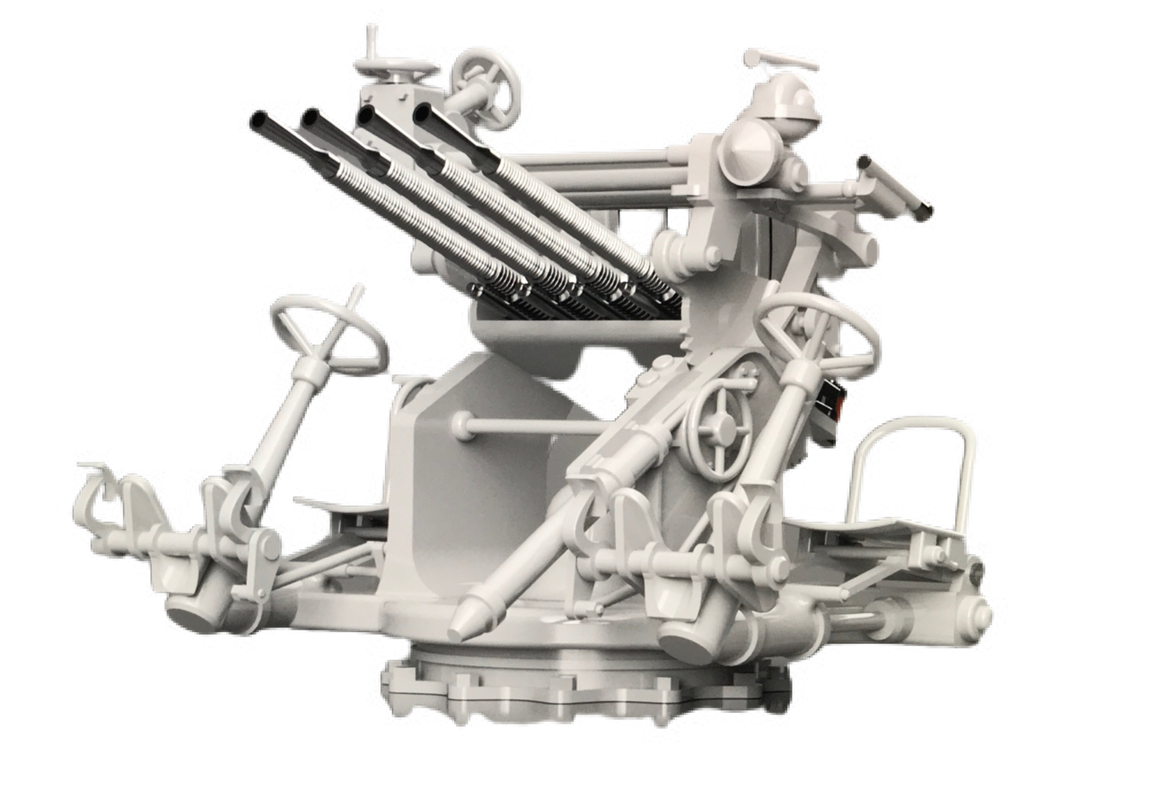
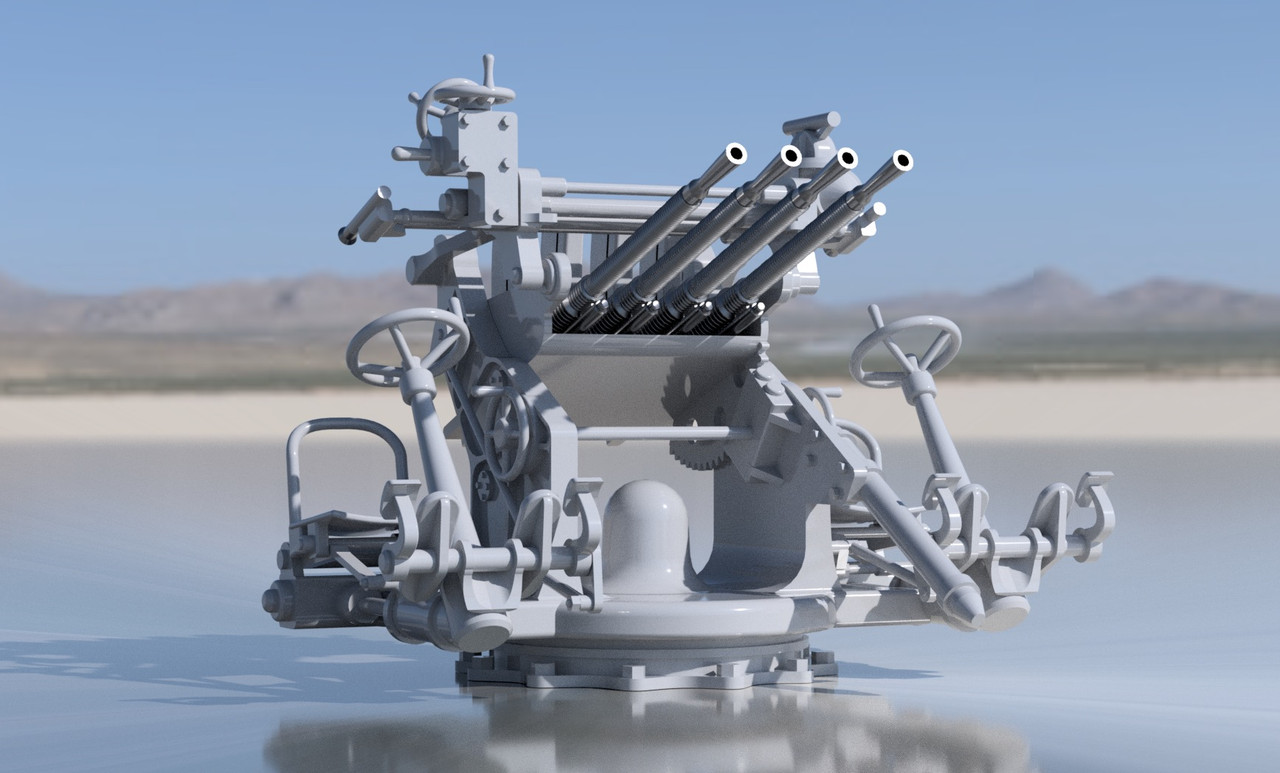
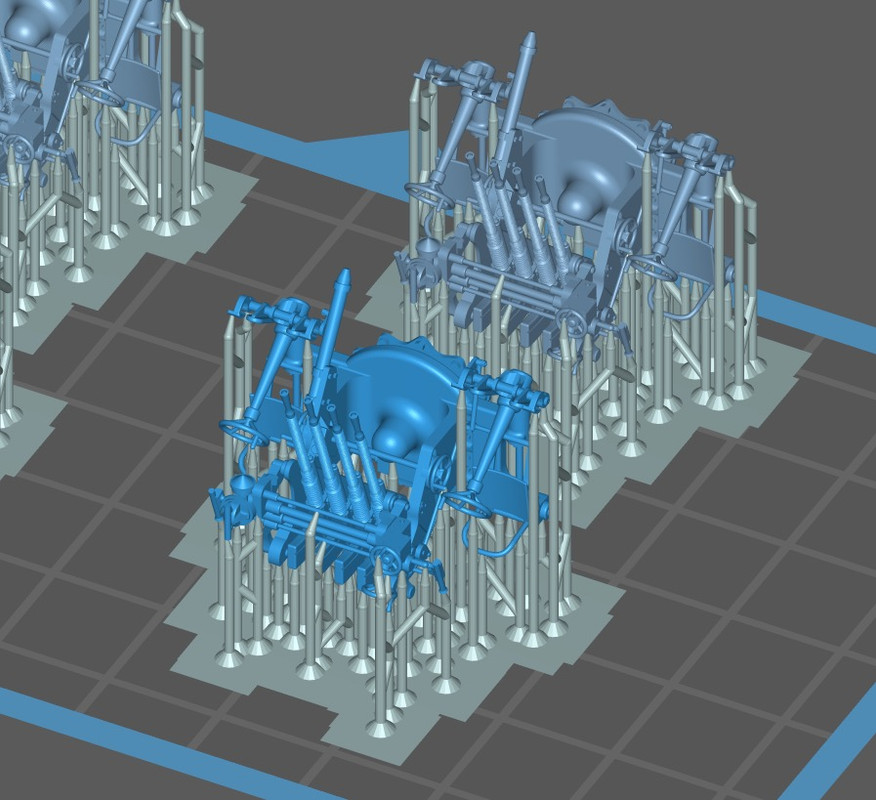
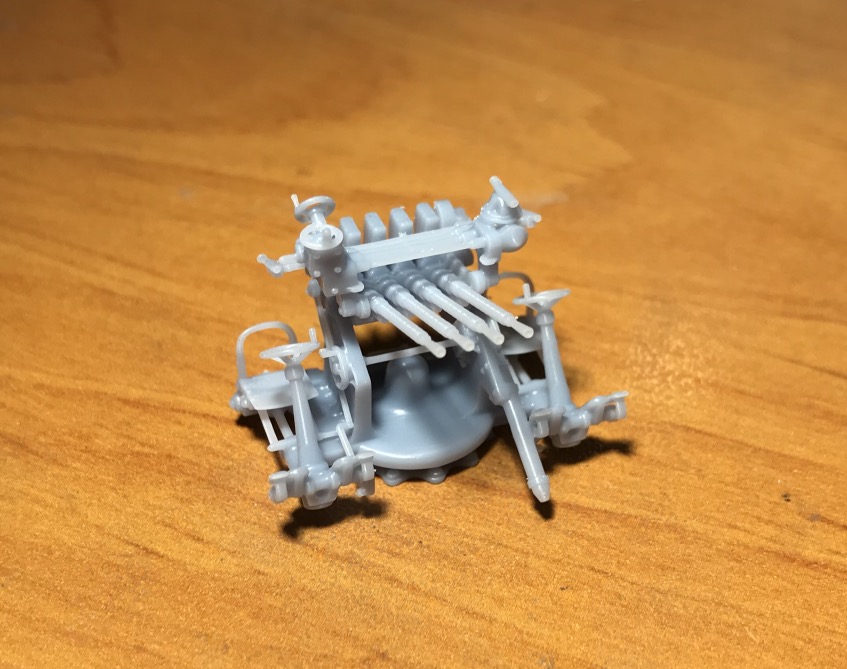
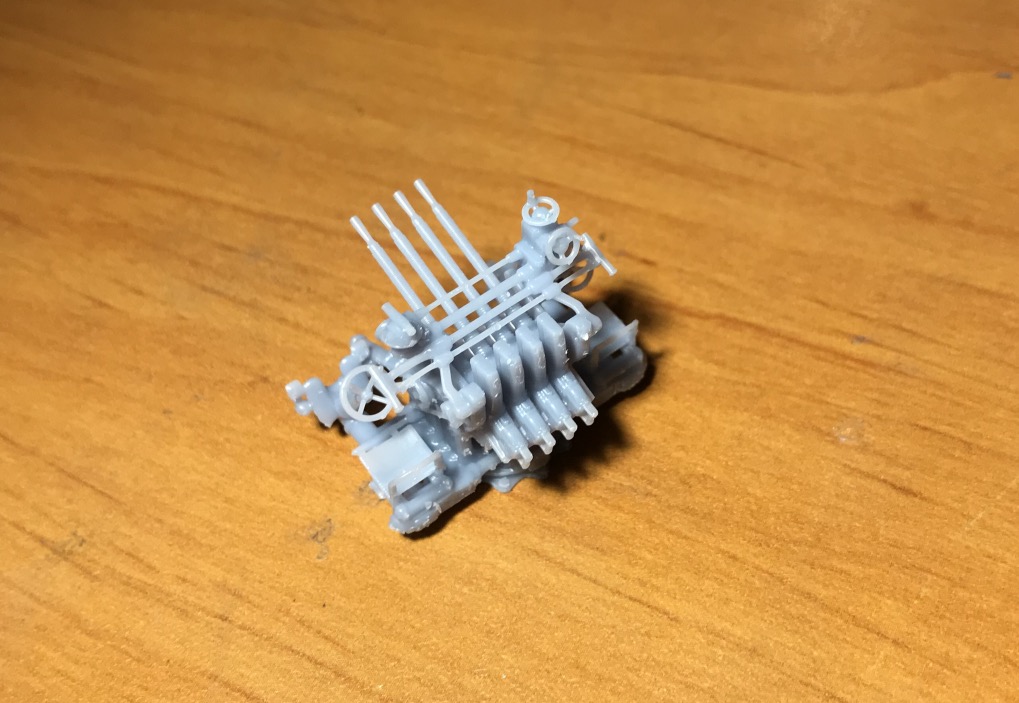
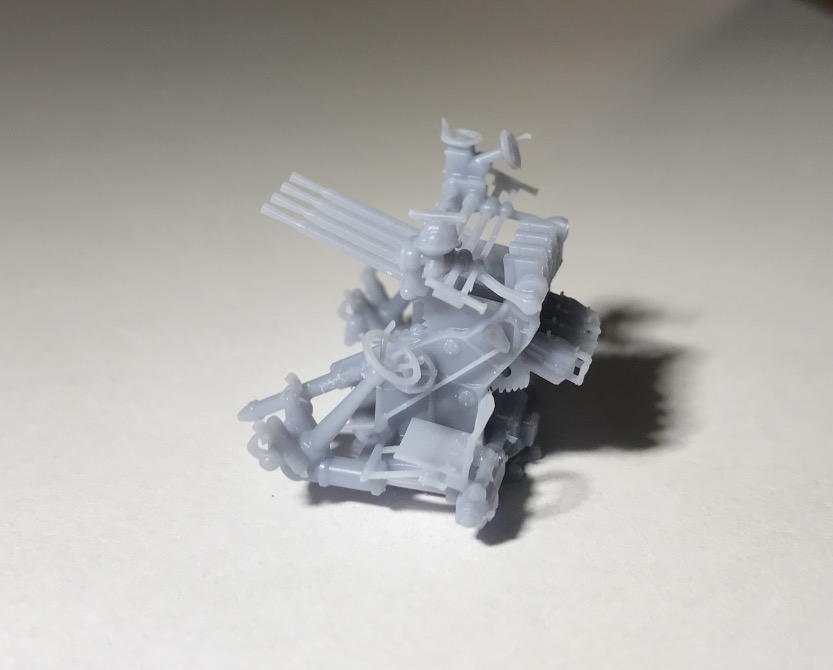
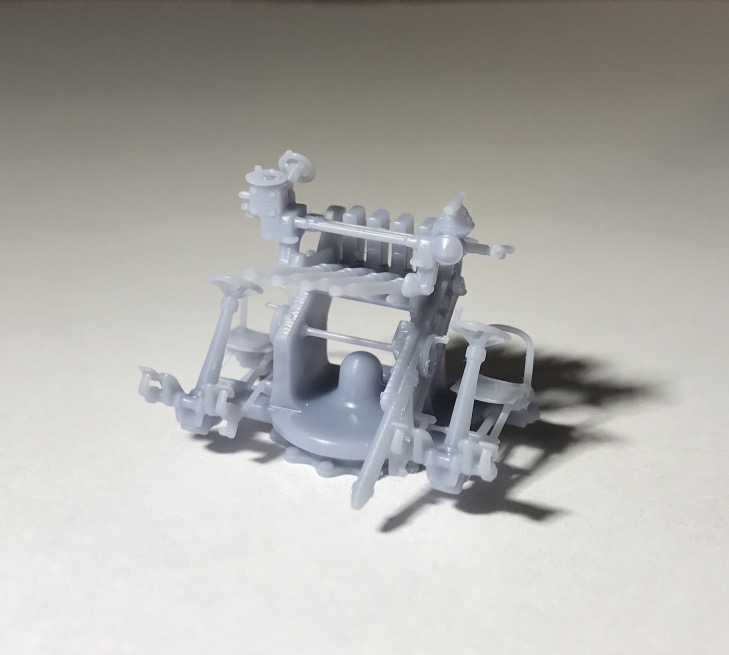
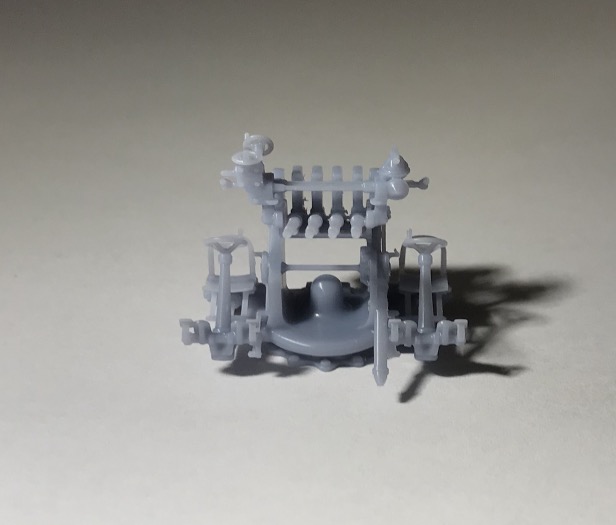
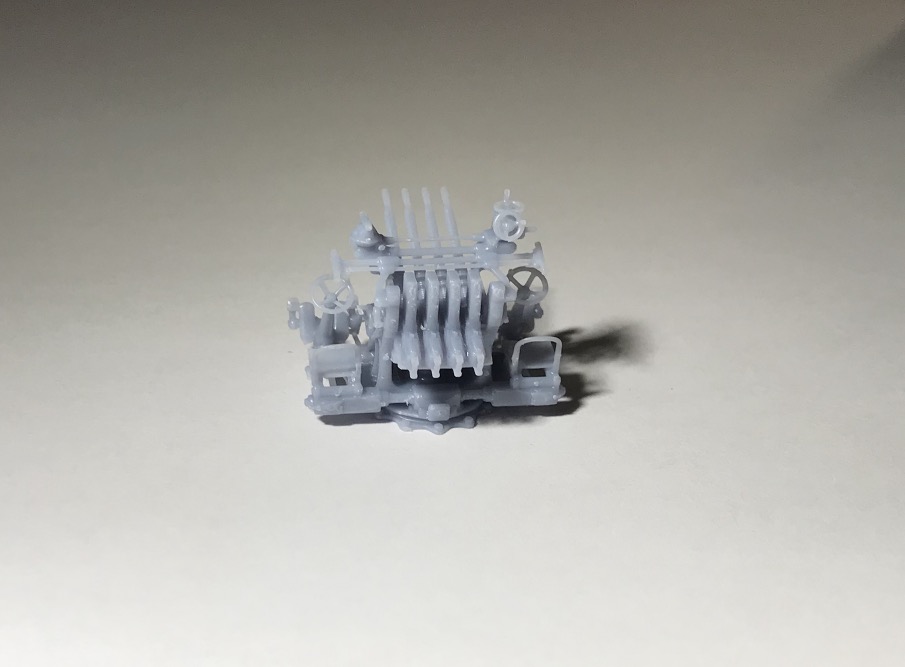
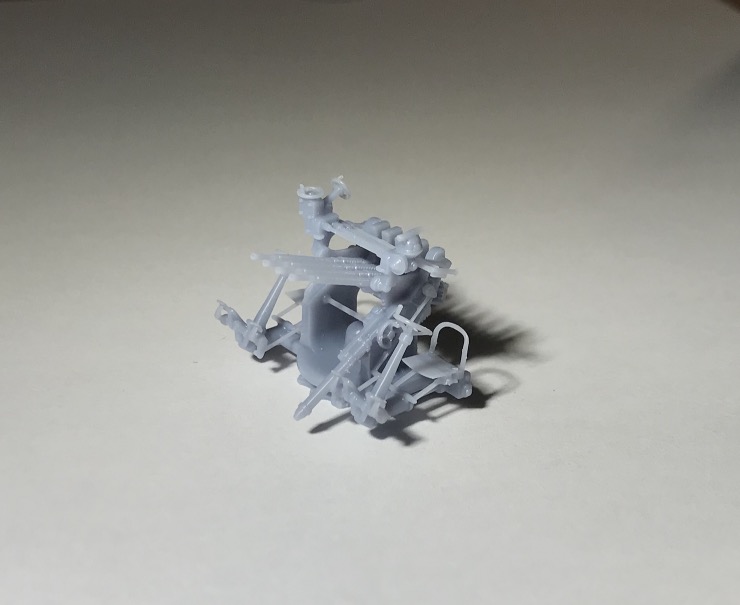
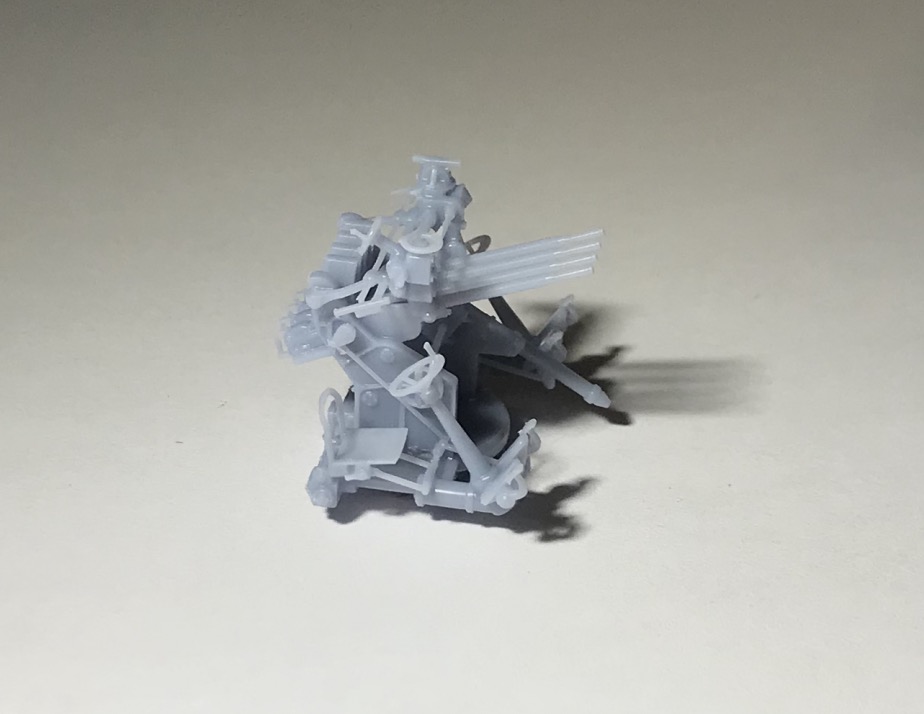
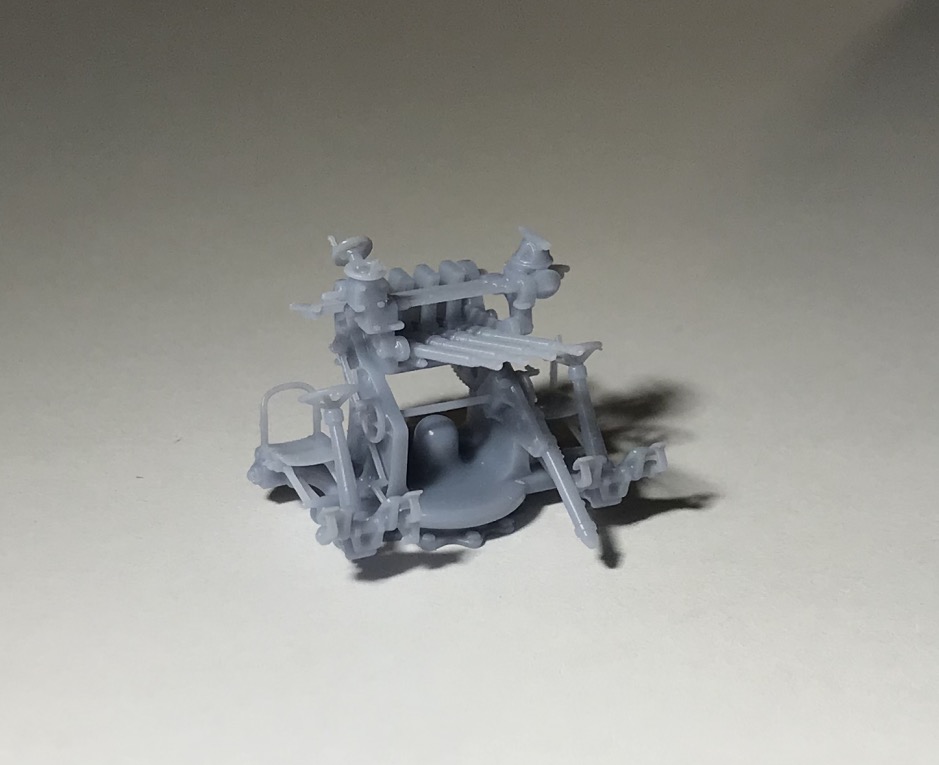
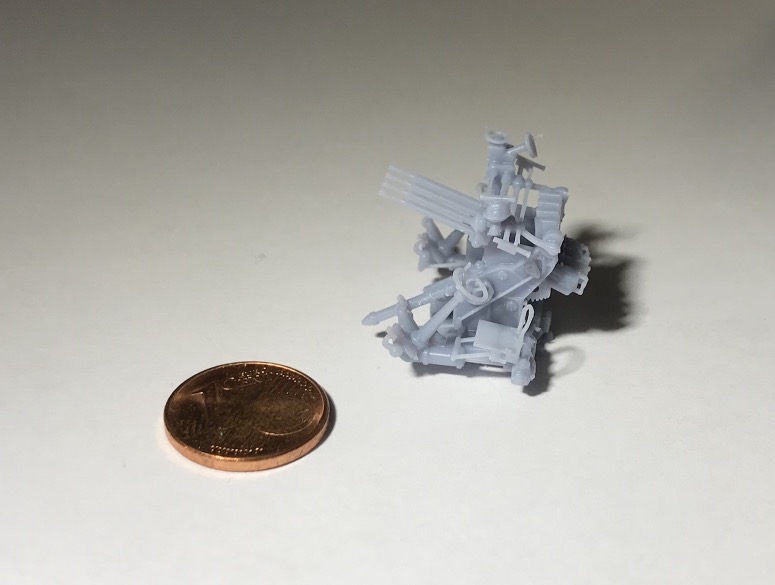
I also started the design of a very French 13.2 mm quadruple anti-aircraft gun (Affuts Hotchkiss) at 1/72 which will be found on Japanese IJN ships as well... It's for a friend, I wouldn't have the use of it for the moment.
In terrestrial too:
A small point tonight on this drawing. I've made good progress, although I'm missing some visual information about the base, so I have to improvise, but I can't be far away, moreover, there are a lot of models a little bit different... Once you understand the mechanisms that animate the whole thing, it's already easier.
The Navy Jack is the same as the blue field with stars on the national ensign/US flag, one for each State in the union. It has also been called the "Jack of the United States" and the "Union Jack." However, Union Jack is the name for the British national flag. Nevertheless, we called the US jack the "Union Jack" on the ships I served on.
The US Navy replaced the traditional blue field with white stars with a "Don't tread On Me" jack (Gadsden flag) after 911.
On 4 June 2019 the Navy returned to flying the traditional Union Jack (blue field with white stars).
Yes, the 5" 38 open mount is very complicated. To make one by hand as I did for APA requires much greater simplification! I still haven't made the spray cover for the training mechanism. There are some good Mx manuals for 5" 38 closed mounts, which show at least the parts in some detail, which for the gun and basic carriage and machinery will remain mostly the same. For 1:200 this is a fairly small and complex item! I did print successfully yesterday several inclined ladders that my 1:192 Missouri is lacking. Since the ABS resin I am using is fairly flexible, they seem durable enough. They seemed too small to easily make from paper as I did the ones on the APA.
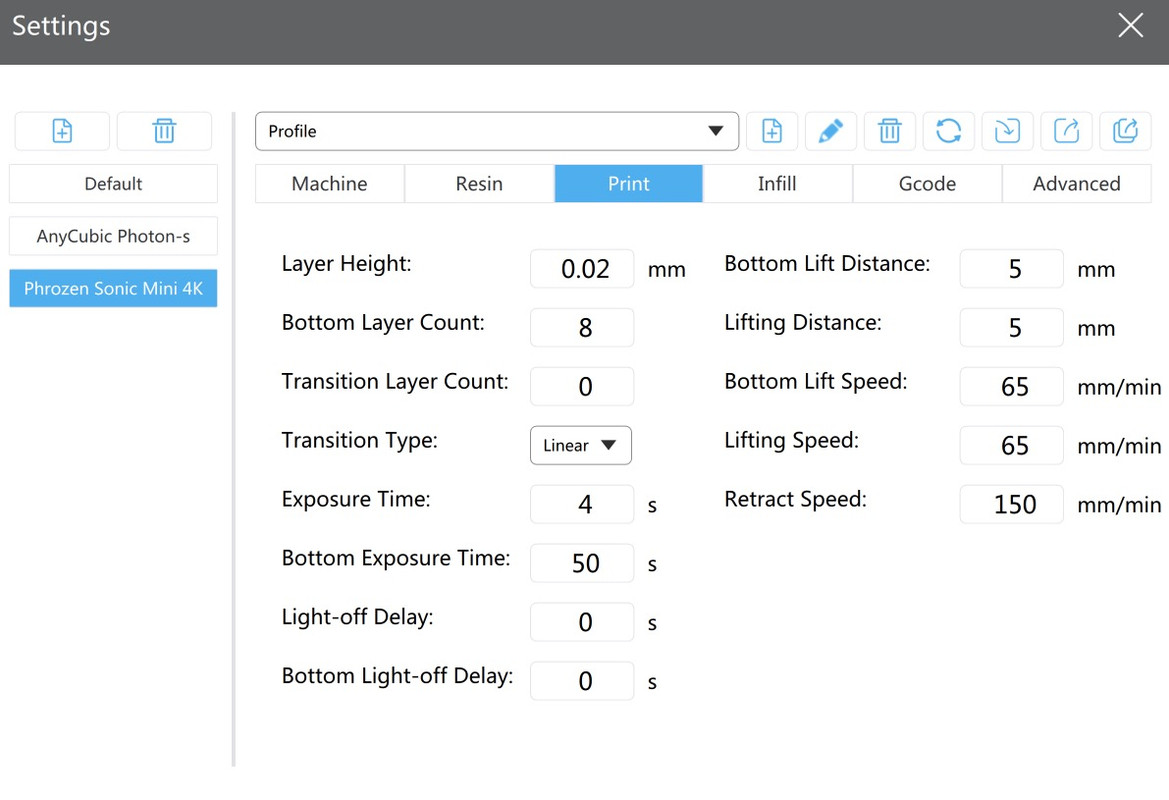
If I read the settings correctly, you are printing with a layer thickness of 0.02 mm (0.000787 inch). Is this correct?
For comparison, an ordinary sheet of printer paper (20 lb.) is 0.09 mm (0.0035 inch). So each layer is about 1/4 the thickness of a sheet of paper. No wonder you are getting very smooth surfaces!
For comparison the diameter of human hair varies from 0.017 to 0.18 millimeters (0.00067 to 0.00709 in).
****
I had pretty much given up on 3D printers because the affordable machines produced very coarse resolution with rough surfaces and lots of "jaggies." But I see the Phrozen Sonik mini 4K sells for US$359.00! I think I know what my Christmas present will be!
Phil
A collision at sea will ruin your entire day. Aristotle
The mike is out in the shop, but the ream of paper in the office (500 sheets) is about 1" thick, or 2 thou per sheet. The Strathmore that I like to make stuff out of is substantially thicker. The SLA printers are pretty smooth, somewhat compensated for by substantial messiness in the whole process. I think Pascal is spot on with his estimate that it takes about a month of printing (pretty continuously) to stabilize your process to some degree of reliability. It's a slow process, the main reason that commercial items are relatively expensive is that the printers plug away for extended periods to produce an item. Time is money.
I consider myself an OK scratch builder (not the best) but can print items that it would not be possible to achieve with traditional methods.
One concern I have is the fragility of 3D printed pieces. A friend created a 1:32 quad 40mm Bofors gun a number of years ago, with every bit of detail shown in the blueprints. It was printed at the highest resolution available at the time. The details came out very nice, but the gun barrels sagged. It was unusable.
Is there a post printing curing process?
How does the strength of the printed material compare to polystyrene?
Phil
A collision at sea will ruin your entire day. Aristotle
I am a novice, but yes, the whole process is important. The SLA process which uses a resin in a vat is cured by UV, I use a 400+ nm Grow lamp, there are special curing cabinets etc. Perhaps Pascal will comment! Depending on the resin, it is first washed in ISP (Alcohol) and then water. Some resins can be washed in water, dried and thne UV cured. I cannot currently testify as to the archival properties. I know for instance that models with Strtathmore Papers have held up well for some 60 years so far.
With your 3D skills I expect you would be very successful with this!
I bought a special machine to clean the parts and to pass them to the UV to harden them definitively.
The quality of the liquid resins has improved a lot in the last few years. Our parts are generally painted and therefore protected from UV rays that could destroy them over time.
I clean mine with isopropyl alcohol (IPA), we can finish the cleaning with water or do it completely with water.
Then we expose the piece to UV for a few minutes to harden it. It doesn't look anything like polystyrene. It is a hard plastic, a technique also used by dentists to make temporary teeth.
The cleaning device from Anycubic, very practical and safe. It's on special offer at the moment: