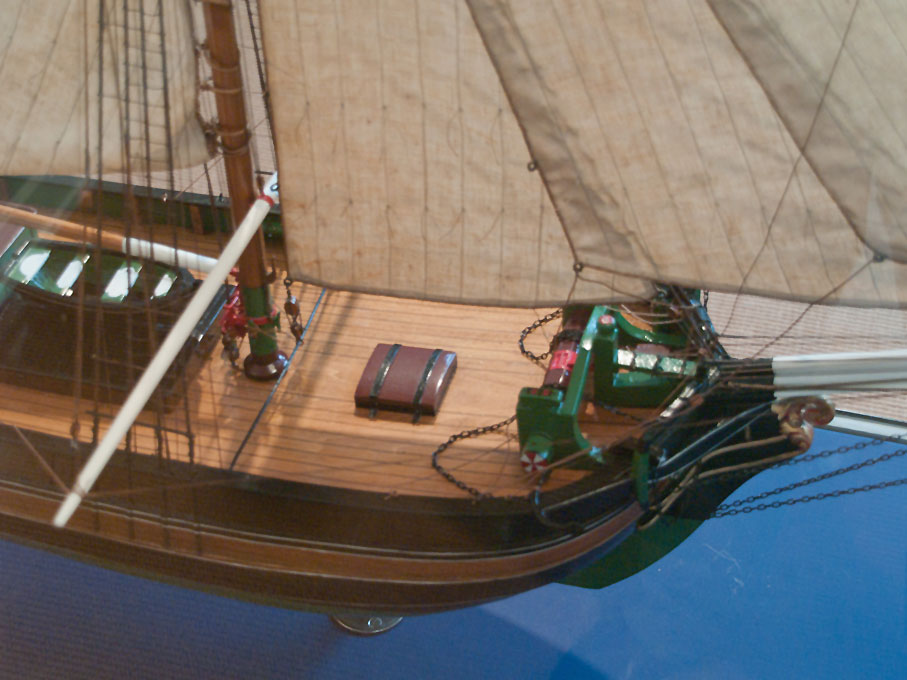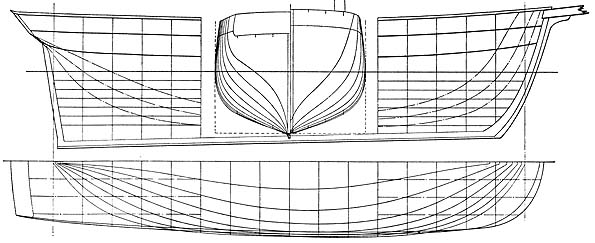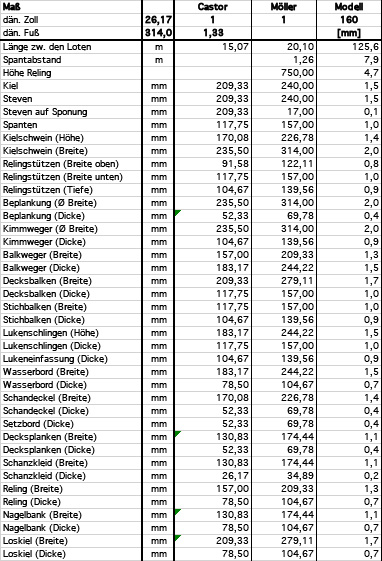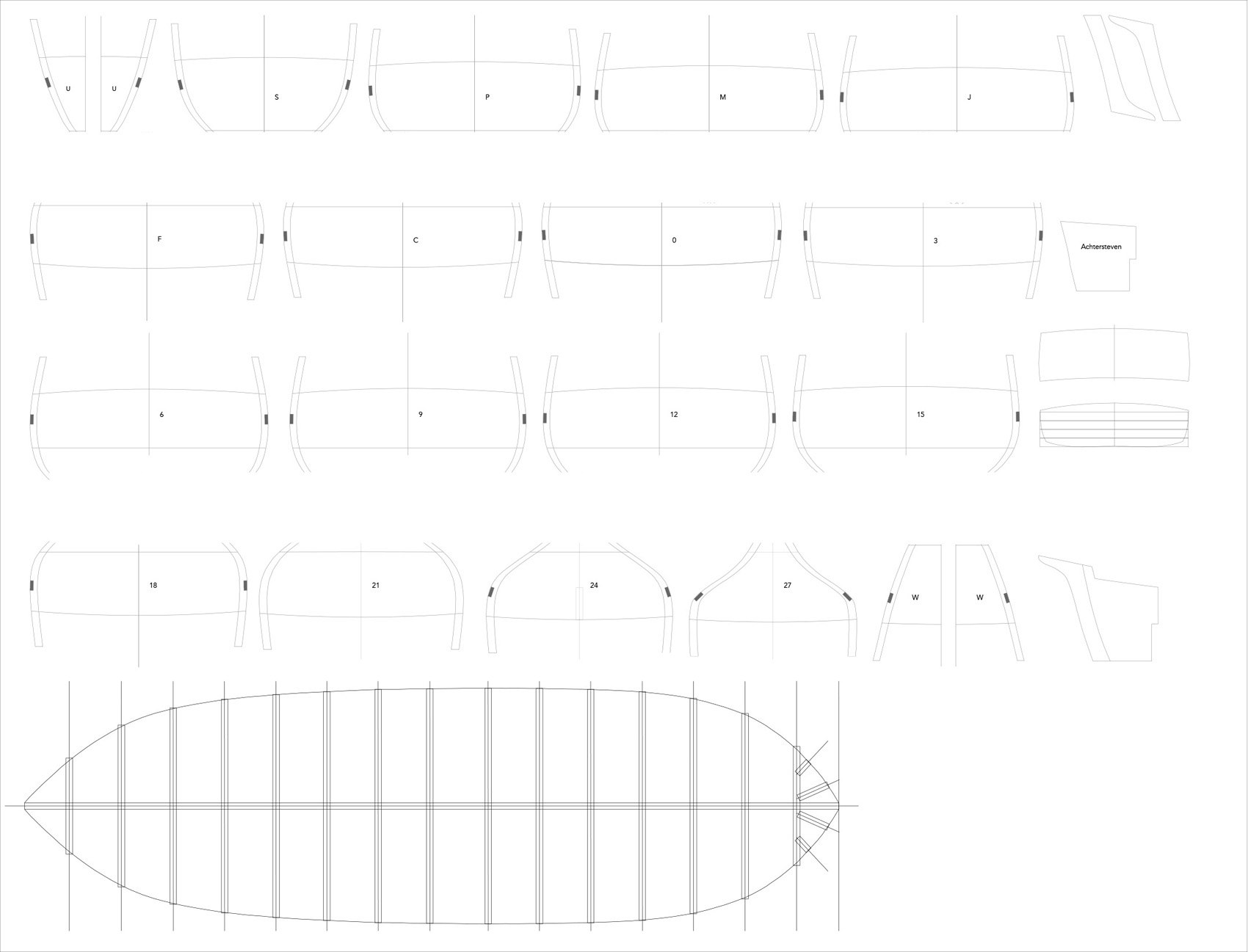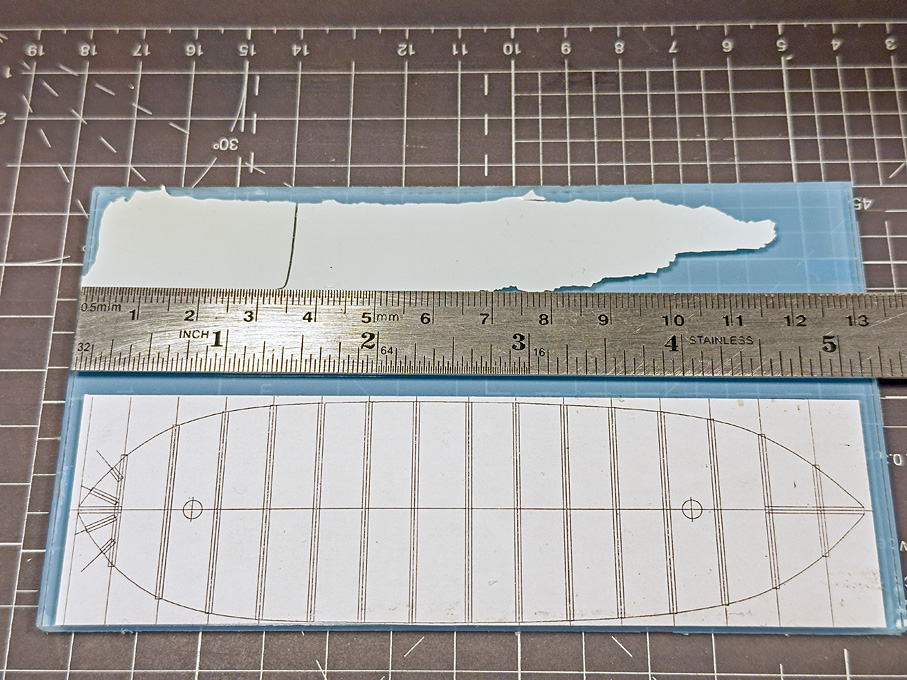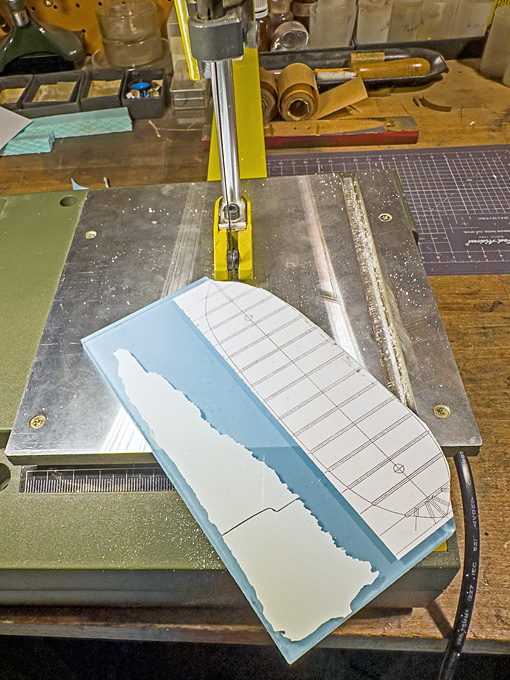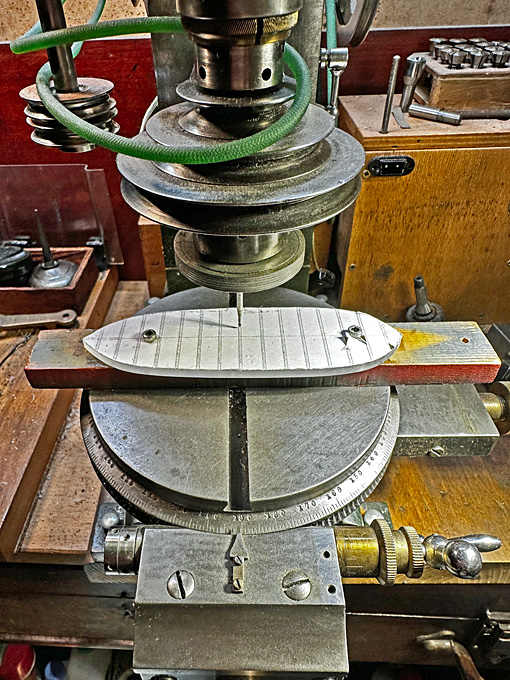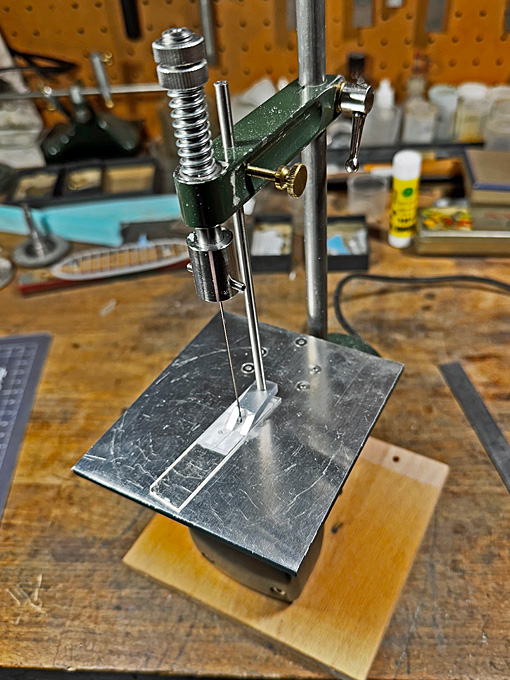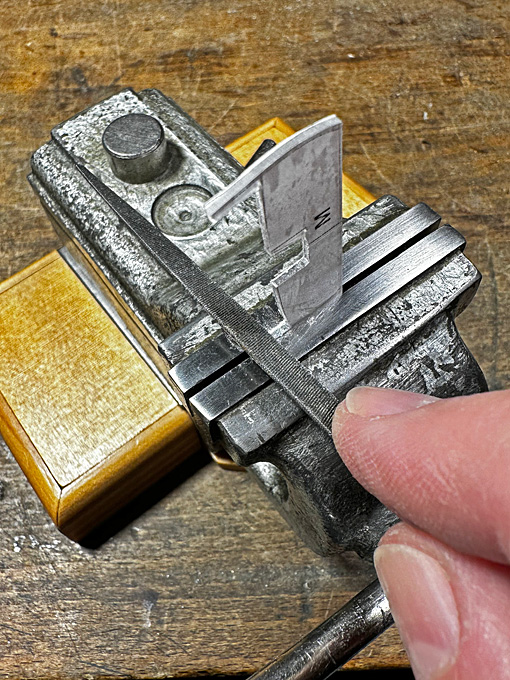
So, this is the beginning of a new adventure. Hopefully, the journey will not be quite as long, as for the previous project.
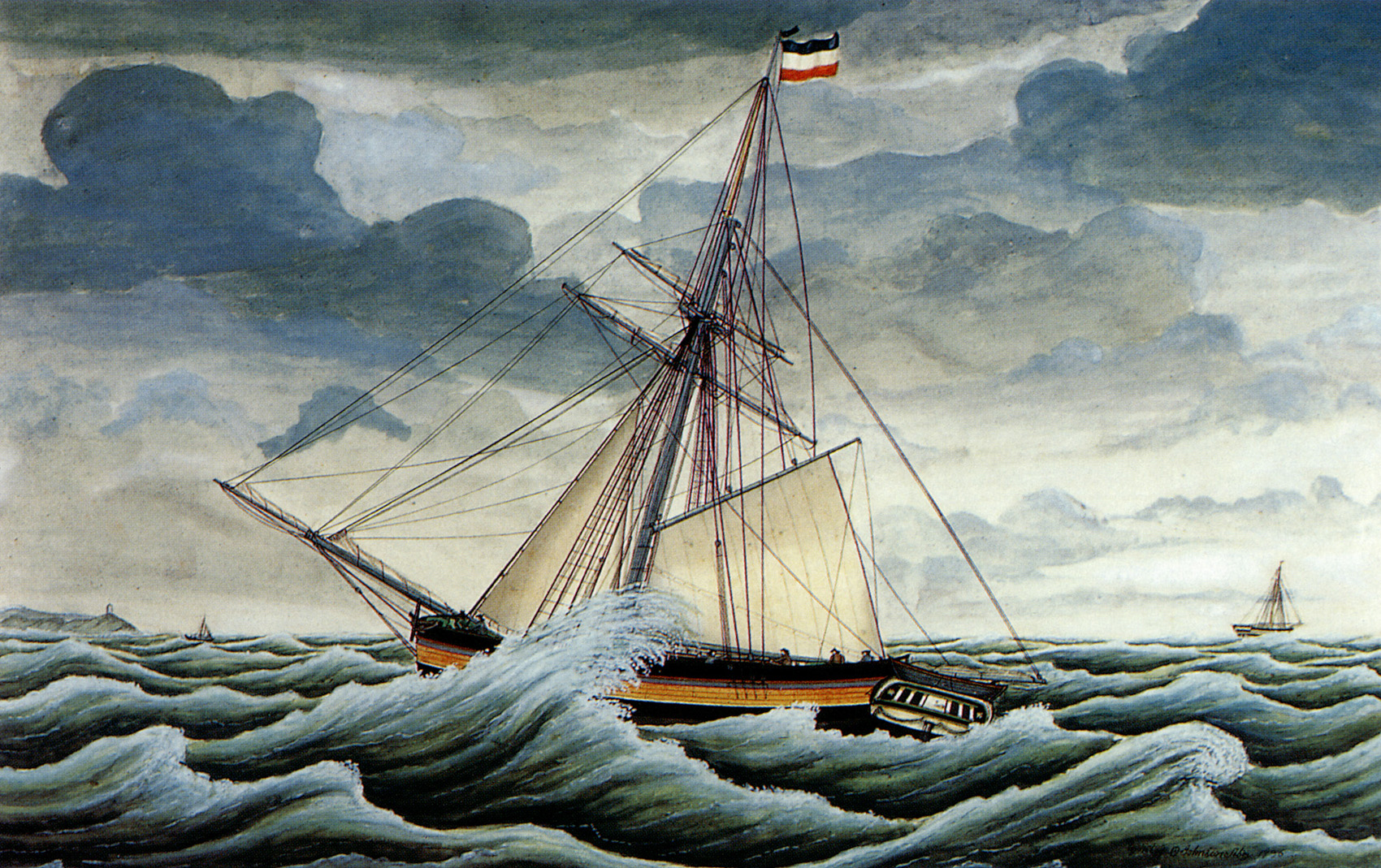
This time, it is about 30 years older, mercantile and with sails: a so-called Pomerian Rahschlup of around 1846, a somewhat anachronistic sailing vessel from the German Baltic coast. I have a certain attachment to this area which now is called Vorpommern, as part of my family came from this area and were also seafarers.
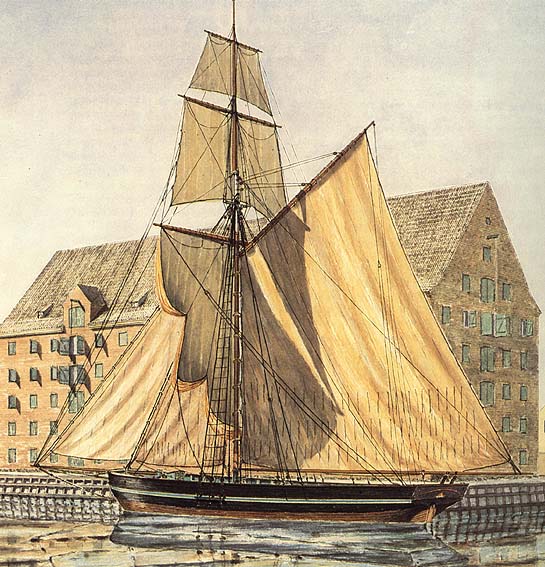
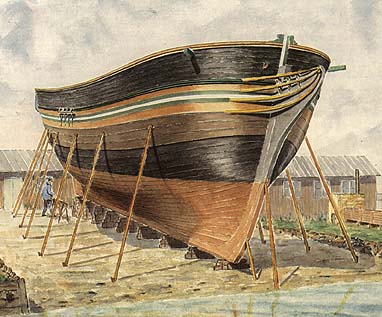
Watercolours of a Rahschlup by Friis-Pedersen (in Friis-Pedersen, 1980, Handels- og S�fahrtsmuseets p� Kronborg.
Introduction
Research on German small coastal trading craft and on this particular type of ship is rather difficult. All physical evidence has long gone, as have the men who built and sailed them. The German literature on commercial coastal craft from the Baltic Sea is quite scarce. Really the only books of some use are those written by Szymanski (1929,1934). He was able to travel much of the area post-WWI to inspect pictorial evidence and collect narrative recollections from people who witnessed the last few decades of commercial coastal sail. Some of his tracings of builders' plans he found at still extant shipyards and with private individuals are now in the Deutsche Technikmuseum Berlin (https://technikmuseum.berlin), but what has not been in public collections during WWII is now largely lost. The war and the lack of care and interest by builders� and ship owners� descendants have taken their toll.
Surprisingly there were very few serious post-WWII maritime historians in both, Eastern and Western Germany, as well as in Poland, to which now most of now Pomerania belongs, who had an interest in commercial coastal craft. Most historian until today have mainly either an ethnological or an economic interest in the subject and typically very little background in and understanding of shipbuilding. To my knowledge there is no study on the complex interaction between economic and societal developments, resources available, and the technological development of the various coastal ship-building traditions in the 18th and 19th century. Wolfgang Rudolph is one of those exceptions, but he was more interested in the smaller artisanal craft. In more recent years Helmuth Olzsak measured and drew still extant boats around the Mecklenburg and Pomeranian coast (Olzsak, 2014), but he was neither a trained naval engineer nor historian. On the Scandinavian side, both the source availability and their modern evaluation is slightly better.
Starting from a wide variety of Baltic craft, as illustrated for instance by af CHAPMAN (1768) for the middle of the 18th century, by the 2nd Quarter of the 19th two types craft seem to have dominated the group of single-masted vessels: the Jacht (or jagt in Danish) and the Schlup (or slup in Swedish and Norwegian). The Jacht was more prevalent west of Rostock, i.e. in western Mecklenburg and Schleswig-Holstein (as in Denmark), while the Schlup occurred more frequently in eastern Mecklenburg and, indeed, in Pomerania.
The Jacht has two distinctive features, a very pronounced sheer (less so in Danish vessels) and a pole-mast, the top of which has a slight curvature forward. They had a flat, heart-shaped transom and carried their rudder outboard. The sail plan consisted of two foresails, a gaff mainsail with a square gaff-topsail. They usually could also set a large square foresail flying. These features were kept right to the end of wooden ship-building at the Baltic coast.
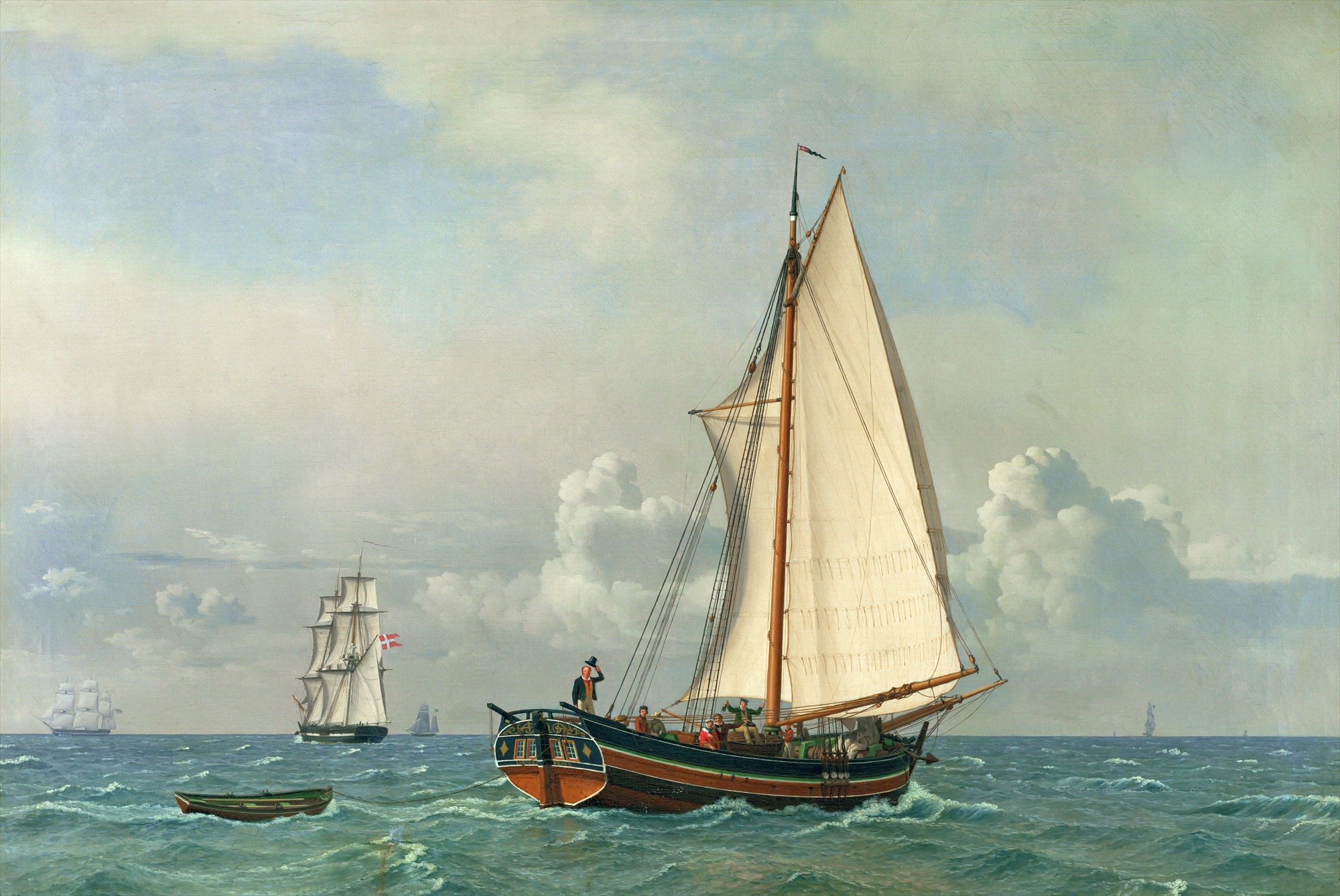
A jagt (�The Sea�) by C.W. Eckersberg, 1831, Louvre, Paris.
The Schlup followed more the fashion of deep-water ship-building of the day. The mast always carried a top-mast. In the 19th century they were built with little or no sheer and had square or oval transom above the water, with a rudder inboard. The sailplan was similar to that of the Jacht, put the gaff mainsail was usually larger in proportion. She largely resembled those trading craft that would be called a smack in British waters.
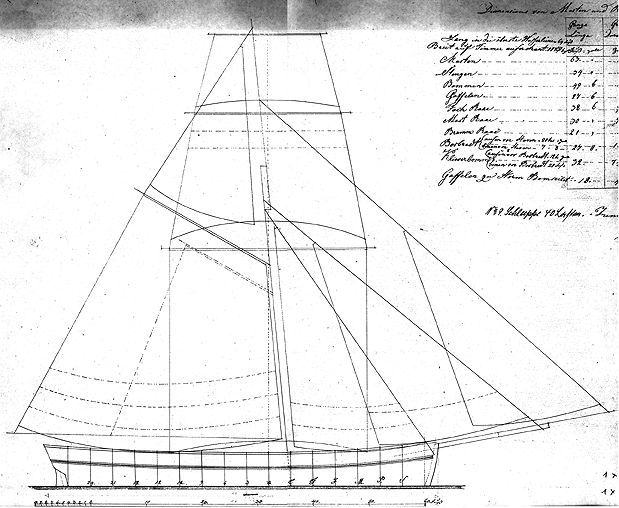
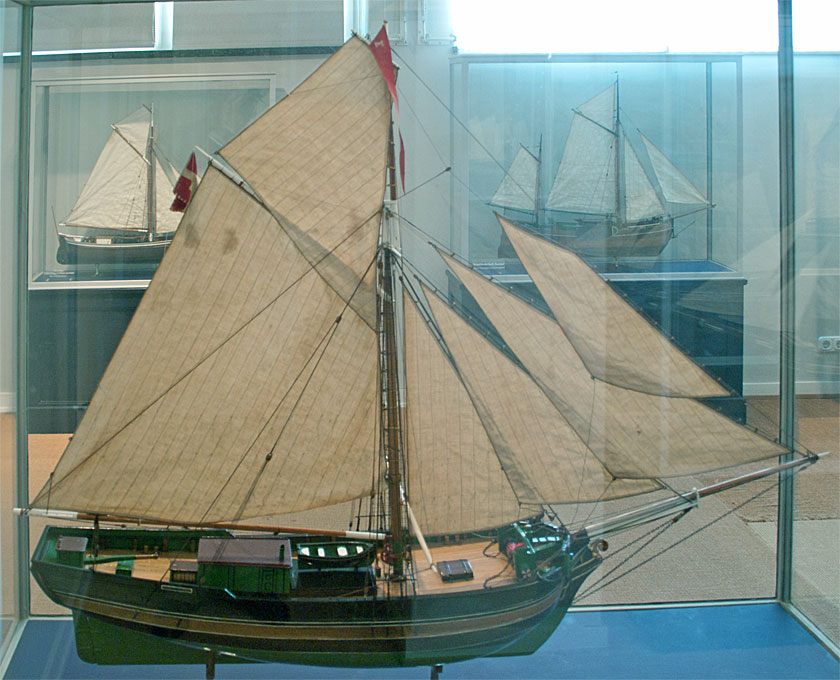
There was also one distinctive version of the Schlup that carried a single full mast. As the name in German indicates, the Rahschlup carried a heavier topmast with two topsails. This is a rather lofty rig for a humble sailing coaster, resembling the rig of the British naval cutters and the Swedish packets (CHAPMAN, 1768) of the late 18th and early 19th century. As their main area of occurrence was Pomerania, which belonged to Sweden from the days of the 30-Year-War until the Vienna Congress in 1815, they may be descendants of those Swedish packets that secured the connection between Stralsund and southern Sweden.
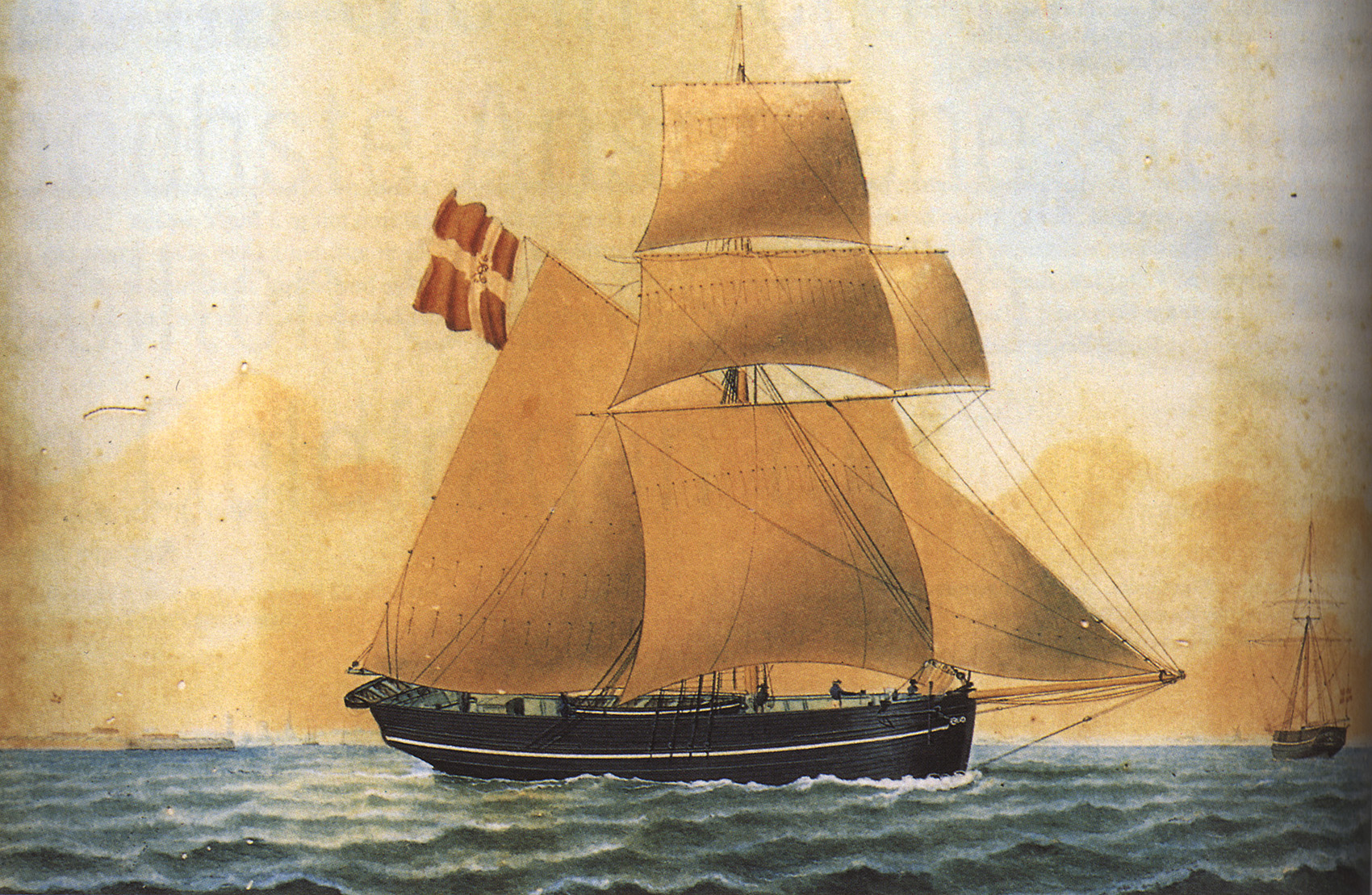
JOHANNA of Copenhagen (1839), International Maritime Museum, Hamburg.
https://www.maritima-et-mechanika.org/m ... up1836.JPG
Rahschlup of 1836, Schiffahrtsmuseum Rostock.
Such rig required at half a dozen men or so to sail her safely. To the contrary, a Jacht could be handled comfortably by the master and a mate, or even only a boy (cf. Rudolph, 1958, on crewing). By the middle of the 19th century, such a rig appears rather anachronistic and would have been quite uneconomic. However, it would have had its advantages when working the coastal lagoons (Bodden, Haff) of Pomerania (now partly in Poland) and Eastern Prussia (now divided between Poland and the Russian Federation), as well as the coast of Southern Sweden. Dunes and rocks overgrown with shrubs and light woods would blanket near-surface breezes.
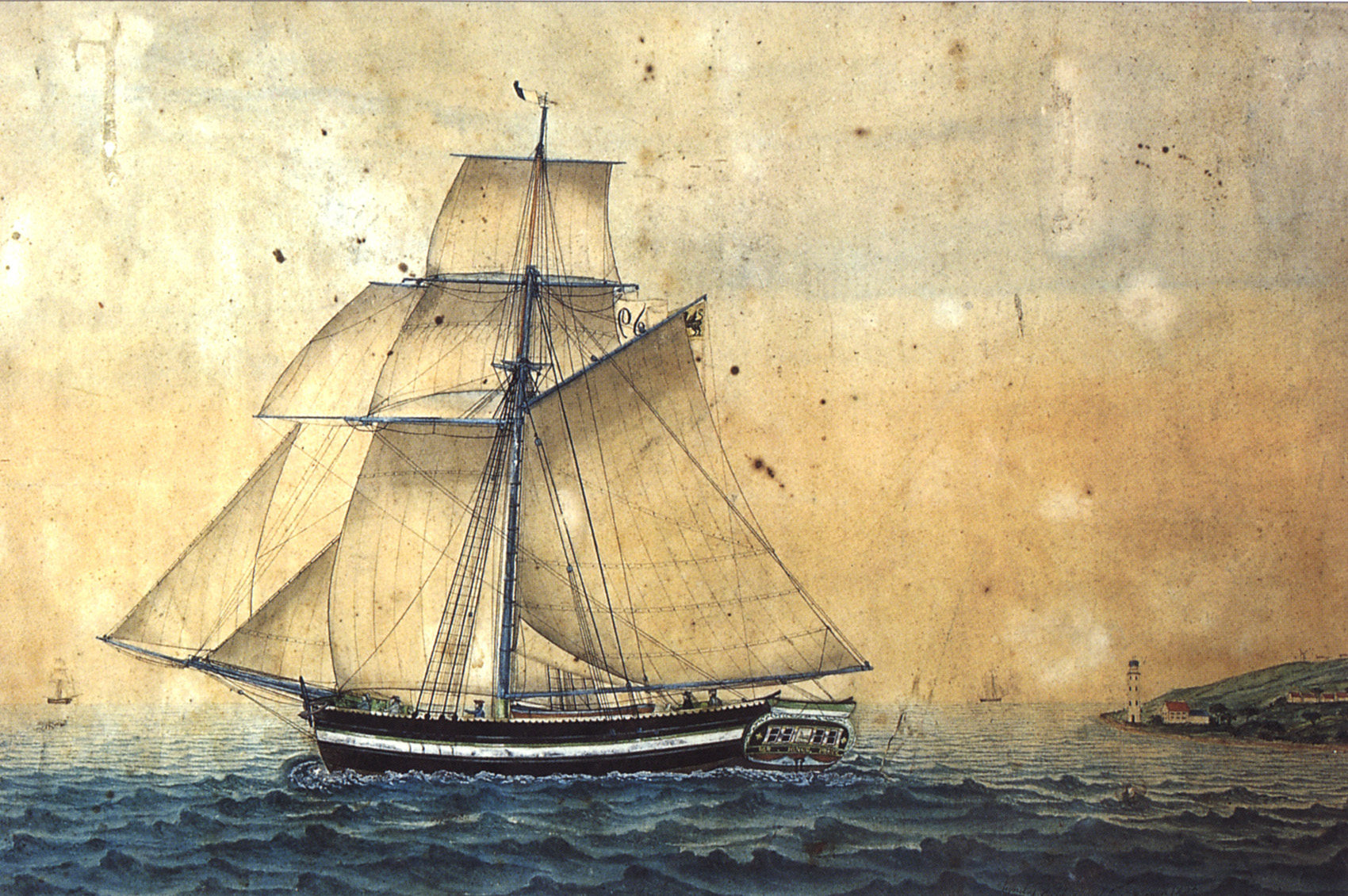
DER JUNGE PRINZ (1819), painted 1832, Schiffahrtsmuseum Rostock.
Pictorial evidence from the middle of the 19th century shows a fairly uniform arrangement of loose-footed gaff mainsail (the gaff being considerably longer than the one on a Jacht, which would also be curved), a square gaff-topsail set flying on a light yard, and two (sometime a flying third one is seen) headsails. Like on the foremast of a topsail-schooner, there was a main yard below the trestle-tree and two light yards running on the topmast and spreading two topsails. A rather large square foresail could be bent to the main yard. In the earlier days a full complement of lee-sails may have been carried as shown on various �captain�s-paintings and one or two rare photographs from Norway, where this rig seems to have survived the longest.
The mast was supported by three to four fully webbed shrouds and a couple of backstays set on tackles. The topmast was supported by shrouds to the trestle-trees only - apparently no backstays were used. The mast also had the usual complement of stays leading to the bowsprit and a fixed jibboom. Unlike to what was the fashion in deep-water sail during the 1840s, the masts of the Rahschlup had virtually no rake.
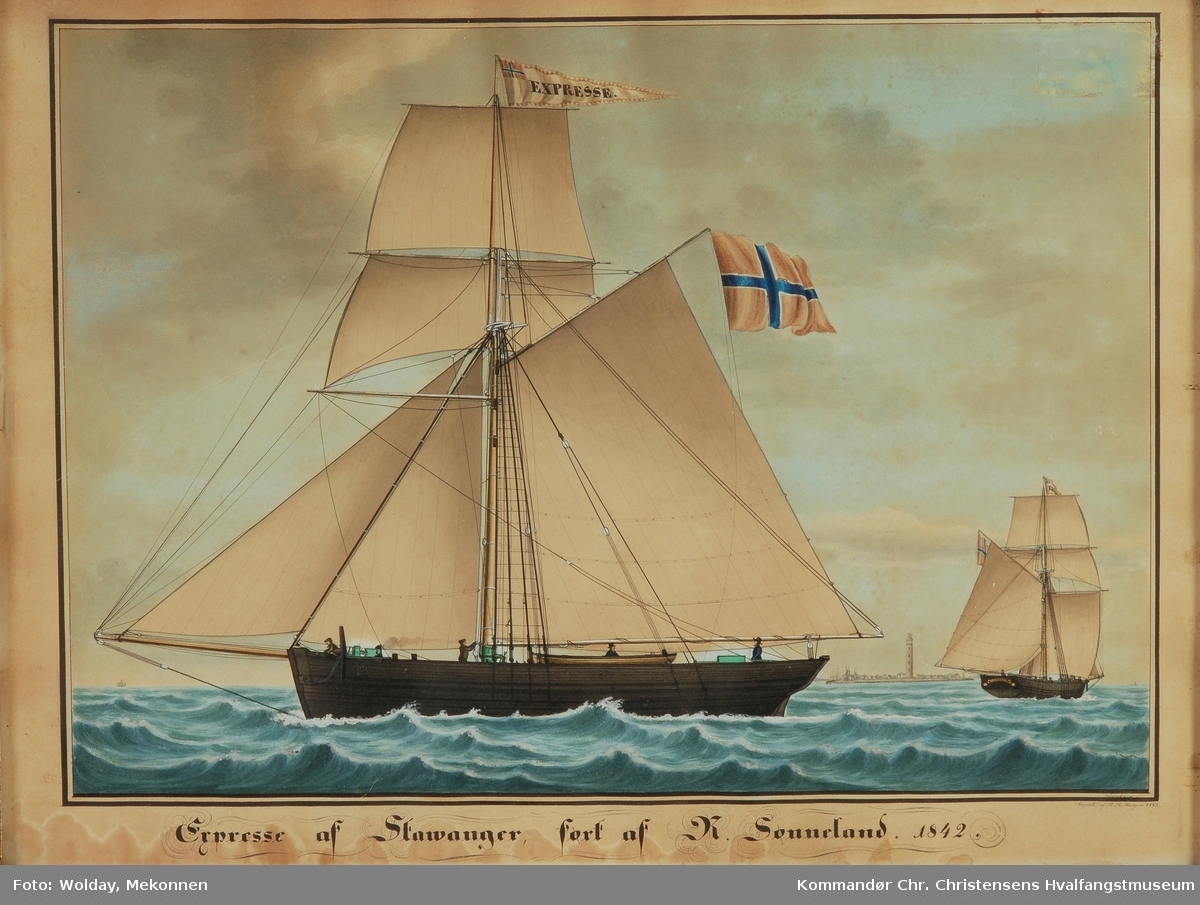
Norvegian slup EXPRESSE (1842), Sandefjordmuseene.
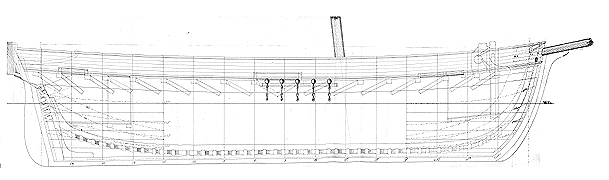
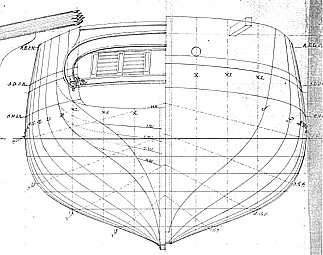
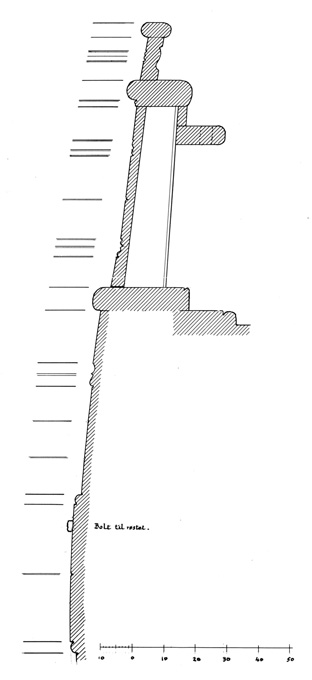
The Schlup ranged in length between 10 and 25 m with a width of as much as 7 m and a depth of up to 3.5 m according to Szymanski (1929, 1934). The Rahschlup naturally tended to be at the upper end of the range. She was always built carvel with a medium sharpness in the waterlines, a rising floor and usually some tumblehome. The entrance was rather bluff (certainly above the water), the run with some hollow. The sheer practically disappeared from the second quarter of the 19th century onward (as was indeed the fashion with larger seagoing vessels at that time). The stem was slightly curved or straight with only a little rake. The sternpost had considerable rake on top of which sat a gilling and it was crowned by a transom that became smaller over the time. The rudder ran inside and was nearly always worked with a tiller.
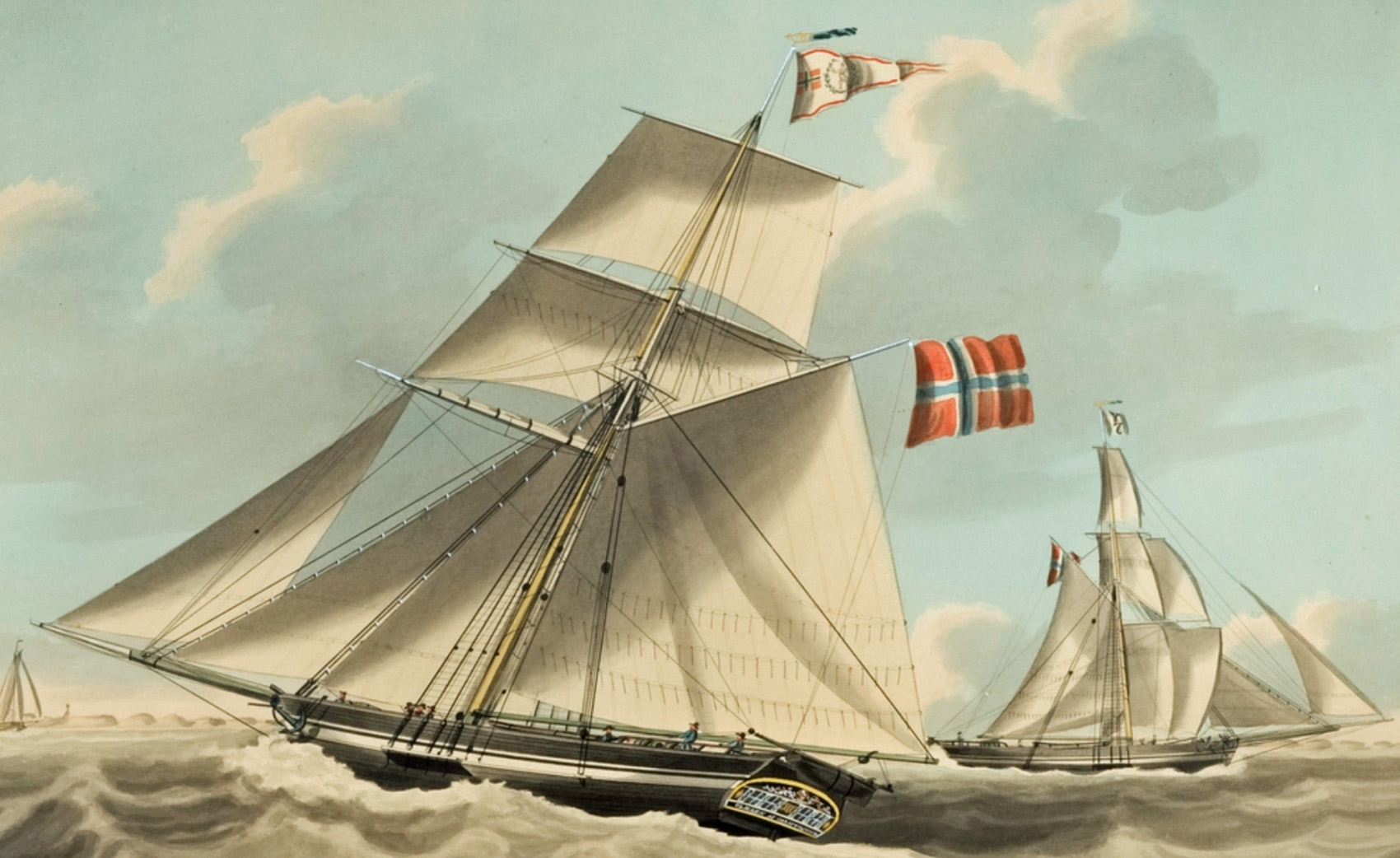
Norvegian slup GL�DEN (1836), Norsk Maritimt Museum, Oslo.
Typically, the deck was flush, but could also have a raised quarterdeck, as was usually the case for the Jacht. There would have have been a small hatch before the mast and a larger one after the mast. Small companionways provided access to the crew's quarters between the small hatch and the spill and to the main cabin in the stern respectively. A small portable caboose lashed to the deck is often seen on paintings. The compass would live together with its lights in a housing with sliding doors lashed to the deck within convenient distance for the helmsman.
Davits over the transom were provided for stowing the dinghy, which was, however, often towed. On some Schlups a larger boat was stowed was stowed in chocks on the main hatch behind the mast.
Mechanical devices to make heavy work easier were, of course, an anchor spill in association with the post providing the footing of bowsprit and a cargo winch behind the mast. The anchor spill followed the technological development of the time from its simple form with an eight-sided trunk to the more sophisticated patent or pump-spills of the time. Also, the simple wooden pumps would make room to the more efficient cast-iron variety.
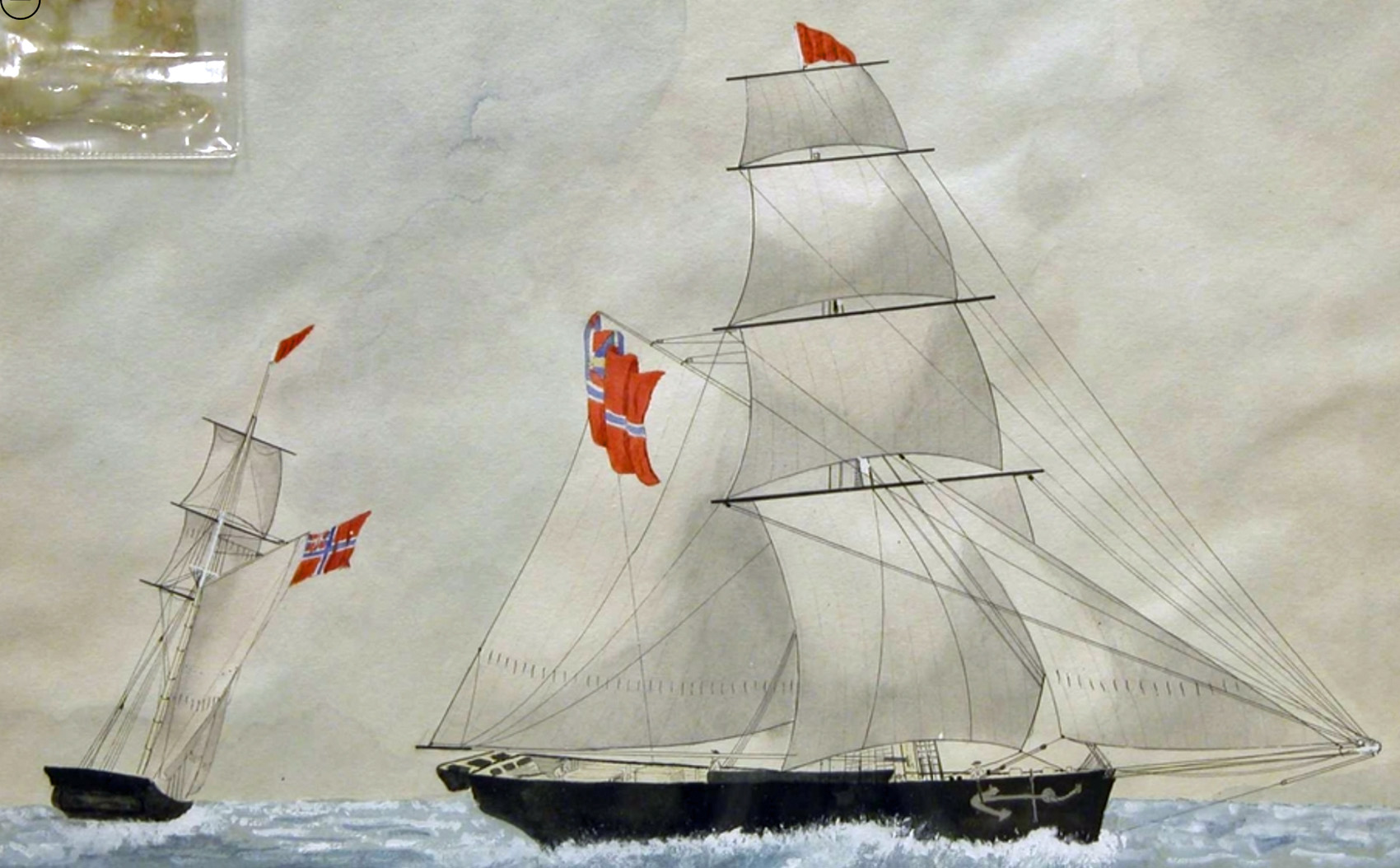
Norvegian slup LOFOTEN (1841), Sverresborg Tr�ndelag Folkemuseum.
Concerning the colour-scheme, Schlup would largely follow the fashion of contemporary deep-water sail (as opposed to the Jacht, which seems to have been more conservative). The colour scheme developed from scraped and oiled sides with black wales up to the early years of the 19th century to one with several strakes in different pale colours, such as pale blue, green or brown, and white, while the whale remained usually scraped and oiled. In later years the whole hull above the water was generally painted black with white rubbing strakes and sometimes the wale still scraped and oiled. Below the waterline coal-tar was sufficient in most cases, as these ships normally would not leave the Northern European waters.
The inside of the bulwarks often were painted in pale green, pale blue or pale ochre before the middle of the 19th century, when white generally became the preference.
Spars would have been either scraped and oiled in their entirety or would have tops and ends in a colour matching the rest of the ship, i.e. pale green, blue, ochre, or white.
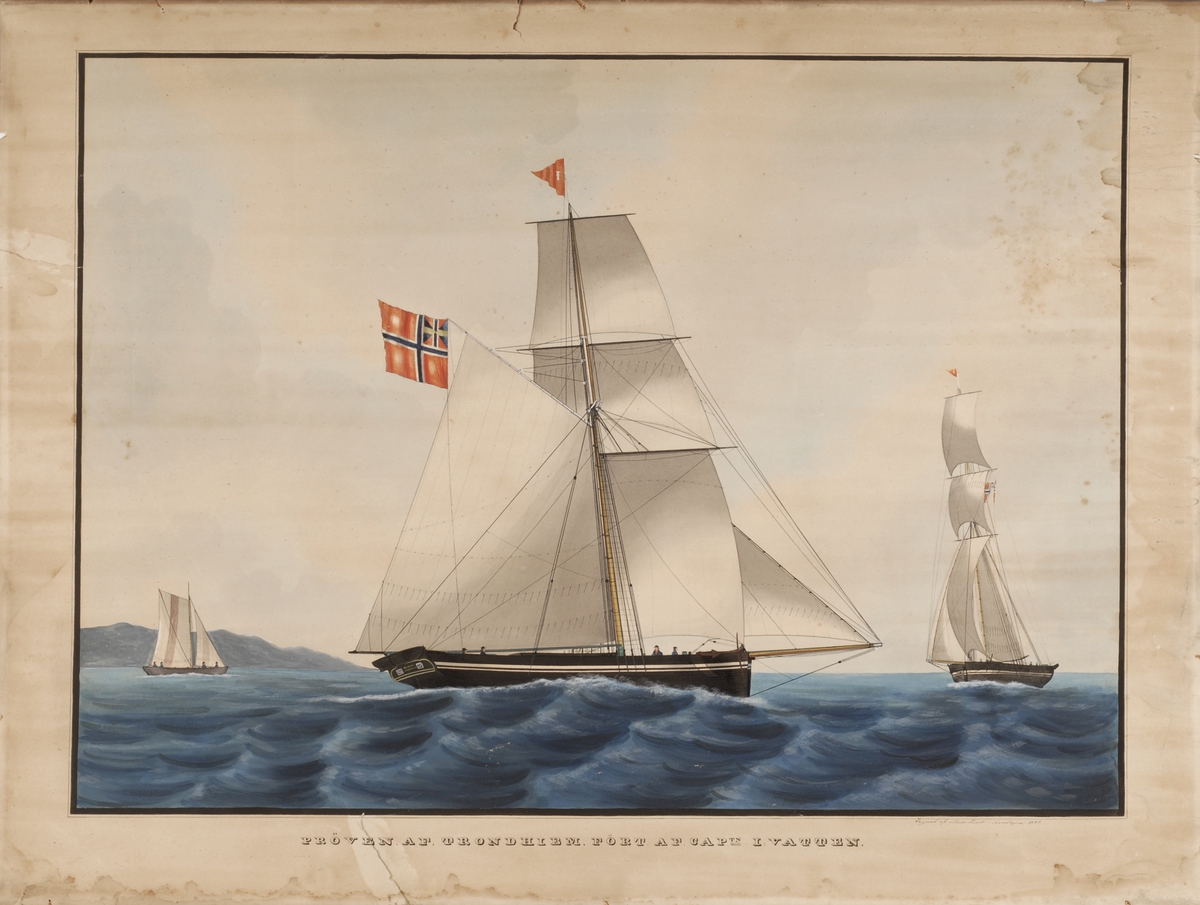
Norvegian slup PR�VEN (1847), Sverresborg Tr�ndelag Folkemuseum.
Their trade
As was mentioned earlier, their main area of operation was the Baltic Sea, with journeys round Skagen to harbours along the German, Dutch, Belgian, Norwegian and British North Sea coasts. Some may have traded as far as the Mediterranean (in which case they would have to be sheathed in copper or zinc), bringing back fruit and wine in exchange for e.g. wheat (Mecklenburg), hemp and pitch (Baltic states, Russia) or perhaps salted herring. Bricks (�Flensborg stone�) and masonry blocks (from e.g. Bornholm, Gotland and Skane/Southern Sweden) might have also been commodities of interest for areas, where either the raw materials (clay) or the fuel (wood) to process them were lacking.
Those registered in Schleswig or Holstein, however, would have carried the Danebrog until 1864 and could have traded freely to the Danish Westindies (https://en.wikipedia.org/wiki/Danish_West_Indies), now US Virgin Islands.
To be continued