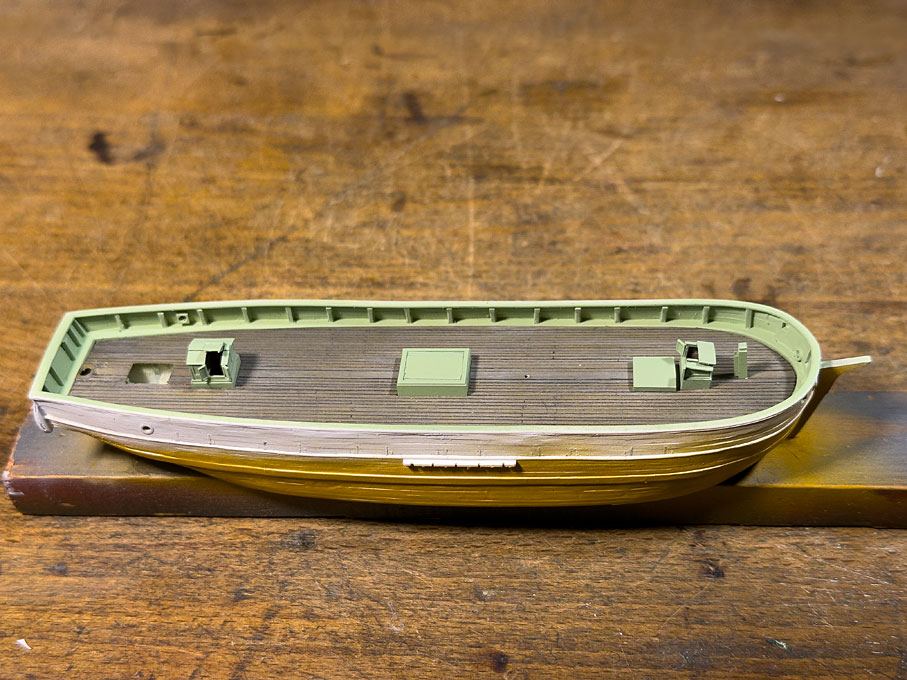
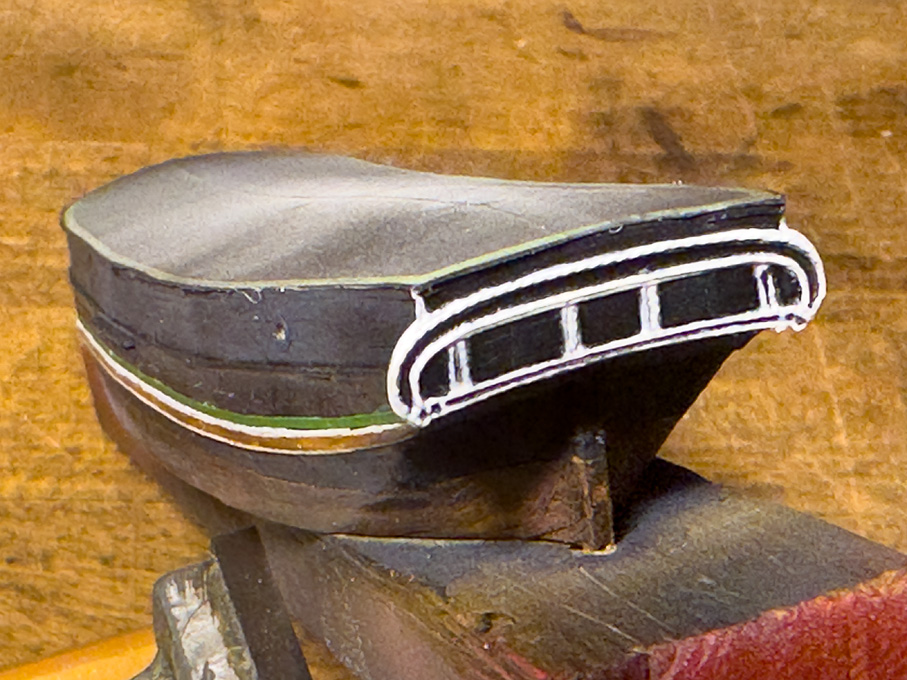
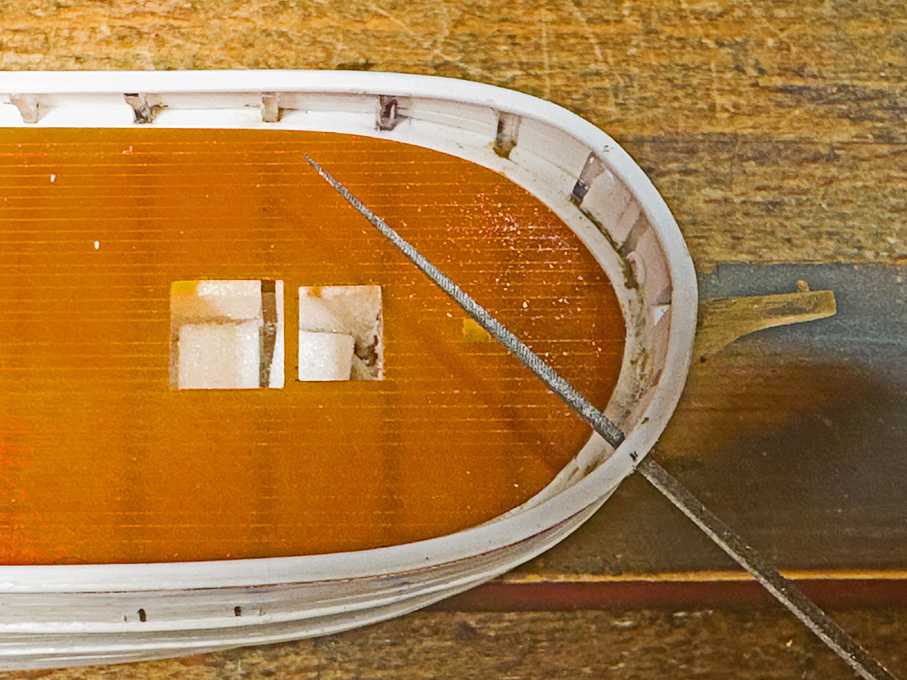
I have been travelling for a few days, which in a way was good, as it gave the paint to dry thoroughly. For acrylics this is a somewhat lengthy process until full consolidation, although the initial drying is very fast. The solvent, water, needs time to diffuse out between the crosslinking acrylic molecules and the paint may retain a somewhat rubbery consistency for some time. Masking may rip off the paint.
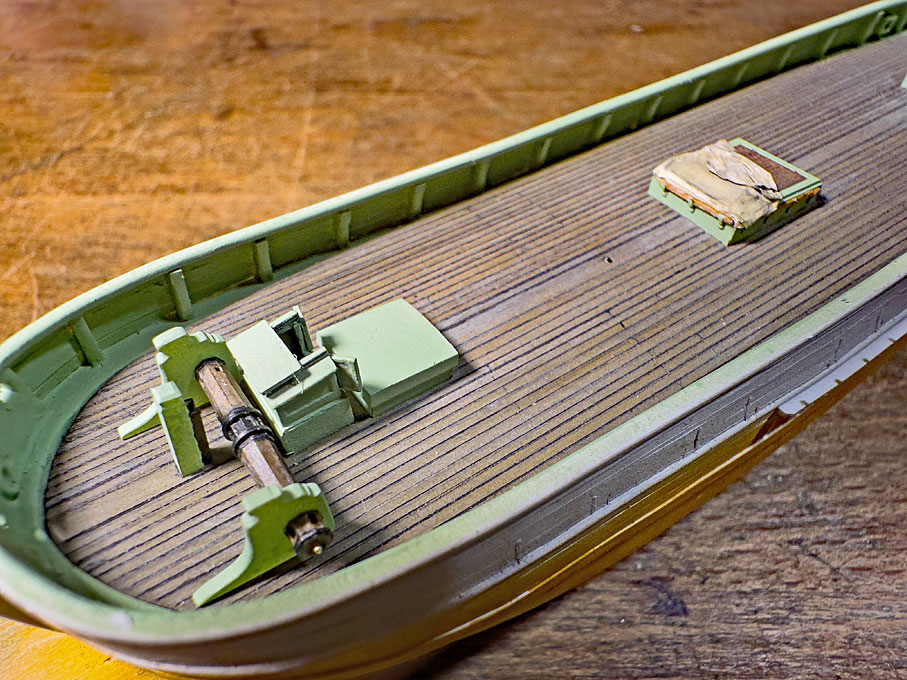
However, in between I turned my attention to painting some details, such as the pin-rails, belaying cleats, bollards, the barrels of the anchor winch and details around the main hatch.
Main hatch
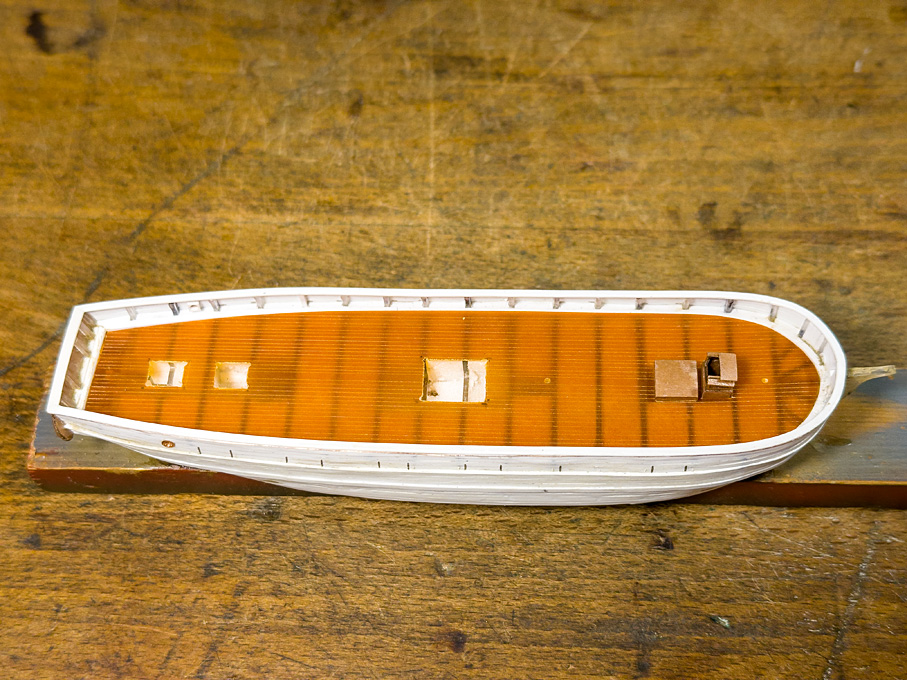
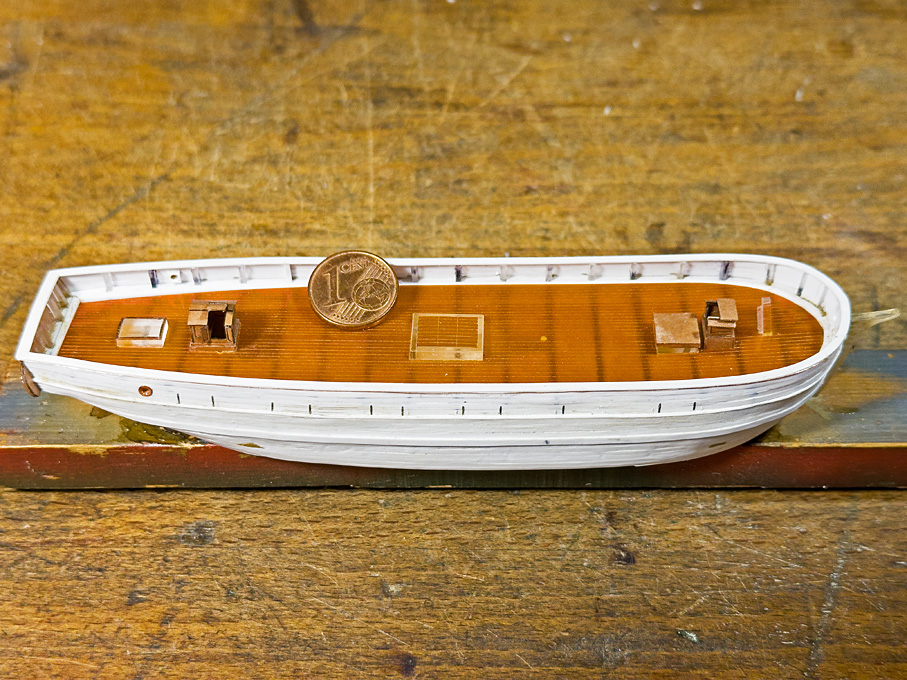
The main hatch has some covering panels that previously had been cut from Bakelite paper and engraved and which were sprayed now in Vallejo model air 71.077 (wood) and somewhat aged with Vallejo model air 71.032 (aged white).
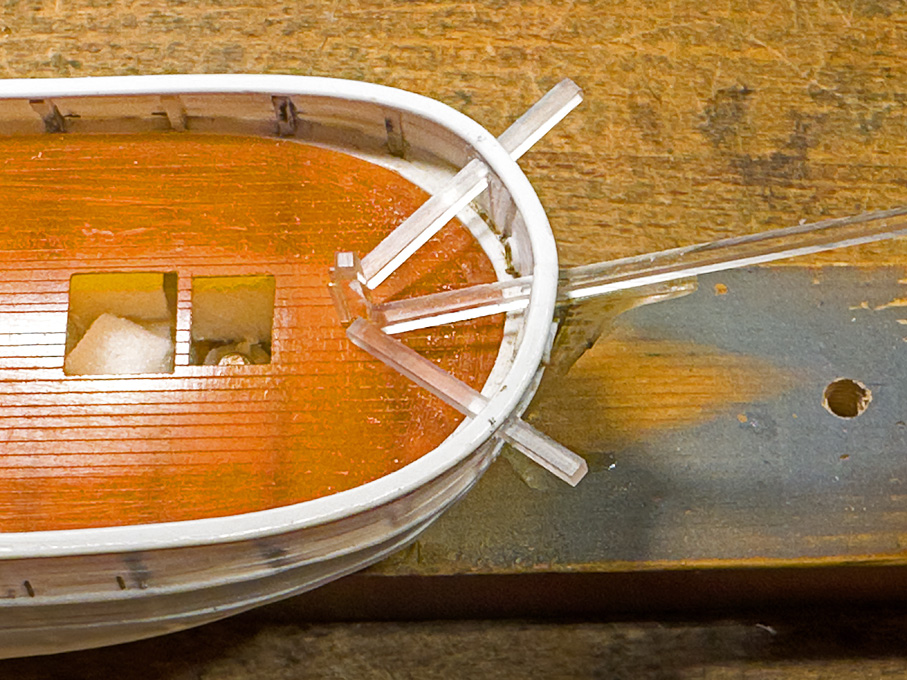
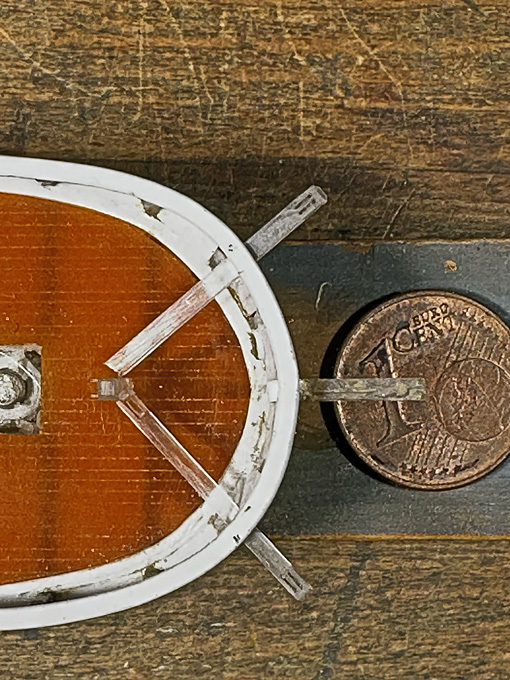
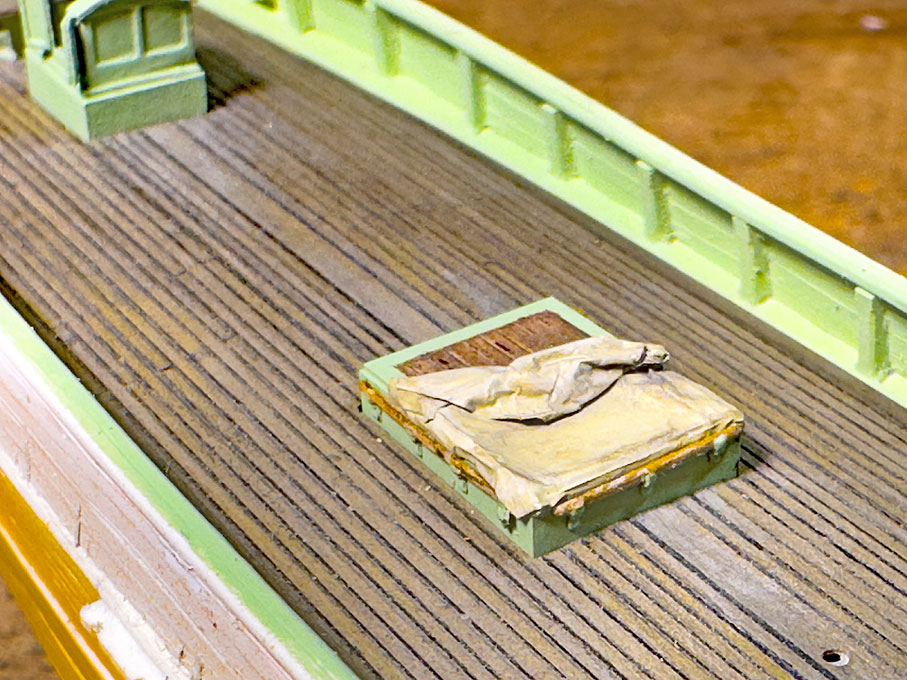
During not so nice weather, the hatch would be covered in a tarpaulin that was secured with wooden battens laid in wooden cleats. The battens would be secured with wedges driven in from both sides into the cleats, but I ignored that detail at this small scale.
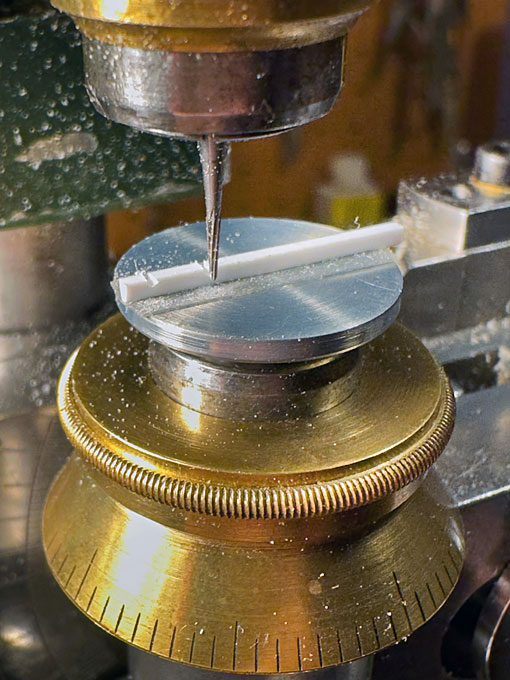
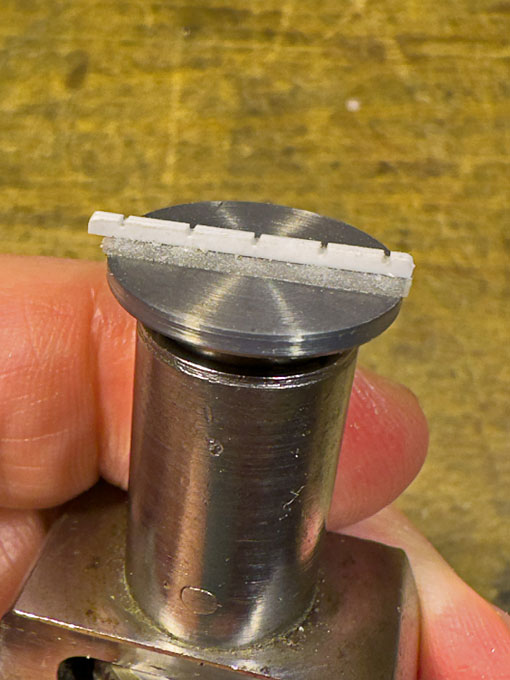
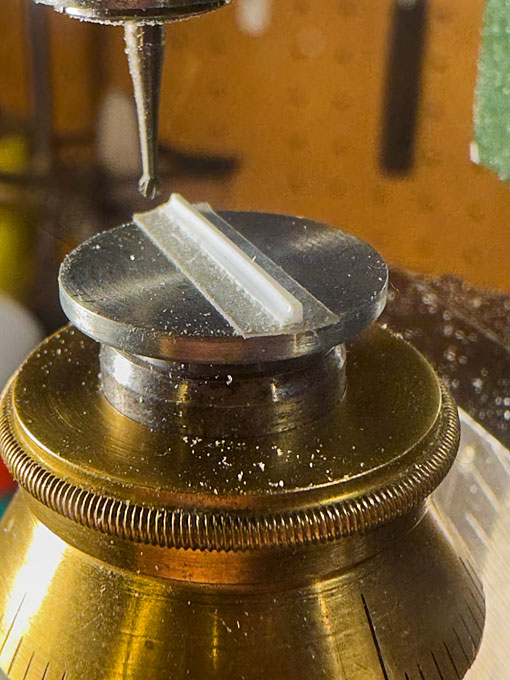
The battens and the cleats were cut from Canson-paper with the laser-cutter as per the template below. Some parts are really tiny, 0.5 mm x 0.7 mm square … To facilitate assembly, I also combined parts of the cleats with the battens.
The parts were soaked in varnish and then cemented together with the same varnish.
The battens were given the same treatment as the hatch cover, but the cleats were painted in the same green as the hatch coaming. They were attached with tiny drops of matt acrylic varnish. Eventually, there will be also a partly removed tarpaulin, but I will make this later.
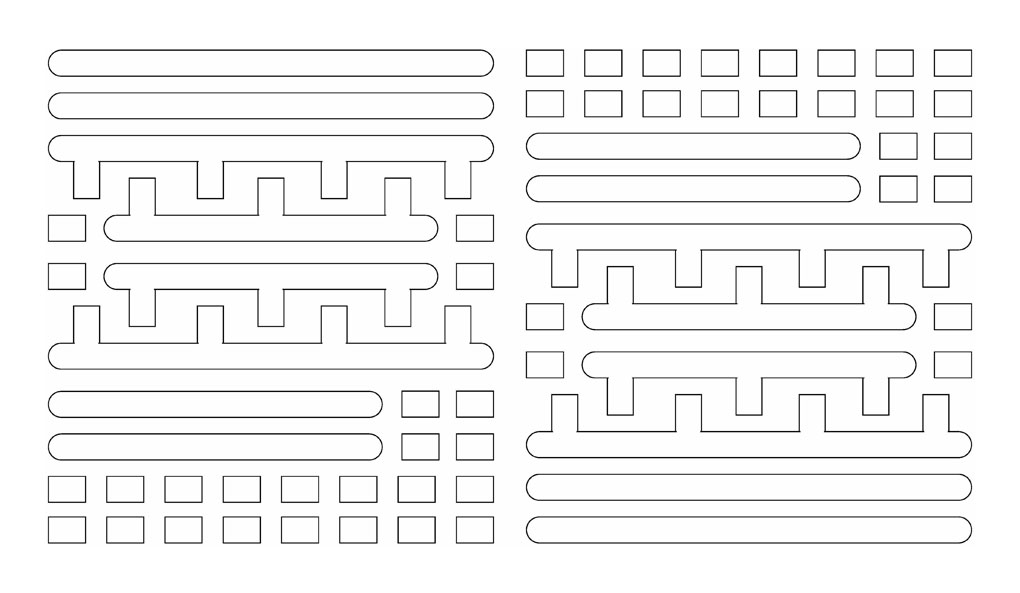 Template for laser-cutting the tie-down battens of the main hatch
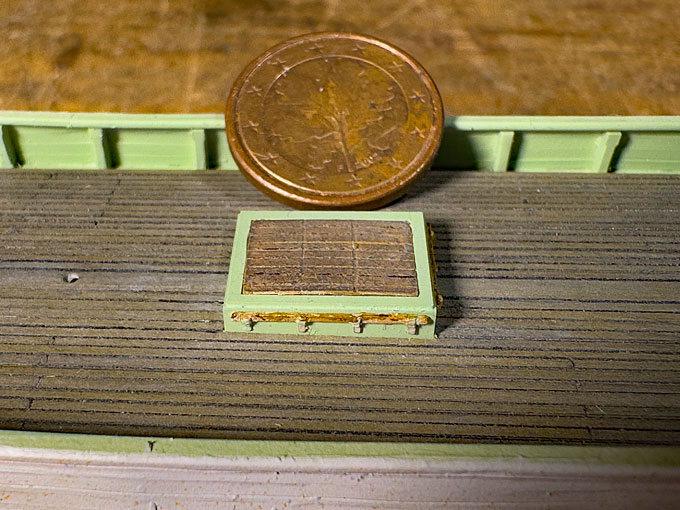 Battens fitted to the main hatch - as usual, close-ups are quite sobering ...
Painting details
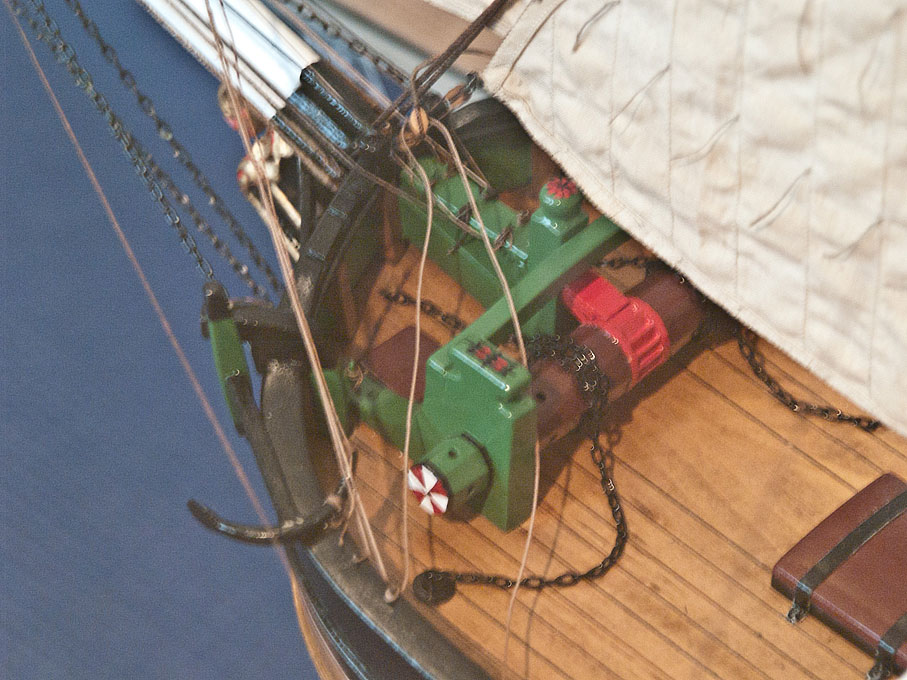
The other parts were first given a spray with Vallejo model air 71.077 (wood), this was followed by a light touch with a Faber-Castell PITT artist pen brush Raw Umber 180. Finally, light coat with Faber-Castell PITT artist pen brush Orange glaze 113 gave the parts the appearance and ‘depth’ of varnished wood. I found it necessary to spread the paint from the pens more equally with a normal paint brush. To tie the slightly varying shines together, these parts were also sprayed with satin varnish.
For the bare wood barrels and drums of the winch the orange glaze was omitted and the wood aged as for the hatch cover. Everything was sprayed in matt varnish and then the iron banding was picked out in black, as was the ratchet-wheel. It was done in this sequence to underline the different sheen of the bare wood and the painted bands.
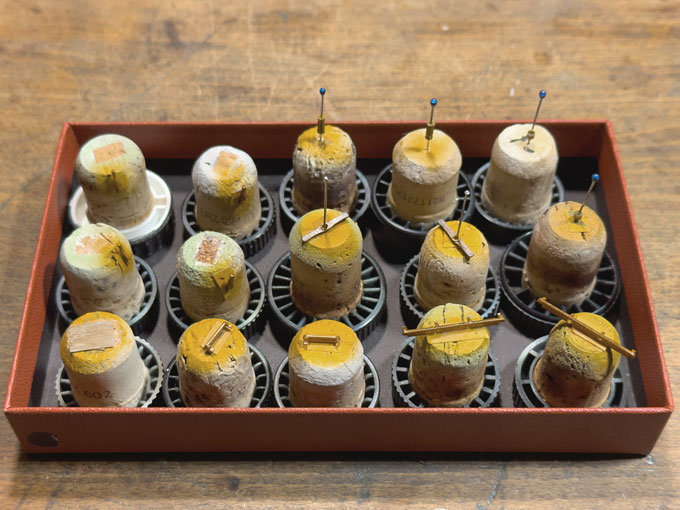 The collection of detail parts ready for installation
This painting is quite time consuming actually, as in spite of the fast initial drying of the acrylics, one better waits a day between paint coats and successive washes.
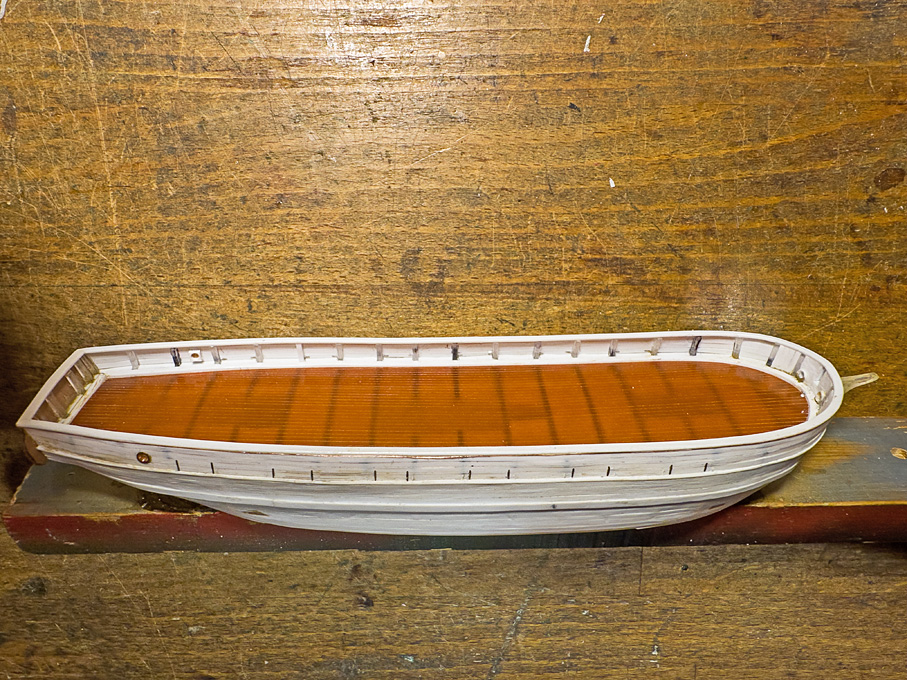
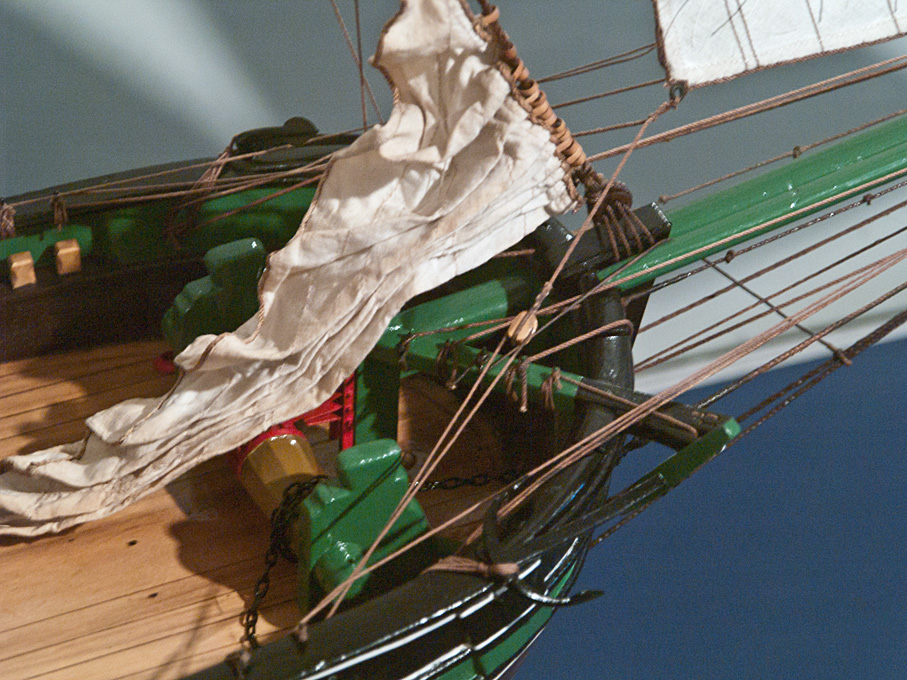
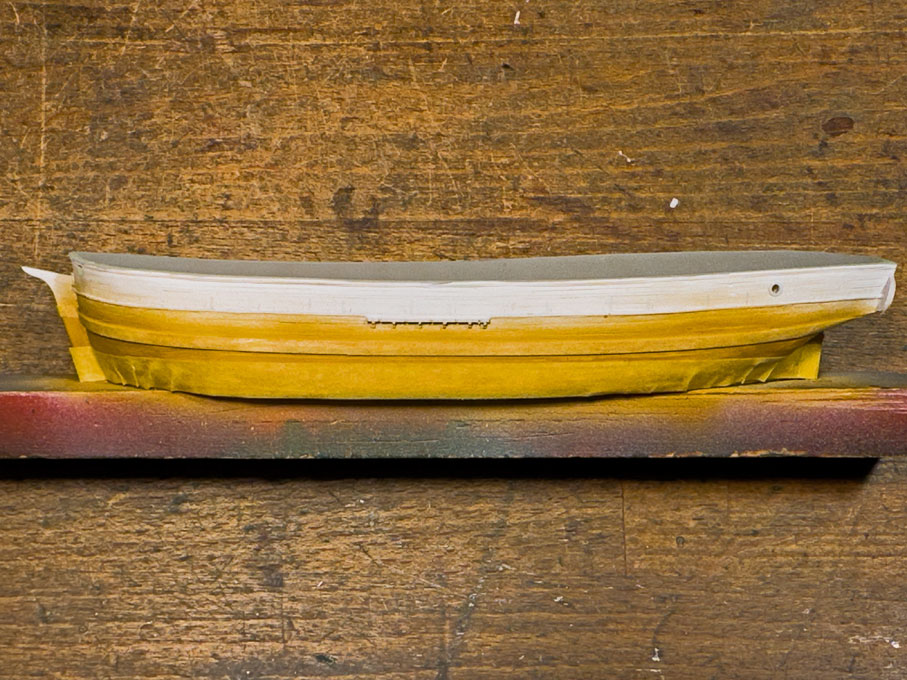
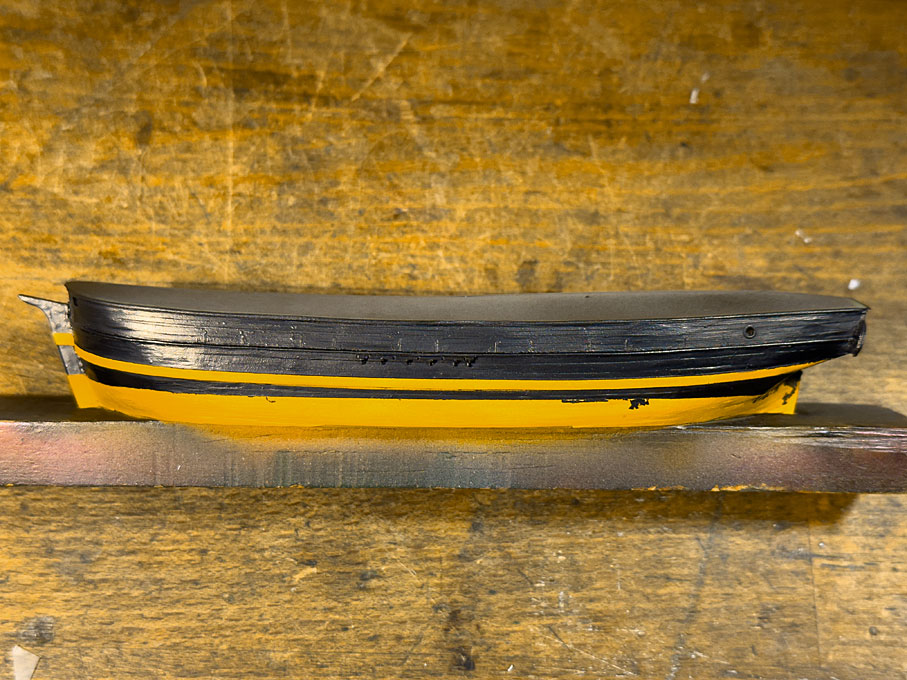
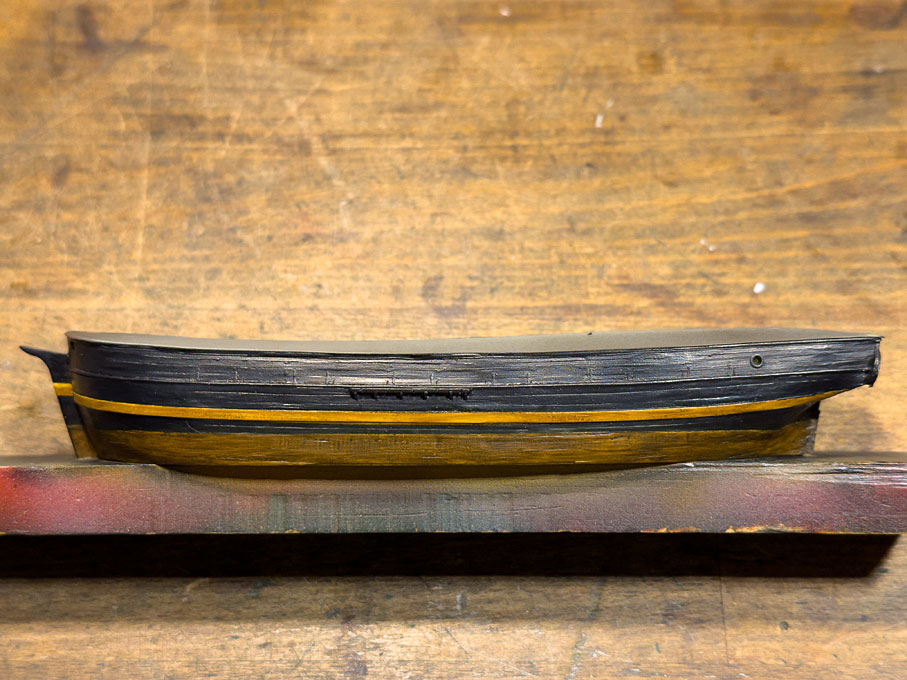
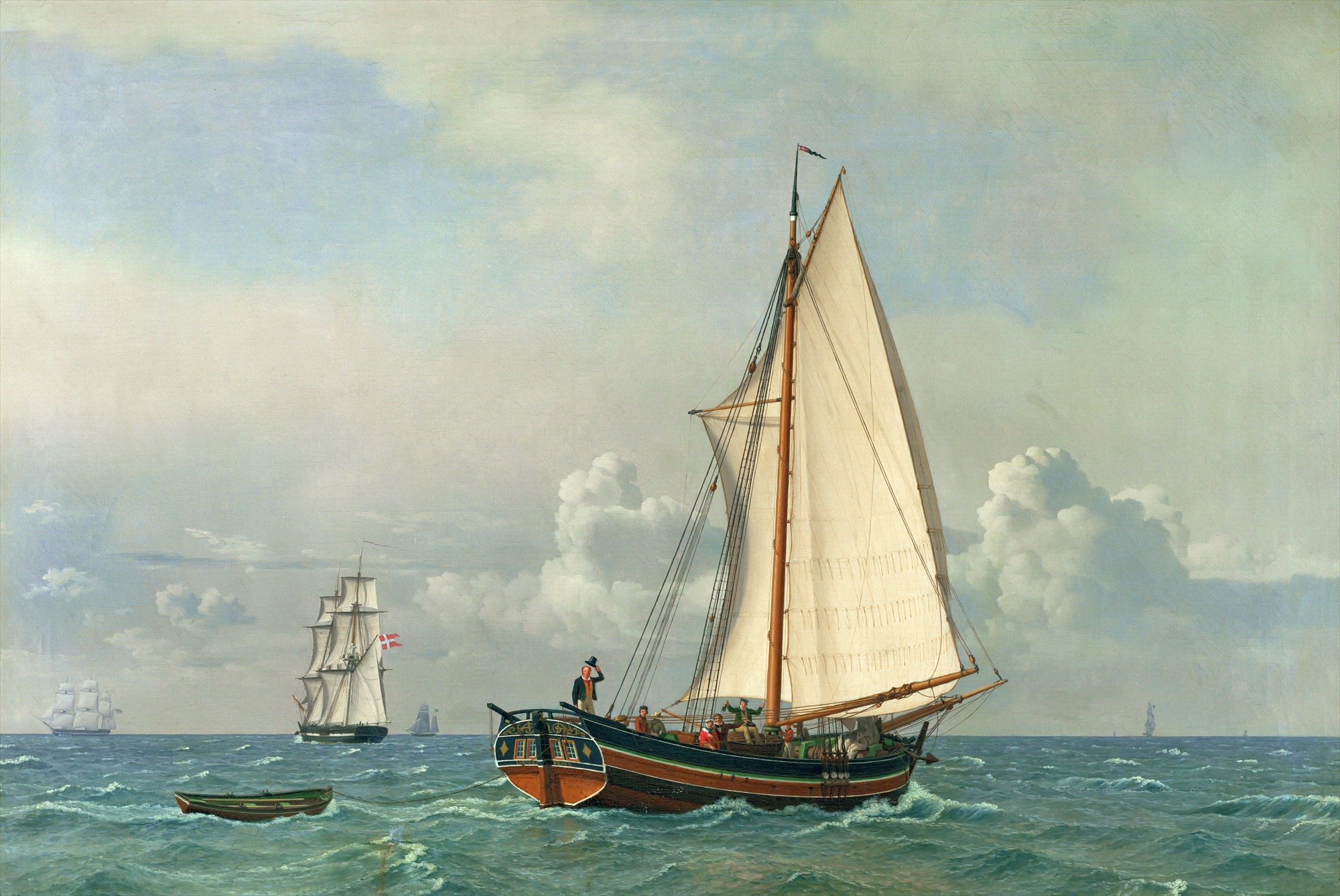
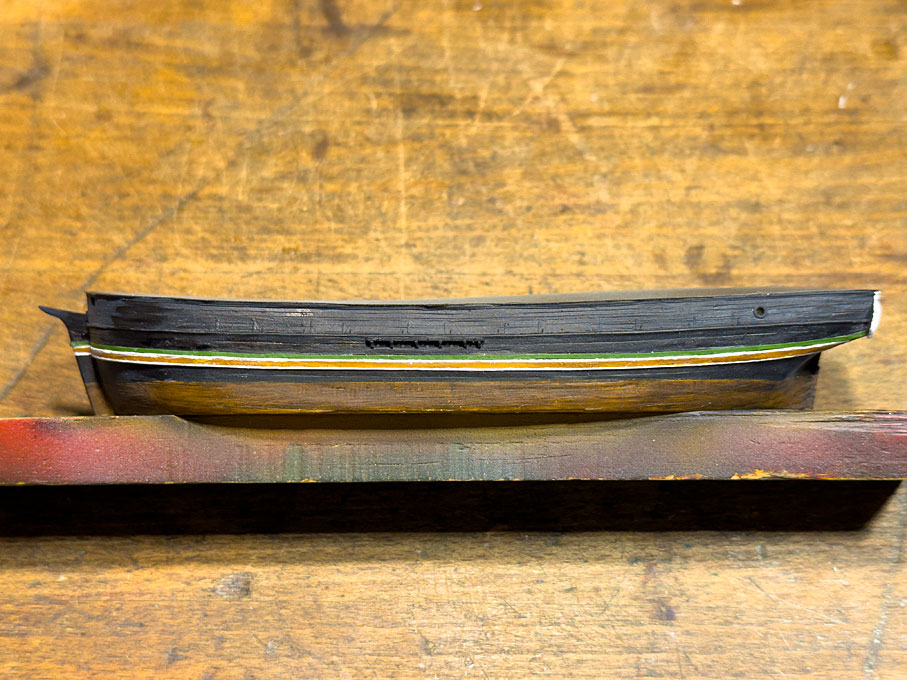
Some more ageing or weathering will be needed eventually to give the ship a used look, but this can only be done, once all deck details have been installed in order to ‘tie’ everything together visually. On the other hand, I first want to finish the outside painting of the hull, as this requires quite bit of handling for masking and blocking of bulwark openings.
To be continued …